
Office Chair Seat Materials
Common materials for office chair seats include genuine leather, PU leather, mesh fabric, sponge, and plastic, with the common combination being mesh fabric + sponge. The following is an analysis based on material characteristics, advantages and disadvantages, and applicable scenarios:
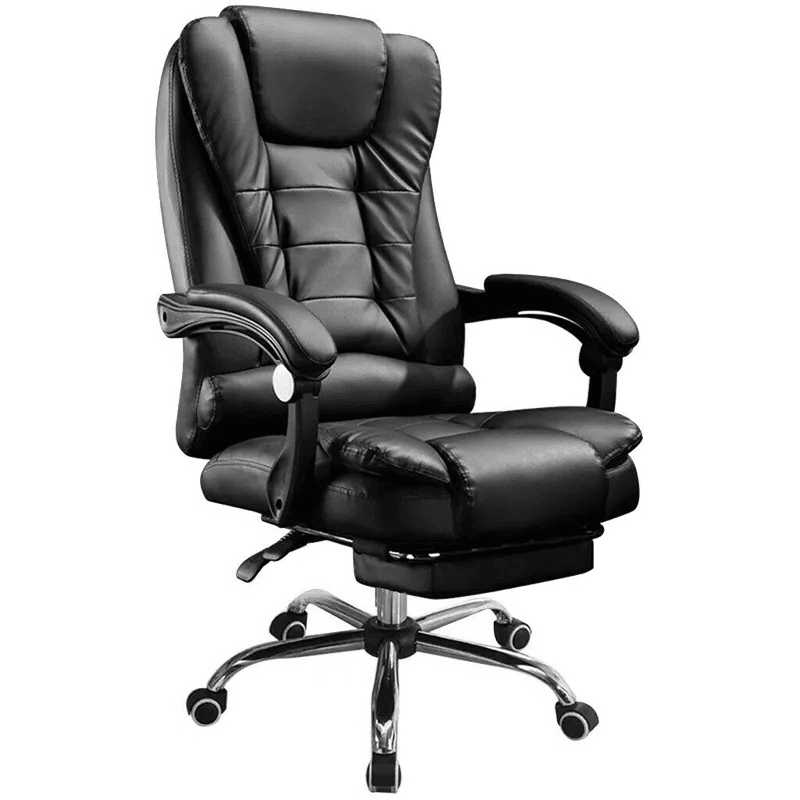
1. Genuine Leather
Genuine leather chair seats are made from natural animal hides. They have a natural surface texture, a soft touch, and excellent breathability. Over time, they can develop a unique luster, enhancing the quality of the office environment. They are relatively durable but require regular maintenance to prevent cracking or fading. The drawback is their high price. They are also sensitive to humidity and prone to mold growth in long-term humid environments. Additionally, genuine leather chair seats are usually heavy and difficult to move, making them suitable for office scenarios with sufficient budgets and a pursuit of a high-end experience.
2. PU Leather
PU leather (polyurethane synthetic leather) is an artificially synthesized imitation leather material. It has a similar appearance to genuine leather but at a lower cost. It is wear-resistant, easy to clean, and more water-resistant than genuine leather, making it suitable for office environments with a risk of coffee or tea spills. The drawback is its relatively poor breathability. Prolonged use may cause a stuffy feeling, and its durability is not as good as that of genuine leather. The surface may peel off after long-term friction. PU leather chair seats are a cost-effective choice, especially suitable for scenarios with a limited budget but a need for aesthetics.
3. Mesh Fabric
Mesh fabric chair seats are woven from high-elastic polyester fibers or nylon. They have excellent breathability and can effectively reduce the stuffy feeling during long sitting, making them suitable for summer or offices with poor ventilation. Their elastic support can disperse body pressure and reduce the burden on the waist. The drawback is their limited load-bearing capacity. Long-term heavy pressure may cause the mesh fabric to loosen and deform, and they are relatively difficult to clean as dust can easily get trapped in the mesh holes. Mesh fabric chair seats are often used in combination with sponges to balance breathability and comfort.
4. Sponge
The sponge is the core filling material for chair seats and is classified by density: High-density sponge (≥45kg/m³) has strong support, slow rebound, and is suitable for long-term office work, but some users may find it too hard; Low-density sponge (<30kg/m³) is soft but prone to collapse and has a shorter lifespan. Medium-density sponge (30-45kg/m³) balances comfort and durability and is the mainstream choice. Sponges are often paired with mesh fabric or leather, with the former enhancing breathability and the latter improving appearance quality.
5. Plastic
Plastic chair seats are mainly made of engineering plastics such as PP or ABS. They are low-cost, lightweight, and easy to clean, but their comfort is relatively poor, usually requiring the use of a cushion. Their advantage lies in their water and moisture resistance, making them suitable for special environments such as laboratories and workshops or as temporary seats. Plastic chair seats rarely appear alone and are often combined with other materials to compensate for their lack of comfort.
Material Selection Recommendations:
- For breathability, choose the mesh fabric + sponge combination;
- For durability, choose genuine leather or high-density sponge;
- For a limited budget, choose PU leather or medium-density sponge;
- For special environments (such as humid or dirty conditions), choose plastic or PU leather.



