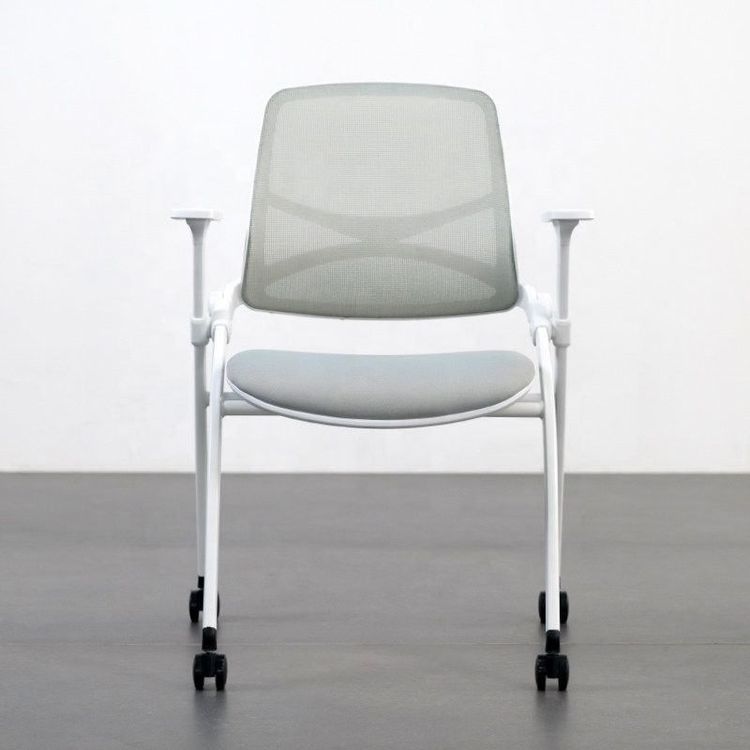
Office Chair Seat Cushion Steel Plate
Typically, a whole steel plate is not directly used as the core structure in office chair seat cushions, but some designs may incorporate steel plates or steel components to enhance support or stability, depending on the product type. Here is a detailed explanation of the possible steel plates or steel components involved in office chair seat cushions:

1. Common Application Scenarios of Steel Plates in Office Chairs
According to available information, steel plates are more commonly used in the backrests or support structures of office chairs rather than in the seat cushions themselves. For example, the backrests of some office mesh chairs are reinforced with steel plates, such as the 'oj-11 office chair backrest iron', which is treated with an electroplating process to emphasize durability. These steel plates primarily serve a back support function, differing from the load-bearing requirements of seat cushions. However, if the seat cushion is designed as a rigid support type (such as in gaming chairs or high-end ergonomic chairs), a steel frame or thin steel plate may be embedded inside to enhance structural stability and prevent deformation of the seat cushion after prolonged use.
2. Possible Steel Components in Seat Cushions: Extended Application of Steel Plate Rubber Mounts
Although 'steel plate rubber mounts' typically refer to metal components of office desk support frames (composed of metal brackets and rubber pads for shock absorption and load-bearing), similar designs may be borrowed for use in office chair seat cushions. For example, the bottom of some high-end office chair seat cushions may be equipped with steel brackets, combined with elastic materials (such as foam or memory foam) to achieve a balance between support and comfort. These steel components act like 'invisible skeletons', indirectly enhancing the user experience by distributing pressure and maintaining the shape of the seat cushion.
3. Functions and Limitations of Steel Plates in Seat Cushions
If a seat cushion does contain a steel plate, its core functions are usually as follows:
- Enhanced load-bearing capacity: Steel materials can withstand significant pressure, making them suitable for users who are heavier or sit for long periods;
- Maintained structural stability: Prevents the seat cushion from collapsing or deforming due to frequent use;
- Assistance in ergonomic design: Provides more precise support when combined with curved seat cushions.
However, it should be noted that using a steel plate directly as the surface of a seat cushion would significantly reduce comfort. Therefore, in actual products, a composite structure of 'steel plate + cushioning layer' is more likely to be used, or steel reinforcements may only be used in key areas (such as the edges).
4. Purchase Recommendations
To confirm whether an office chair seat cushion contains a steel plate, it is recommended to:
- Consult the product manual or supplier to clarify the internal structural materials;
- Prioritize products labeled as 'ergonomic design', 'high-density foam', or 'steel frame', as these designs typically focus more on balancing support and comfort;
- Avoid products that only emphasize 'steel plate durability' without mentioning a cushioning layer, as long-term use may cause discomfort.
Summary: The application of steel plates in office chair seat cushions is relatively concealed, more often serving as support frames or reinforcing components rather than directly contacting the body. Specific designs depend on the product type and brand technology, and it is recommended to obtain detailed information through official channels.