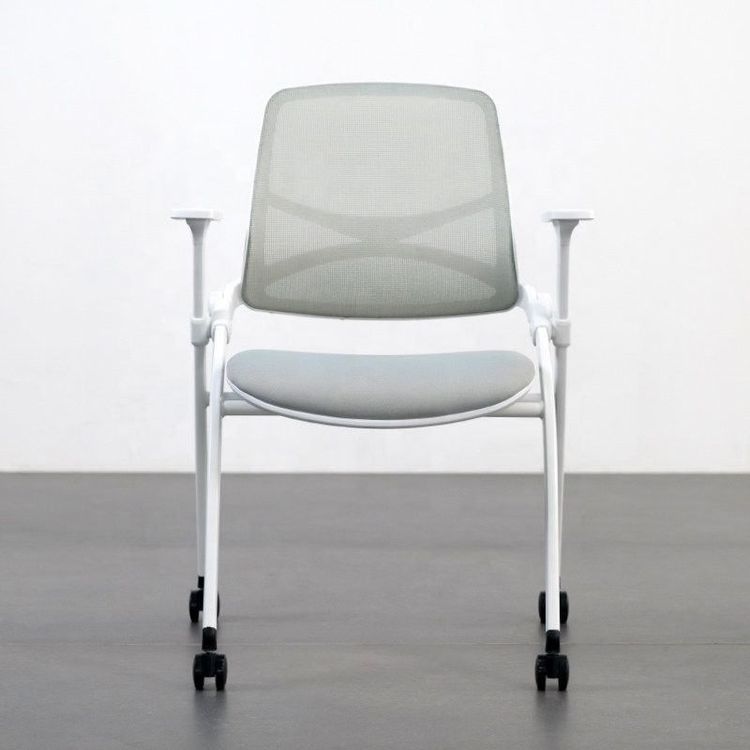
Office Chair Repair
For office chair repair, you can refer to the following methods, which should be tailored to the specific damaged part:

1. Slide Rail Repair The slide rail is a crucial component for the lifting or movement of an office chair. Damage to it can result in lifting malfunctions or stuck movement. When repairing, first prepare tools such as screwdrivers and wrenches, and check the extent of the damage to the slide rail:
- Complete Damage: If the slide rail is irreparable due to breakage or deformation, purchase a new slide rail that matches the original model for replacement. When replacing, remove the fixing screws of the old slide rail, install the new one, and then test whether the lifting function works properly.
- Reduced Sensitivity: If the slide rail is only stuck due to dust accumulation or insufficient lubrication, first clean the debris inside the slide rail, and then apply a special lubricant (such as silicone-based lubricant) to reduce friction. If it is still not sensitive after lubrication, add shock-absorbing pads on both sides of the slide rail to improve sensitivity by adjusting the contact angle between the casters and the slide rail.
2. Chair Wheel Repair Damage to the chair wheels can cause difficulty in moving the chair or produce strange noises. The repair steps are as follows:
- Check the Damage Level: Use tools (such as an Allen wrench) to remove the wheels and observe whether the wheel axles, bearings, or wheel surfaces are broken, deformed, or worn.
- Replace the Wheels: If the wheels are severely damaged (such as cracked wheel surfaces or stuck bearings), purchase new wheels of the same specifications for replacement. When replacing, align the wheel axles with the mounting holes at the bottom of the chair, fix them with screws, and then test whether the rolling is smooth.
- Simple Repair: If the wheels are only not turning smoothly due to dust blockage, use a small brush to clean the debris inside the wheel axles and bearings, and then apply a small amount of lubricant to restore the rotation.
3. Cabinet Lock Repair (if the office chair comes with a storage cabinet) If the office chair comes with a storage cabinet and the lock is damaged, repair it carefully to avoid scratches:
- Remove the Old Lock: Use a screwdriver to remove the fixing screws of the lock body. When removing the old lock, keep all the parts (such as the lock core and springs).
- Install the New Lock: Choose a new lock that matches the original lock in model and size. Align the lock hole and the fixing hole according to the instructions, tighten them with screws, and then test whether the lock tongue can extend and retract normally.
- Function Test: Use the key to repeatedly open and close the lock to check whether the lock is sensitive. If the lock tongue gets stuck or the key has difficulty turning, readjust the position of the lock core or replace the lock.
Repair Precautions:
- Cut off the power supply before operation (if the chair has electric functions) to avoid the risk of electric shock.
- Wear gloves when using tools to prevent scratches or pinches.
- If the damaged parts involve structural safety (such as gas springs or five-star bases), it is recommended to contact professional repair personnel for handling to avoid safety hazards caused by self-disassembly.