Office Chair Recline Mechanism
The core design of the office chair recline mechanism revolves around the types of recline mechanisms, synchronized recline adjustments, back-recline operation methods, and extreme recline functions, as detailed below:

Types of Recline Mechanisms
The recline function of office chairs is primarily achieved through three types of mechanisms:
- Back-Recline Mechanism: When the chair back reclines, the seat remains horizontal. This design is suitable for scenarios requiring focused relaxation while reclining, but it may cause clothing (such as shirts) to be pulled out due to the relative movement between the chair back and seat, so attention should be paid to the fabric worn.
- Seat-Recline Mechanism: The seat and back recline together at a fixed angle, similar to a seesaw. Depending on the position of the support point, there are two types:
- Mid-Mounted: The support point is located beneath the buttocks. When reclining, the buttocks sink while the knees rise, suitable for short breaks.
- Front-Mounted: The support point is close to the knees. When reclining, the buttocks sink but the knees remain relatively stationary, commonly found in large leather chairs, suitable for long-term comfortable leaning.
- Synchronized Recline Mechanism: The seat and back move in sync, with angle changes conforming to the body's state during recline (such as the natural curvature of the lumbar spine), providing better fit and support. This type of mechanism is often used in high-end ergonomic chairs and can effectively disperse body pressure.
Subdivisions and Adjustments of Synchronized Recline
Synchronized recline mechanisms differ in mechanical structure and locking methods:
- Mechanical Structure: Includes X-shaped, S-shaped, etc. (no unified naming), with three types of operation methods:
- Wire Control Adjustment: Controls the recline angle through buttons on the armrests, offering convenient operation.
- Mechanical Adjustment: Relies on a handle beneath the seat for manual adjustment.
- Self-Weight Adjustment: Utilizes the user's weight to automatically adapt to the recline angle, requiring no additional operation.
- Recline Locking: There are two modes:
- Multi-Stage Locking: Fixes several preset angles (such as 90°, 110°, 135°), suitable for scenarios with clear needs.
- Dynamic Back-Following Locking: Dynamically fits the back movement, providing continuous support during recline, suitable for users requiring flexible adjustments.
Back-Recline Adjustment Methods
The back-recline function is achieved through the following methods:
- Angle Control: Pushes/pulls the chair back through a handle or button to achieve recline and return actions.
- Locking and Unlocking: Most designs place the handle on the right side, with left-push to lock the current angle and right-pull to unlock for angle adjustment.
- Rebound Force Adjustment: The chassis is equipped with a cylindrical knob. Turning it clockwise increases support force (suitable for heavier users), while turning it counterclockwise decreases support force (suitable for lighter users), ensuring a smooth recline process.
Extreme Recline Design
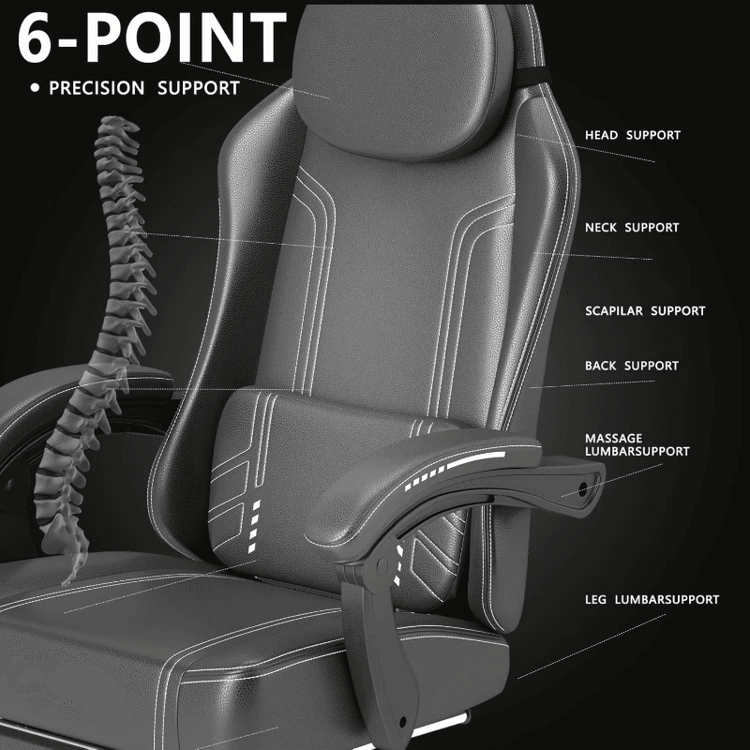
Some office chairs support a 160° extreme recline angle, combined with spinal stretching functionality, to simulate a semi-reclined posture, suitable for long breaks or short naps. This design requires the use of a footrest to disperse leg pressure and enhance comfort.
Purchase Recommendations: Choose the recline mechanism type based on usage scenarios (e.g., select synchronized recline for frequent reclining), prioritize adjustment convenience (e.g., wire control is superior to mechanical adjustment) and locking functionality (dynamic back-following locking is more flexible), and extreme recline design is suitable for users with a need to lie flat.