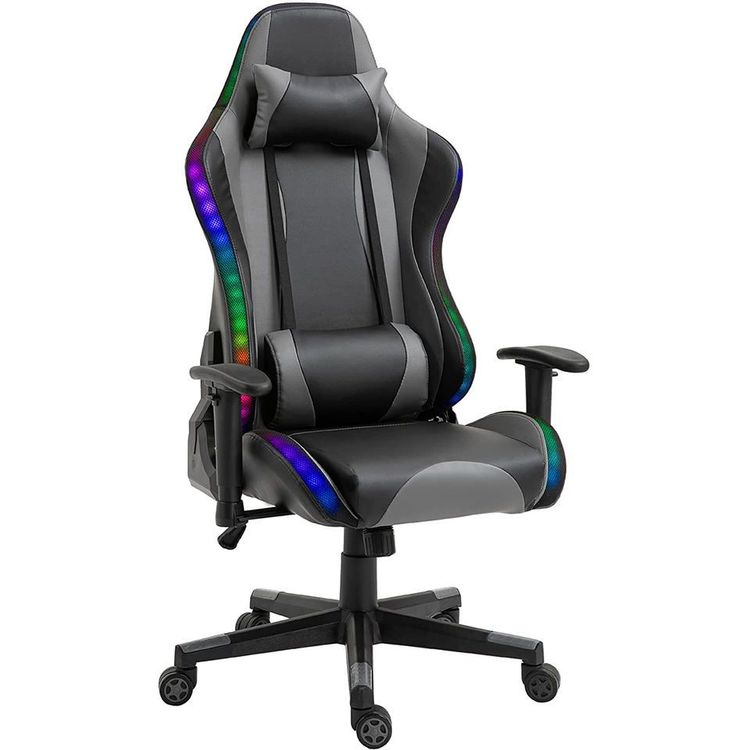
Office Chair Recline Angle
The recommended range for the recline angle of office chairs varies according to national standards and actual usage scenarios. Proper adjustment can balance comfort and health, while incorrect adjustment may pose health risks.

I. Benchmark and Adjustment Range for Office Chair Recline Angles
According to the national standard "Ergonomic Requirements for Healthy Homes - Part 3: Office Desks and Chairs," the original benchmark angle (the angle between the backrest and the seat) of an office chair should be 90° to 95°. This angle represents the initial sitting posture, aligns with the natural curvature of the human spine, and maintains basic sitting stability.
In practical use, the adjustment range of an office chair should be tailored to the activity scenario:
- Focused Work Scenarios: It is recommended to set the angle between the backrest and the seat at 90°-110°. Within this range, the spine can maintain a slight forward convexity or remain nearly upright, reducing lumbar pressure while avoiding issues such as deviation of the line of sight from the desktop or insufficient arm support due to excessive recline.
- Lunch Break Relaxation Scenarios: The angle can be adjusted to 110°-130°. Among these, a 130° large recline angle has been proven to provide a comfort level closer to lying flat, making it particularly suitable for short breaks and effectively relieving tension in the lumbar muscles.
II. Health Risks of Incorrect Adjustment
If the recline angle is too large (e.g., exceeding 130° or approaching 180° for lying flat), the following issues may arise:
- Increased Cervical Spine Pressure: When the head is tilted back, the cervical spine must bear a greater weight of the head. Over time, this may lead to straightening or reverse curvature of the cervical spine's physiological curve, causing pain or stiffness.
- Breathing Obstruction: Excessive recline may compress the chest cavity, limiting lung expansion and resulting in shallow breathing or chest tightness. This effect is more pronounced in individuals with sensitive respiratory systems.
- Decreased Sitting Stability: When the angle is too large, the body's center of gravity shifts backward, requiring reliance on the feet or armrests for support to prevent sliding. This, in turn, increases muscle fatigue.
III. Adjustment Recommendations
- Prioritize Office Chairs with Segmented Adjustment: Models that support independent adjustment of the backrest angle, seat depth, and headrest height can more precisely match the needs of different scenarios.
- Use with Lumbar Support: Even when reclining, ensure that the lumbar region is supported to prevent the lumbar spine from hanging in the air.
- Avoid Prolonged Fixed Angles: Adjust your posture every 30-60 minutes to promote blood circulation.