Back to blog
Article
Office Chair Procurement Plan
Admin October 09, 2026
The office chair procurement plan should be formulated comprehensively based on the procurement scale, the needs of the main body, and the budget. The following are procurement strategies for different scenarios:

I. Large-scale Procurement Plan (e.g., over 1,000 sets)
- Clarify Requirements: Distinguish the needs for different scenarios such as staff chairs, conference chairs, and visitor chairs. For example, staff chairs should meet ergonomic standards (seat height of 40-50 cm, backrest inclination of 100-120°, load-bearing capacity of ≥100 kg), with high-elastic mesh fabric or artificial leather as the preferred upholstery materials. Conference chairs should be equipped with silent casters and high-density rebound sponge (rebound rate ≥ 80%). Visitor chairs should match the interior decoration style; for instance, a light luxury style can choose dark gray upholstery + matte silver metal frames.
- Supplier Screening: Require ISO9001/ISO14001 certifications, at least 3 years of experience in supplying to government and enterprises, and similar-scale cases in the past 2 years. Prices should be controlled at ≤350 yuan for staff chairs, ≤280 yuan for conference chairs, and ≤400 yuan for visitor chairs. After-sales service should include a 3-year warranty, installation and commissioning within 72 hours, and a 48-hour response to quality issues.
- Implementation Process: Screen suppliers through procurement platforms and exhibitions, organize sample chair try-outs, and ultimately select local manufacturers to reduce logistics costs. For example, in one case, 1,450 sets were procured with a total budget of 462,000 yuan, and the unit prices were 328 yuan, 256 yuan, and 379 yuan respectively.
II. Small and Medium-scale Procurement Plan (e.g., for a 50-person office)
- Prioritize Space Planning: Determine the quantity of furniture based on the office area and department layout to avoid over-procurement. For example, second-hand furniture can be used for employee workstations to reduce costs, but the condition of the desktop and wiring functionality should be checked. For office chairs, a mix of second-hand branded products and new ones can be chosen, with a focus on testing core functions such as height adjustment and casters.
- Differentiated Configuration: The manager/boss's office can have a higher configuration (e.g., a large executive desk + an executive chair), but not all items need to be new. For public areas (e.g., the reception area), choose simple and durable mesh seats, controlling the budget at 200-400 yuan per set.
III. Procurement Strategies for Different Entities
- Corporate Administrative Departments: Focus on ergonomic design (e.g., lumbar support, adjustable armrests), load-bearing durability (cold-rolled steel chair frames), and require the appearance to be consistent with the office space style. The efficiency of installation and delivery should be included in the supplier assessment.
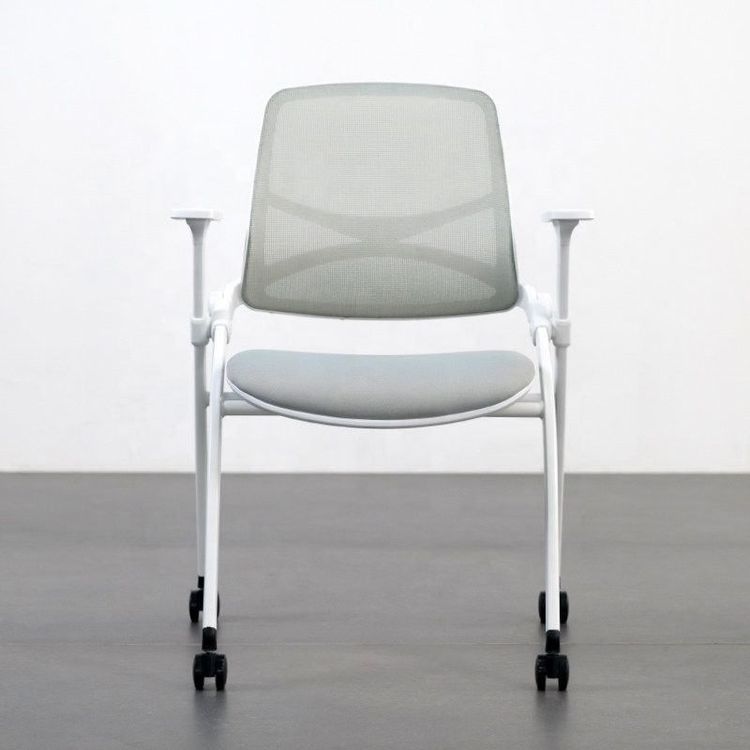
- Startups/Small Studios: Prioritize cost-effectiveness and choose products that are easy to install and have a simple appearance. For example, mesh seats have good air permeability and usually cost 200-300 yuan, suitable for compact office environments.
- Chain Operators: Require a unified appearance style and ask suppliers to provide long-term bulk customization services (e.g., LOGO customization) and a national after-sales repair network. Durability tests should cover high-frequency use scenarios for more than 5 years.
IV. Key Control Points
- Environmental Compliance: Require suppliers to provide product environmental testing reports (e.g., formaldehyde emission ≤ 0.124 mg/m³).
- Cost Optimization: For large-scale procurement, unit prices can be reduced through centralized bargaining. For small and medium-scale procurement, second-hand furniture or off-peak procurement (e.g., after industry exhibitions) can be utilized.
- Risk Management: Clearly define liability for breach of contract (e.g., the deduction ratio for delayed delivery) and quality deposits (usually 5%-10% of the contract amount) in the contract.