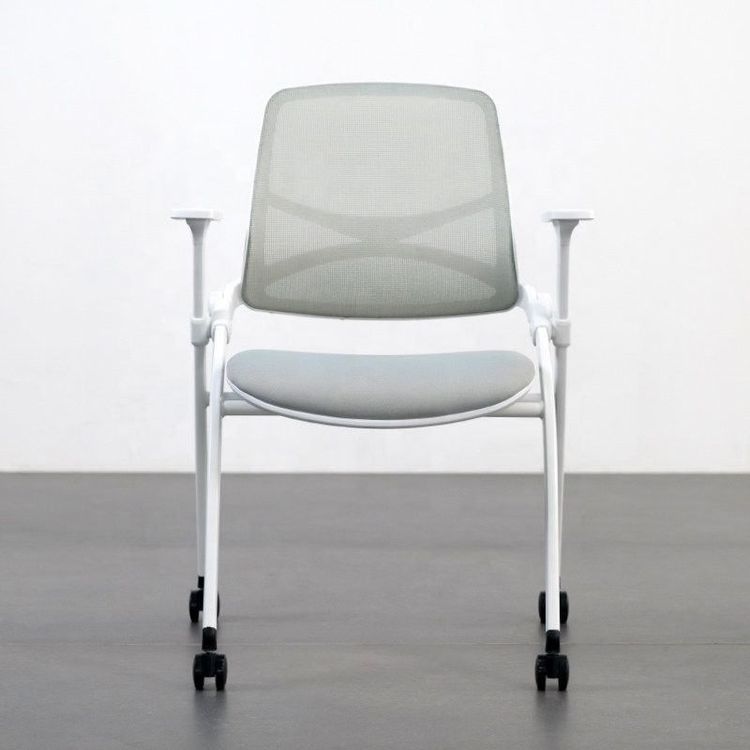
Novel Uses of Office Chairs
The novel uses of office chairs cover multiple fields such as health monitoring, intelligent adjustment, fitness assistance, scenario transformation, and massage relaxation, as detailed below:

1. Health Monitoring and Assistance Functions
Some high-end office chairs achieve health management by integrating biosensors. For example, built-in heart rate and respiratory rate monitoring modules can collect data in real time, combined with body fat analysis functions, to generate personalized health reports through mobile apps, helping users understand their physical condition. More advanced designs use pressure-sensing matrices to analyze the pressure distribution on the buttocks and waist during sitting, identify areas at risk of muscle strain, and detect poor postures such as bending forward or hunching through AI algorithms, prompting users to adjust their sitting posture through vibration reminders or app notifications to prevent cervical and lumbar spine diseases.
2. Intelligent Scenario Adjustment
The intelligence of office chairs is reflected in environmental adaptation and personalized settings. By connecting with in-car or indoor temperature and humidity sensors, the seat can automatically activate ventilation or heating modes to maintain comfort; voice control functions support switching between preset scenarios such as 'reading mode' and 'gaming mode', automatically adjusting the backrest angle and armrest height to optimal positions. Some models are equipped with gravity sensors that can dynamically adapt the seat cushion depth and backrest curvature based on the user's weight and height, and store different users' preference settings through memory functions, achieving a customized 'one-person, one-chair' experience.
3. Fitness and Stretching Exercises
To address muscle stiffness caused by prolonged sitting, office chairs can serve as simple fitness tools. For example, crossing your palms and stretching backward can stretch shoulder muscles and relieve fatigue; placing your hands behind your head and leaning forward can relax neck ligaments; holding the backrest and twisting your waist left and right can enhance core muscle flexibility. These exercises are designed based on ergonomic principles and can be completed without additional equipment, making them suitable for short exercises during office breaks to reduce health risks associated with maintaining the same posture for extended periods.
4. Multi-functional Transformation Design
Some home office chairs achieve scenario transformation through electric adjustment mechanisms. For example, a single button press can transform them from a sitting mode to a recliner to meet lunch break needs; further transformation can turn them into a baby cradle, suitable for family childcare scenarios; some models can even unfold into a simple massage bed for use with massage functions. This design expands the usage boundaries of office chairs through modular structures, upgrading them from a single seating option to multi-functional furniture.
5. Massage and Relaxation Functions
Office chairs combined with massage pads can cover key areas such as the shoulders, neck, back, and buttocks, simulating real-life massage techniques through flexible guide rail technology, combined with airbag squeezing and constant-temperature hot compress functions to promote local blood circulation and relieve muscle stiffness. Some models also support intensity adjustment and mode switching, allowing users to choose programs such as 'deep relaxation' or 'gentle soothing' according to their needs, achieving seamless switching between office and leisure scenarios.