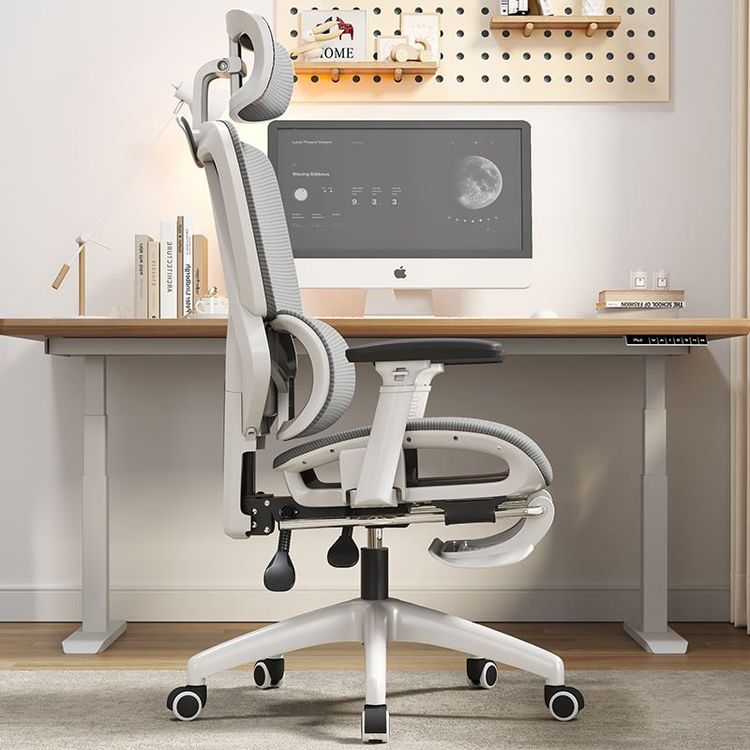
Looseness of Office Chair Mesh
Looseness of office chair mesh is mainly caused by issues in materials, craftsmanship, and design, and can be avoided through targeted purchasing.

Common Causes of Mesh Looseness
Material Issues
- Poor-quality mesh material: Low-end chairs use recycled chemical fiber ordinary mesh, which has poor fiber toughness, insufficient tensile strength, sparse weaving density, and weak resistance to stretching. Under long-term pressure from the human body, it is prone to being stretched and deformed. Mid-to-high-end products use high-elasticity glass fiber or imported reinforced mesh, with thicker warp and weft threads and a high weaving density, providing inherent rebound tension and resistance to pulling without loosening easily.
- Thin frame material: Cheap backrest and seat cushion frames have thin walls and fragile materials, which are prone to slight deformation under stress. If the frame curvature does not have a pre-tensioning design for tension, the mesh cannot be tightened during installation, and the slight deformation of the frame after a person sits down will further stretch the mesh, causing it to become loose and wrinkled.
- Lack of sponge auxiliary layer: Some mesh seat cushions need to be paired with a high-elasticity buffer layer to share the stress. Low-priced models omit the buffer pad layer, placing all the weight on the mesh, which is prone to local depression and loosening under long-term single-point pressure.
Craftsmanship Issues
Regular factories evenly tighten the four sides of the mesh and fix it with reinforced stitching at specific points during assembly to ensure balanced tension. Small workshops, to save costs, simply fix it with buckles without tightening or performing tension setting. Although it may look normal when leaving the factory, the mesh will gradually loosen and sag after a few months of use.Design Issues
Unreasonable seat surface size design (such as being too wide or having too large a span) will increase the suspended area of the mesh, doubling the tensile force it is subjected to, making it more prone to loosening and deformation than a regular-sized seat. In addition, the mesh is not the softer the better. Overly soft materials will cause the person to sink when sitting down, lacking support for the waist, concentrating stress on the lumbar spine, and having insufficient tension, which will lead to loosening and deformation after a short period of use.
Preventive Measures When Purchasing
- Check the mesh material: Prioritize imported high-elasticity glass fiber mesh or thickened breathable mesh, which have strong toughness and resistance to stretching. Avoid off-brand thin chemical fiber mesh, which is extremely prone to loosening and wrinkling.
- Check the frame: Choose products with one-piece molded thickened frames and fully enclosed reinforced structures, which can firmly hold the mesh. Thin plastic frames are prone to uneven stress and local loosening and deformation.
- Press test by hand: Press the mesh firmly. If it rebounds quickly, does not depress, and does not feel soft or floaty, it has high durability. If it collapses with one press and rebounds slowly, it will inevitably become loose later.
- Avoid overly wide seat surfaces: When the seat surface is too wide or large, the mesh has a large stretching span and is more prone to sagging and loosening under long-term weight bearing.
Some brands (such as the ErgoHuman Gold Elite E2MAX with adjustable seat mesh version) have launched office chairs with adjustable seat mesh tension, which can further optimize the user experience according to needs.