
Office Chair Mesh Embedding
Office chair mesh embedding is primarily achieved through structural design, material properties, and installation techniques to ensure precise integration, with different models adopting differentiated technical solutions.
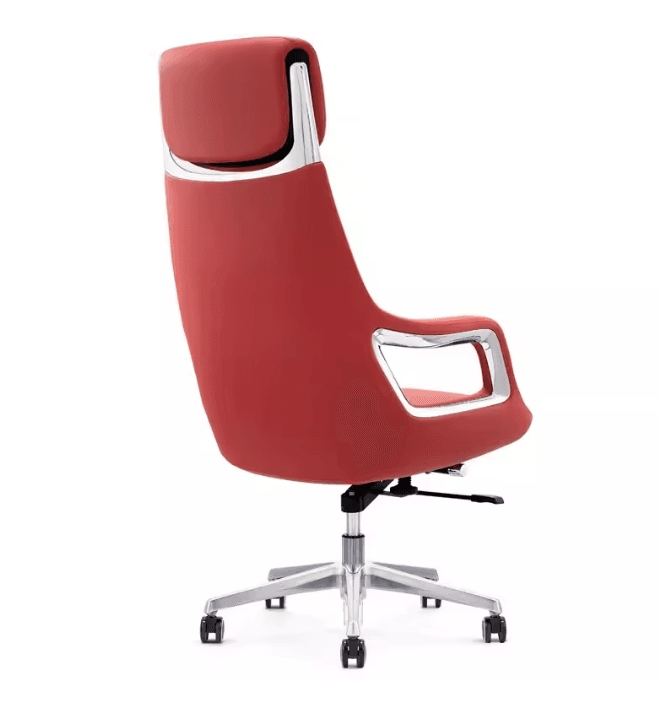
I. Precision Integration Technology for Mesh and Chair Back
Taking the Ergomax Evolution2+ ergonomic chair as an example, its mesh system utilizes a dual-helix structure made of American Matrex mesh: vertical fibers provide elastic cushioning, while horizontal fibers maintain shape stability. This structure allows the mesh to disperse pressure under load while preserving the chair back's supportive form, preventing deformation after prolonged use. The embedding of the mesh into the chair back is achieved through high-precision mold forming, with the edges secured using hot-melt adhesive or ultrasonic welding to ensure seamless integration with the frame and minimize dust accumulation in gaps.
II. Embedded Mechanism of Synchronous Tilt Base
Some mesh office chairs (such as models cg-e1074 and cg-e1054) incorporate the mesh into the ergonomic chair frame through a synchronous tilt base that controls the functional locking mechanism. The base uses gear or hydraulic linkage systems inside. When the user reclines, the chair back and seat tilt synchronously, and the mesh adjusts via elastic tension control to accommodate different angles, preventing excessive localized stretching. The connection between the base and frame typically features snap-fit slots, with the mesh edges secured by screws or rivets after embedding to ensure synchronized movement between the mesh and frame during tilting, avoiding misalignment or loosening.
III. Key Steps in Installation Techniques
The installation of mesh chairs follows a step-by-step fixation principle:
- Connecting the Five-Star Base and Gas Lift: First, secure the five-star base (footrest) to the gas lift (height adjustment column) using threads or quick-connect interfaces, ensuring the gas lift is perpendicular to the ground to prevent chair tilting during subsequent installation.
- Assembling the Mesh Seat and Chair Back: Using Ergomax as an example, four high-strength screws are used to connect the seat to the metal frame of the chair back, with screw holes pre-embedded in the reinforcing strips along the mesh edges to prevent direct tearing of the mesh under stress.
- Adjusting Armrests and Headrest: On some models, the armrests connect to the chair back via sliding rails or rotating axes, while the headrest is embedded into the top of the chair back using slots. During installation, adjustments are made to align them flush with the mesh support surface, forming a complete ergonomic support system.
IV. Synergistic Effect of Materials and Structure
The stability of mesh embedding relies on the balance between material elasticity and frame rigidity. High-elasticity mesh (such as Matrex mesh) must be paired with high-strength plastic or metal frames to prevent frame deformation from causing mesh sagging. Additionally, the mesh edges typically feature a double-layered hem design, with an inner layer of elastic fibers and an outer layer of abrasion-resistant polyester fibers, enhancing durability and facilitating secure attachment to the frame. Some premium models also incorporate silicone pads between the mesh and frame to reduce friction noise and improve comfort.



