Office Chair Legs
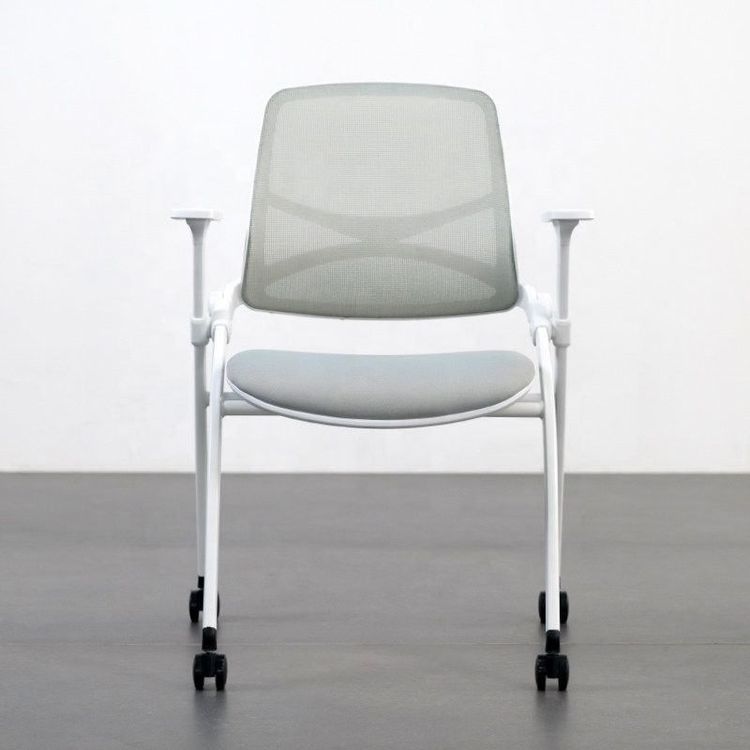
The legs of an office chair are typically designed with five legs, featuring a central column structure and a five-point star-shaped base, often made of stainless steel with a diameter ranging from 25 to 35 millimeters.

Quantity Design: Stability Advantages of Five Legs
Office chairs commonly adopt a five-leg design, a structure chosen not arbitrarily but based on mechanical principles and usage scenario optimization. Traditional four-leg chairs are prone to instability when rotating or reclining, as the center of gravity can shift, leading to insufficient support on one side and increasing the risk of tipping over. In contrast, five legs expand the support area to a wider plane by adding contact points, significantly reducing the likelihood of instability when the center of gravity shifts. For example, when a user leans back or rotates quickly, the five legs can distribute pressure more evenly, ensuring stability during dynamic use. Additionally, the five-leg design better accommodates the multifunctional needs of office chairs, such as tilting, rotating, and moving in any direction, further enhancing safety.
Structural Design: Central Column and Five-Point Star-Shaped Base
The leg structure of modern office chairs centers around a central column, with the base evolving into a five-point star-shaped layout. The central column serves as the vertical support main body, connecting the seat to the base and ensuring overall structural rigidity through high-strength materials like steel or aluminum alloy. The five-point star-shaped base radiates five legs from the central column, forming a symmetrical geometric structure. This design not only optimizes weight distribution but also reduces material usage while maintaining sufficient strength. For instance, when each leg of the star-shaped base contacts the ground, it can independently bear part of the pressure, preventing deformation or breakage caused by local overload.
Material and Dimensions: Standardized Parameters for Stainless Steel Legs
The material for office chair legs is primarily stainless steel, valued for its high strength, corrosion resistance, and ease of cleaning, making it suitable for long-term office environments. The diameter of stainless steel legs is typically controlled between 25 and 35 millimeters, a standard widely adopted in the industry. A diameter too small (e.g., below 25 millimeters) may result in insufficient load-bearing capacity, especially for users with larger body weights or frequent movement, leading to structural damage. Conversely, a diameter too large (e.g., exceeding 35 millimeters) increases material costs and chair weight, affecting portability. The specific diameter selection must consider the chair's load-bearing capacity (e.g., ordinary office chairs typically bear about 100-120 kilograms, with high-end models up to 150 kilograms or more) and intended use (e.g., whether frequent movement or reclining is required), with optimal parameters determined through engineering calculations.
In summary, the legs of an office chair achieve a balance between stability, functionality, and economy through coordinated design in quantity, structure, and material, becoming an indispensable component of modern office furniture.