
Office Chair - Leather
Leather office chairs are typically made of PU leather or genuine leather and are a common material type for executive chairs (managerial chairs). They feature ergonomic designs and intelligent functions, suitable for business managers or home study settings.
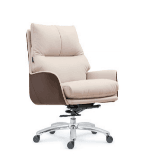
Material and Structural Characteristics
The core materials of leather office chairs are PU leather or genuine leather. PU leather is synthetic leather, which is cost-effective, durable, and easy to clean, making it suitable for users with a limited budget who still seek a leather-like feel. Genuine leather, with top-grain leather being a premium representative, offers excellent breathability and a soft touch but comes at a higher price, often used in high-end products. The structural components are designed for stability: the frame and base are commonly made of metal (such as steel) or high-strength engineering plastics to ensure load-bearing capacity; the seat and backrest are filled with high-density foam for comfortable support; and components like wheels, five-star bases, and gas lifts work together to enable flexible movement and height adjustment.
Functional and Design Advantages
Ergonomics is the core design philosophy of leather office chairs. Most products support multi-dimensional adjustments: the gas lift allows for seat height adjustment to accommodate users of different heights; the recline function enables the backrest to tilt backward, alleviating fatigue from prolonged sitting; some high-end models are equipped with adjustable armrests that support up-down, front-back, or rotational adjustments to fit the natural posture of the arms. Additionally, intelligent functions are becoming increasingly popular, such as integrated pressure sensors to monitor sitting posture or motor-driven automatic adjustment of the backrest angle to enhance the user experience.
Application Scenarios and Material Selection
Leather office chairs are commonly found in the offices of business managers or home studies, where their sophisticated appearance and comfortable experience align with high-end office needs. For those seeking cost-effectiveness, PU leather products are an ideal choice; for those prioritizing durability and touch, genuine leather (especially top-grain leather) is a worthwhile investment. It is important to note that genuine leather requires regular maintenance to prevent cracking, while PU leather should be protected from scratches by sharp objects.
Industry Development Trends
With technological advancements, the functional boundaries of leather office chairs continue to expand. Intelligent monitoring systems can provide real-time feedback on sitting posture data, helping users improve their health habits; automatic adjustment technologies analyze usage scenarios through algorithms to dynamically optimize the backrest angle and support intensity. These innovations not only enhance the practicality of the products but also drive the evolution of office furniture towards intelligence and personalization.



