
Office Chair Inspection Test
Office chair inspection tests should comprehensively evaluate multiple aspects such as physical and mechanical properties, safety performance, material environmental friendliness, and ergonomic characteristics to ensure that the products meet standards and can be used safely and durably.
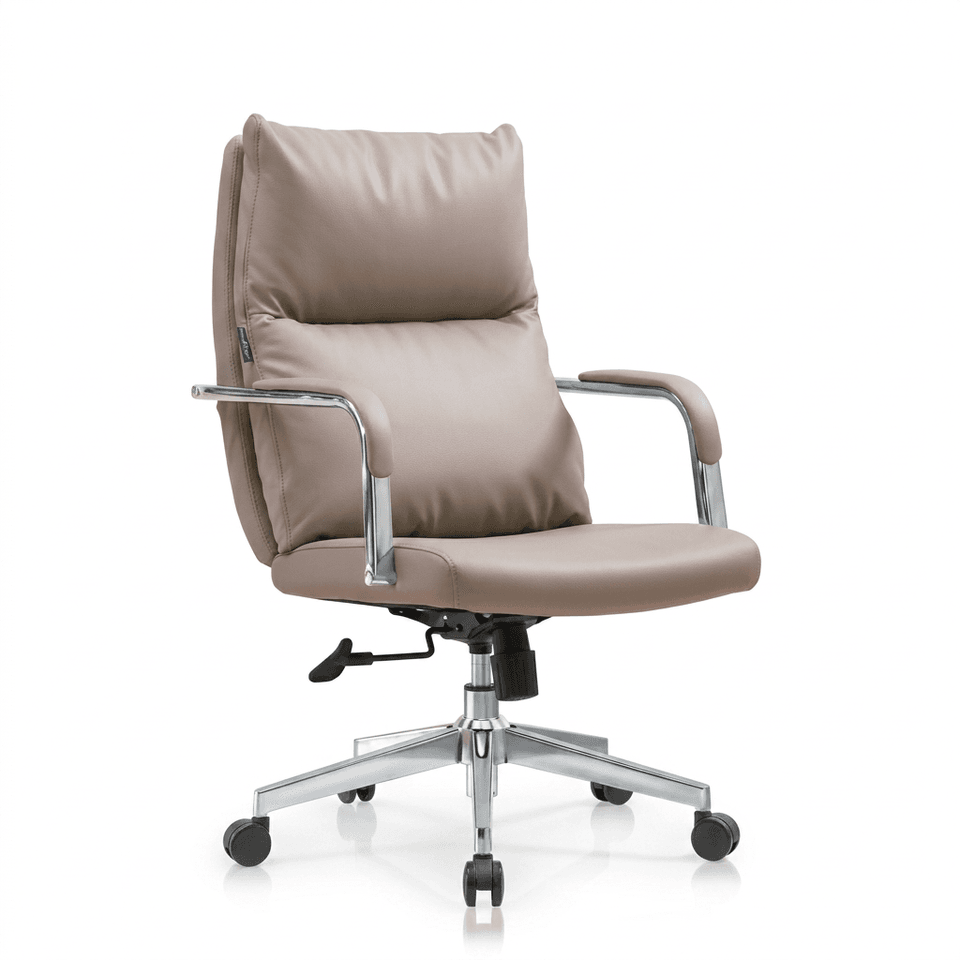
Physical and Mechanical Property Testing
Physical and mechanical properties are the core of office chair inspections, covering stability, strength, and durability. Stability testing uses a stability test bench to simulate forward, backward, and lateral tipping risks, ensuring that the chair does not tip over under normal use and foreseeable misuse conditions. Strength testing employs a universal material testing machine to apply static loads to the seat, backrest, and armrests to verify their load-bearing capacity. Durability testing utilizes a multi-functional seat fatigue testing machine to simulate long-term use scenarios, such as repeated loading in seat static pressure tests to inspect load-bearing durability, backrest cyclic durability tests to simulate millions of reclining motions, and fatigue tests on casters and gas cylinders to ensure that key components do not fail during long-term use.
Safety Performance Testing
Safety performance testing focuses on aspects such as the clearance of rotating parts and flame retardancy. Rotating part clearance must be measured with a clearance gauge to prevent finger or clothing entrapment. Flame retardancy testing evaluates the material's burning speed and spread under an open flame through combustion tests to ensure compliance with fire safety standards. Additionally, sharp edges, shear points, and tubular clearances must be inspected to prevent users from being cut or pinched during use.
Material Environmental Friendliness Testing
Material environmental friendliness testing primarily targets limits on hazardous substances, such as formaldehyde, heavy metals, and volatile organic compound (VOC) emissions. Formaldehyde testing uses a spectrophotometer to analyze the concentration of formaldehyde released from samples. VOC testing simulates indoor environments with an environmental chamber, collects gas samples, and analyzes volatile organic compound components using a gas chromatography-mass spectrometry (GC-MS) system. Heavy metal testing requires pre-treatment of materials to ensure that the content of hazardous substances such as lead and cadmium meets environmental standards.
Ergonomic Characteristic Testing
Ergonomic characteristic testing verifies dimensions and adjustment functions according to the EN1335 standard. Dimension verification uses a standard mannequin to simulate real human sitting postures and weights, calibrating parameters such as seat cushion depth, seat height, backrest support angle, and armrest spacing. Adjustment function testing checks whether the chair supports adjustments in height, angle, and armrest position, ensuring that users can adjust it to a comfortable state according to their needs, reducing fatigue from prolonged sitting.


