
Office Chair Hours in a Career
The total time an office worker spends sitting on an office chair during their career typically ranges from 60,000 to 80,000 hours, with some IT engineers possibly exceeding 80,000 hours.
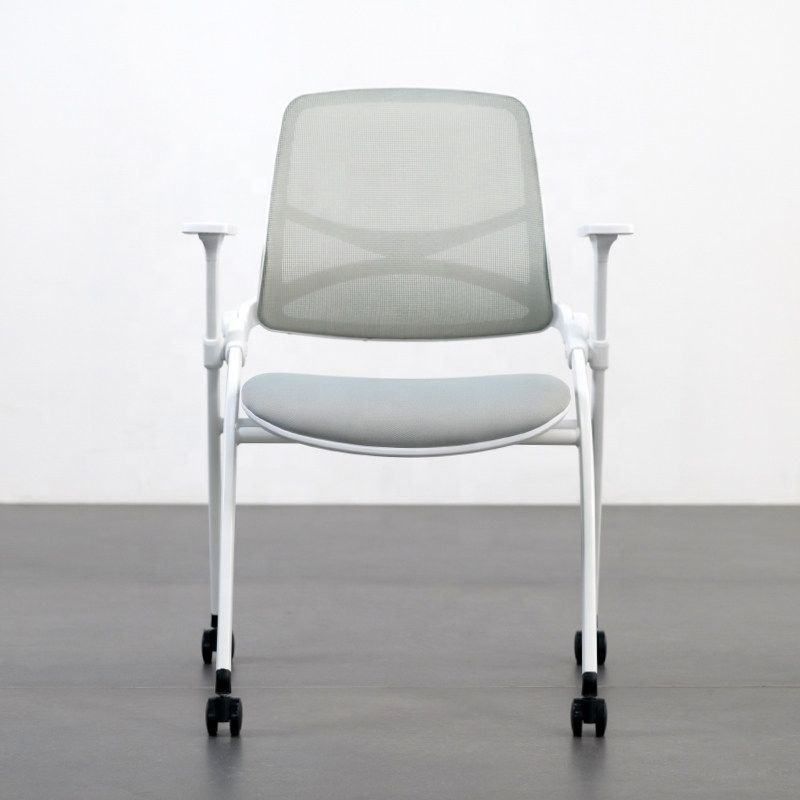
Depending on different statistical methods and occupational characteristics, there are variations in the total time spent sitting on an office chair during a career, but it generally falls within the range of 60,000 to 80,000 hours. Here is a detailed analysis:
1. Basic Estimation Model: Total Hours Over a 40-Year Career
Using a baseline of "40 years of work, 230 working days per year, and 8 working hours per day," the total time is calculated as:
40 years × 230 days/year × 8 hours/day = 73,600 hours
This result closely aligns with the claim of "75,000 hours" and reflects the average level in conventional office settings. This model assumes fixed work years, attendance rates, and daily working hours, applicable to most office workers.
2. Variations in Hours Due to Occupational Differences
The intensity of work in different occupations directly affects the time spent on an office chair. For example:
- IT Engineers: Due to long project cycles and frequent overtime, their daily working hours may extend to 10-12 hours, with higher annual attendance rates. If calculated as "40 years, 250 days/year, 10 hours/day," the total time can reach:
40 × 250 × 10 = 100,000 hours
Even considering some rest days and flexible working hours, the actual value may still exceed 80,000 hours. - Traditional Industry Workers: If they work 6-7 hours per day, the total time may drop to 50,000-60,000 hours, but such cases are becoming increasingly rare.
3. Rationality of Data Sources
- 60,000 hours: Based on a conservative estimate of "6 hours per day, 40 years, 250 days/year," reflecting some low-intensity positions or part-time scenarios.
- 80,000 hours: Calculated as "8.5 hours per day, 40 years, 235 days/year," more closely resembling the current situation where overtime is common in modern workplaces.
- 75,000 hours: As an intermediate value, it balances standard working hours with moderate overtime.
4. Practical Influencing Factors
- Popularization of Remote Work: Some time may shift from office chairs to home seating, but the overall sedentary time may not necessarily decrease.
- Increased Health Awareness: Habits such as standing desks and regular breaks may shorten the duration of continuous sitting, but the total time remains largely unchanged.
- Changes in Occupational Lifespan: With the delay in retirement age, the total time may further increase.
In conclusion, the time spent on an office chair during a career is influenced by multiple factors such as occupation, working hour systems, and health habits. However, the range of 60,000-80,000 hours is widely representative, with high-intensity positions like IT engineers possibly exceeding this upper limit.


