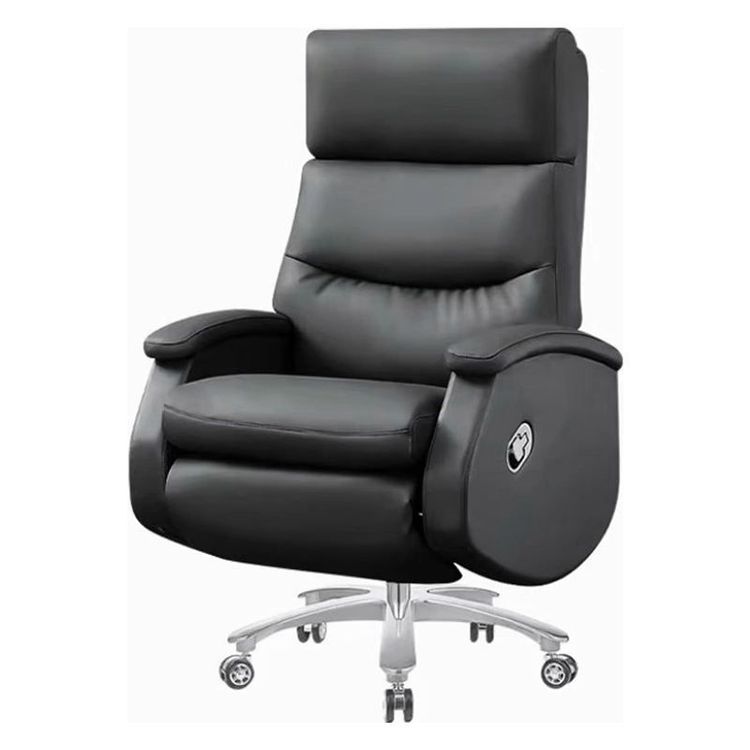
Office Chair Height Adjustment OEM/ODM: Custom Design & Bulk Production Guide
Custom design and bulk production of Office Chair Height Adjustment OEM/ODM require a focus on four core aspects: design support, functional realization, production capacity, and quality assurance. Here is a detailed guide:

1. Custom Design Support
OEM/ODM services typically offer a one-stop solution from design to delivery. Customers can submit their requirements by providing reference photos, competitor product links, or hand-drawn sketches. Based on these, suppliers will complete custom designs, covering details such as brand logos, colors, materials, and packaging. For example, companies like HengYao Furniture support free sample production and lower the minimum order quantity (MOQ) threshold, facilitating small-batch trial production. During the design process, attention should be paid to material compatibility. For instance, the selection of PU leather, fabric, or steel bases should match the height adjustment mechanism to avoid functional failures due to insufficient material strength.
2. Height Adjustment Function Realization
The pneumatic lift mechanism is a core component and should be selected from those certified by international standards such as BIMFA to ensure smooth and safe adjustment. Taking the SZ-OCM17 model as an example, it explicitly states “Height Adjustment: Yes,” indicating that the collaborative design of the pneumatic rod and chair structure has passed functional verification. During design, space should be reserved for the installation of the pneumatic rod, and the connection structure between the seat and base should be able to withstand the stress of frequent adjustments to avoid looseness or abnormal noises after long-term use.
3. Bulk Production Capacity and Cycle
For large-scale production, it is necessary to evaluate the supplier's production capacity and delivery efficiency. Mainstream factories can produce over 10,000 chairs per month, with some companies like HengYao Furniture exceeding 50,000 pieces per month, meeting the demands of large orders. In terms of production cycles, sample production takes 7-15 days, while bulk orders typically require 30-45 days, with scheduling to be negotiated with the supplier based on order size. For transportation, full container load (FCL) or less-than-container load (LCL) options should be clarified, and buffer time should be reserved to account for potential delays such as customs inspections.
4. Quality Assurance and Compliance
Implement a 100% full inspection process covering details such as the sealing of the pneumatic rod, the stability of the chair structure, and surface treatments (e.g., waterproof, scratch-resistant, and stain-resistant coatings). Long-term warranty services (usually 1-3 years) can enhance customer trust. Products must comply with international standards (e.g., ANSI/BIFMA X5.1) and obtain relevant certifications to ensure no compliance risks when exporting to over 60 countries. For example, waterproof materials must pass water splashing tests, and scratch-resistant coatings must meet wear resistance indicators.
5. Additional Features and Material Options
In addition to height adjustment, the swivel function is a standard feature of office chairs, requiring smooth and quiet operation of the base bearings. In terms of materials, over 60 color options are available, supporting different tactile materials such as PU leather and fabric. Appropriate solutions should be recommended based on usage scenarios (e.g., open-plan offices or home studies). For example, high-back chairs are suitable for breathable fabrics, while manager chairs can opt for PU leather with a better texture.