Office Chair - Heavy Duty
When choosing heavy-duty office chairs, it is essential to focus on load-bearing capacity, structural stability, and lumbar support design, and make selections based on the actual test data and user reviews of specific models.

1. Load-Bearing Capacity and Structural Stability Are Core Indicators
Heavy users (typically those weighing ≥85kg or over 170 pounds) should prioritize office chairs with clearly specified load-bearing capacities and stable structures. For example, products from Gedeli Furniture Flagship Store feature a "thickened explosion-proof chassis + steel five-star base" design, capable of supporting up to 260 pounds in actual tests. The Sihoo C300 is officially rated to support 300 pounds, with users reporting no wobbling or deformation after prolonged sitting at 200 pounds. The Xiangyaojia H6 employs a "thickened steel tube frame" and an "integrated die-cast aluminum alloy five-star base," achieving a static load capacity of 1248kg and passing a 250kg impact test. The Heibaidiao X7 ensures stability for 200-pound users through a "professionally certified Class 4 gas lift + thickened aluminum alloy five-star base." Standard computer office chairs typically have a load capacity ranging from 100 to 200 kilograms, while bow-shaped office chairs, due to design differences, generally have a load capacity between 100 and 150 kilograms, depending on the specific model.
2. Lumbar Support Design Affects Long-Sitting Comfort
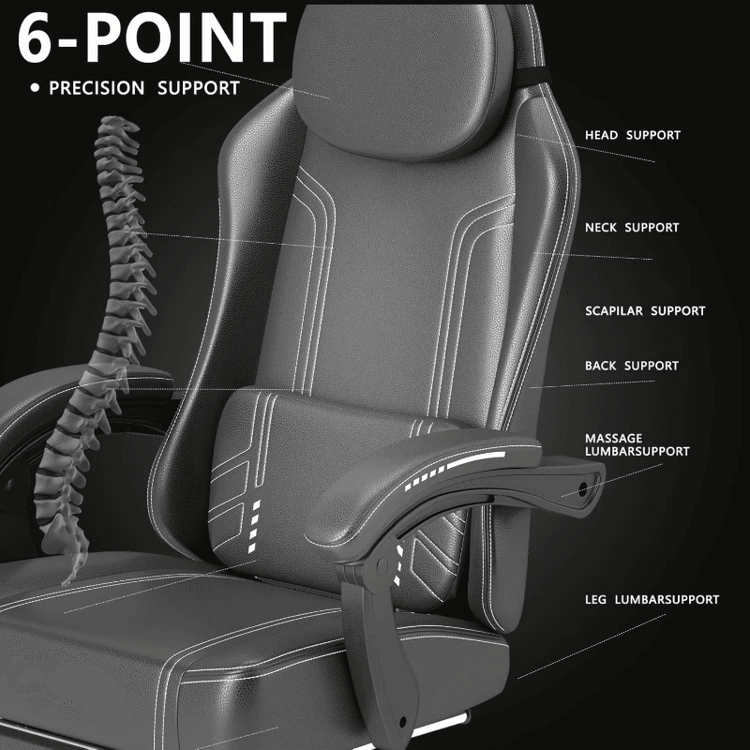
In addition to load-bearing capacity, lumbar support should conform to the natural curve of the spine. Prioritize chairs with an "S-shaped curved backrest" and an "adjustable lumbar pillow (up and down, front and back)" to achieve a "stable yet non-pressing" support effect. High-end models may be equipped with "dynamic lumbar tracking technology." For example, the Yongyi WoKe MAX features a "dynamic lumbar tracking + seat-back linkage" design that continuously conforms to the lumbar spine, reducing fatigue from prolonged sitting.
3. Multiple Parameters Should Be Considered When Making a Purchase
Heavy users should avoid relying solely on the maximum load capacity stated on product pages and should also pay attention to the following details:
- Effective Seat Width: Ensure there is sufficient space between the hips and the edge of the chair to avoid a cramped feeling.
- Seat Cushion Compression Resistance: Avoid overly soft foam cushions, as they may lose support over time due to compression.
- Backrest Recline Resistance: Adjustable to meet the recline needs of users of different weights.
- Structural Strength: Check the materials and connection methods of key components such as the chair legs and gas lift.
Additionally, it is recommended to leave a space of 2-3 fingers between the front edge of the seat cushion and the back of the knee to prevent leg compression due to excessive seat depth.