
Future Design of Office Chairs
The future design of office chairs will evolve around three core directions: scenario integration, intelligent ergonomics, and green sustainability.
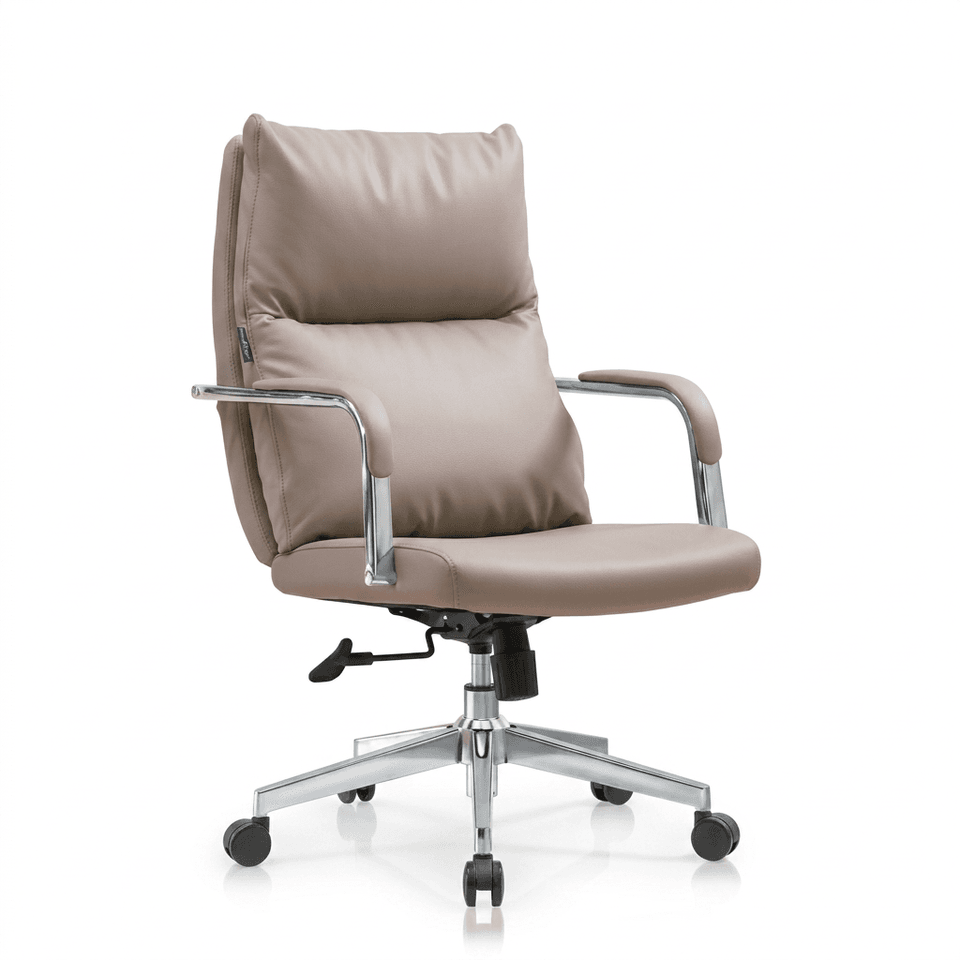
Scenario Integration: From Single Function to Universal Adaptability
Future office chairs will break free from the limitations of traditional “single-scenario” use, achieving universal adaptability through modular design, dual-scenario compatibility, and flexible customization. For example, the Movably Pro office chair features a detachable and reversible dual-zone cushion, supporting one-touch switching between focused work, prolonged sitting relief, and short rest modes to cover users' all-day needs. The ingLIFE office chair employs a 360-degree adaptive adjustment mechanism, seamlessly connecting home and office scenarios to meet diverse needs such as remote work and meeting collaboration. The Setu seat, centered on a dynamic responsive motion spine, follows the body's natural movements without manual adjustments, adapting to flexible scenarios like informal collaboration and mobile work. This design logic not only enhances space utilization but also provides users with consistent comfort across different environments through “scenario adaptability.”
Intelligent Ergonomics: From Passive Support to Active Adaptation
Future office chairs will incorporate more intelligent technologies, achieving a leap from “passive support” to “active adaptation.” Pressure sensing, posture correction, and health monitoring functions will become standard. For instance, the Backrobo Setu seat uses a dynamic responsive motion spine to sense changes in the user's sitting posture in real-time and adjust support intensity accordingly. The ECOLSTAR KC2-1 Planet Baby Seat employs adaptive back-tracking technology to actively conform to the back curves of users of different weights without manual adjustments, making it particularly suitable for children. The Paradigma Chair integrates tactile intelligent control, allowing users to actively control seat posture through backlit capacitive touch switches, free tracking rotation, and spine-adaptive height adjustment functions, preventing cervical and lumbar issues caused by prolonged sitting. These technologies transform office chairs from “tools” into “health managers” through upgraded “human-machine interaction.”
Green Sustainability: From Environmental Concept to Full-Chain Practice
Future office chairs will deepen the concept of green sustainability, integrating it throughout the entire lifecycle from design, production, use, to recycling. For example, the pallo office chair extends its service life through replaceable component design, reducing resource waste. The Sphere chair is made from recycled materials, lowering carbon emissions. Some brands also achieve the transition from “environmental concept” to “full-chain practice” through low-carbon production processes and circular design. This trend not only responds to global sustainable development demands but also reduces long-term usage costs for users through “upgradable and recyclable” features.


