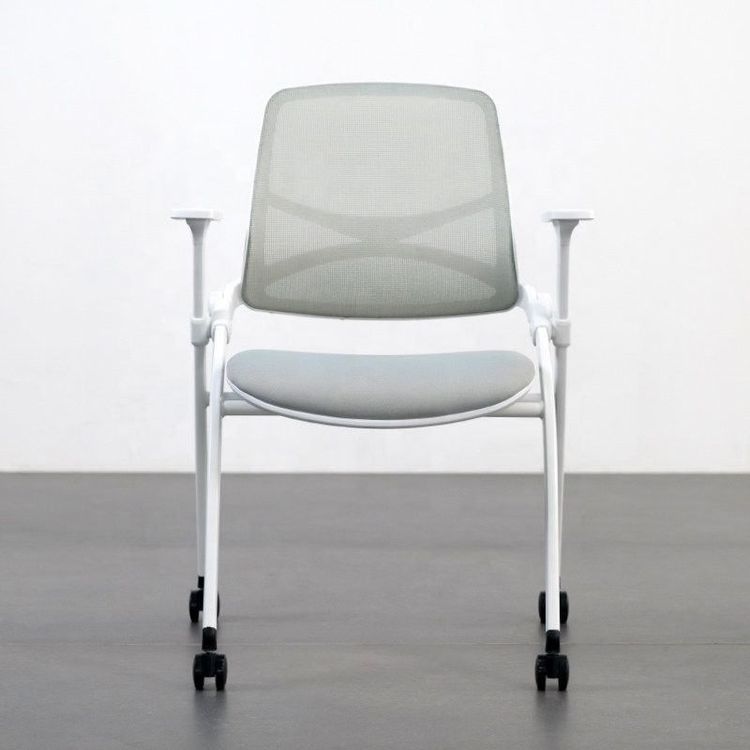
Office Chair Free Adjustment
The 'Office Chair Free Adjustment' feature enables a dynamic relaxation function through a chassis linkage structure, allowing the backrest to recline 15°–35° with a slight rocking motion. Its core purpose is to provide dynamic support and micro-relaxation, rather than full reclining.

Functional Implementation Principle
The free adjustment function relies on a complete chassis linkage structure, working in tandem with the chassis spring damping system and rotating shaft. When the user leans back, the seat and backrest recline simultaneously, creating a dynamic range of slight rocking within the set angle. The recline angle can be adjusted and locked using the handle on the armrest, or set to infinite suspension. The built-in damping spring automatically adjusts the rocking sensation based on the user's weight: lighter individuals experience less rocking to avoid excessive movement, while heavier individuals receive sufficient support to ensure dynamic balance.
Ergonomic Advantages
- Relieves static lumbar pressure: Prolonged sitting with a fixed spinal curve leads to sustained increases in intervertebral disc pressure. The free adjustment function naturally extends the lumbar curve through slight recline, reducing intervertebral disc pressure by 20%–30% and alleviating stiffness and soreness in the lumbar muscles.
- Promotes lower limb blood circulation: When reclining, the pelvis shifts slightly backward and the knees naturally lift slightly, improving poor venous return in the lower limbs caused by prolonged sitting and reducing the risk of leg numbness and swelling.
- Dynamically stabilizes core muscles: Slight rocking activates the core muscles of the waist and abdomen for micro-adjustments, preventing muscle strain caused by prolonged static exertion and offering better lumbar support than a completely fixed chair.
- Provides quick relaxation without interrupting work: Without needing to get up or leave the workstation, a 10–15 second recline can quickly relieve tension in the shoulders, neck, waist, and back, making it ideal for micro-breaks during work.
Limitations on Applicable Scenarios
The free adjustment function is not 'universally suitable'. High-precision, highly focused tasks (such as precision drawing, code debugging, financial reconciliation, etc.) require absolute visual stability and zero deviation in hand movements. Slight backrest rocking can cause visual offset and operational errors, reducing efficiency and increasing error rates. Additionally, individuals prone to motion sickness or with sensitive constitutions may experience dizziness, nausea, and scattered attention due to continuous slight rocking, making it difficult to concentrate on work.