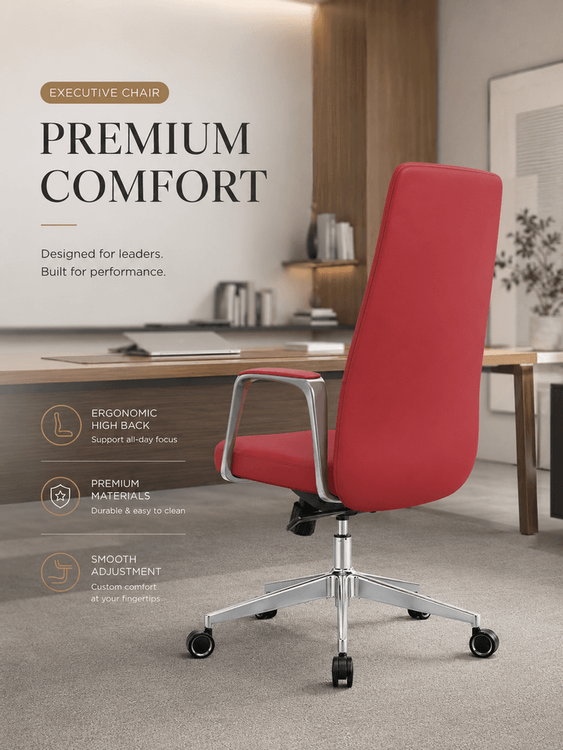
Office Chair Forward Tilt for Desk Work
The forward-tilt function of office chairs is crucial for those who work at a desk for long periods. However, it is essential to distinguish between 'true forward tilt' and 'false forward tilt' and use them appropriately to avoid health risks.

I. Physiological Stress and Risks of Forward-Tilt Desk Work
When leaning forward at a desk, the spine bears 2.3 times the pressure it does when sitting upright. If the posture is incorrect (e.g., with a hollow lower back), the intervertebral discs can degenerate more rapidly due to excessive compression, leading to lower back pain, back pain, and even herniated discs. Additionally, pelvic retroversion forces the lumbar muscles to contract compensatorily, further increasing fatigue.
II. Core Differences Between True Forward Tilt and False Forward Tilt
True Forward Tilt (Seat and Back Synchronization)
- Mechanism: The seat and backrest move in tandem. When the body leans forward, the backrest tilts forward simultaneously, keeping the lumbar support in constant contact with the lower back, maintaining pelvic neutrality, and preventing lumbar suspension.
- Effect: The hip angle exceeds 100°, achieving 'straight-spine forward tilt.' The spine remains naturally upright, the back receives stable support, and pressure on the thighs is reduced. For example, the Motia R9 PRO uses DriftSync™ chassis technology to synchronize the backrest and seat movement, adapting to prolonged focused office work.
False Forward Tilt (Seat Only Forward Tilt)
- Mechanism: Only the seat tilts forward, while the backrest remains fixed. When the body leans forward, the back detaches from the backrest, leaving the lower back suspended.
- Effect: It fails to address the issue of lower back pressure and may even exacerbate muscle fatigue due to distorted posture.
III. Scientific Usage Recommendations
- Prioritize True Forward Tilt Function: Ensure the backrest and seat move in tandem to avoid lumbar suspension.
- Avoid Prolonged Locking of Angles: The forward-tilt mode is an auxiliary sitting posture. It is recommended to get up and move every 30 - 45 minutes, switching to an upright or reclined posture to promote blood circulation.
- Combine with Other Adjustable Functions: Use adjustable lumbar supports, headrests, etc., to further distribute pressure and enhance comfort.
Summary: The true forward-tilt function effectively alleviates lower back pressure during forward-tilt desk work through mechanical linkage design. However, it must be combined with regular movement and proper usage to maximize spinal health protection.