
Office Chair for Government Agencies
The core information about office chairs for government agencies can be elaborated from three aspects: functional design, procurement examples, and policy specifications:
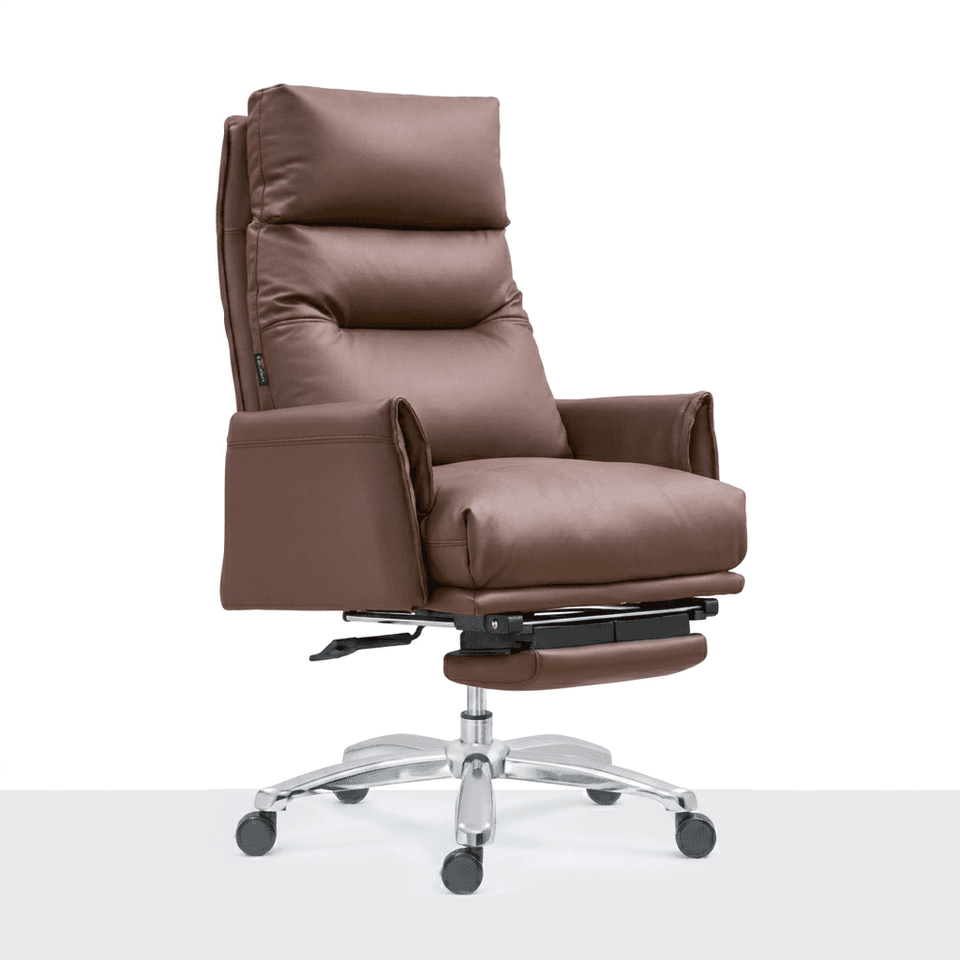
I. Functional Design: Multiple Adjustable Mechanisms to Meet Personalized Needs
Some office chairs for government agencies adopt a modular design, integrating five types of functional mechanisms:
- Foot Adjustment Mechanism: Through a retractable or flippable footrest, it accommodates the leg support needs of users of different heights, alleviating fatigue from prolonged sitting.
- Lockable Cover Mechanism: The seat bottom is equipped with an openable storage cover for storing documents or small office supplies. After closing, it is secured with a lock, balancing practicality and security.
- Arm Adjustment Mechanism: The armrests feature adjustable clasps that support locking in height, angle, and front-back positions, preventing arm suspension or excessive abduction, in line with ergonomic requirements.
- Lumbar Tension Adjustment Mechanism: The chair back incorporates an elastic support structure, allowing users to adjust the lumbar support intensity via knobs or sliders to accommodate the lumbar curves of users with different body types.
- Other Auxiliary Mechanisms: Some high-end models also include functions such as headrest height adjustment and backrest tilt locking to further optimize sitting comfort.
II. Procurement Examples: Customization and Cost Control Coexist
Taking Suzhou Xinzhida Furniture Co., Ltd. as an example, its "Chinese-style Government Agency Chair" has the following characteristics:
- Material and Craftsmanship: It uses a solid wood frame paired with PU leather upholstery, balancing durability and a solemn appearance, meeting the stability requirements of government agencies for furniture.
- Price and Bulk Procurement: Priced at 220 yuan per unit, it supports large-scale customization and can reduce unit costs through centralized procurement, suitable for public sectors with limited budgets.
- Design Adaptability: The high-back design conforms to ergonomic principles, meeting the needs of prolonged office work, while the Chinese-style aesthetic harmonizes with the office environment of government agencies.
III. Policy Specifications: Emphasis on Environmental Protection and Safety Standards
According to the "Provisional Standards for the Configuration of Office Equipment and Furniture in Central Government Agencies," the configuration of office chairs must adhere to the following principles:
- Energy Conservation and Environmental Protection: Priority should be given to materials with low volatile organic compounds (VOCs) to reduce the emission of harmful substances such as formaldehyde, in line with green procurement requirements.
- Safety and Confidentiality: The structure must be stable to prevent accidental injuries caused by mechanism failures; storage designs must prevent information leakage risks.
- Universality: Although specific configuration details are not explicitly outlined, furniture dimensions and functions are required to be suitable for most office scenarios to avoid resource waste.
The design of office chairs for government agencies must balance functionality, cost, and policy requirements, enhancing the user experience through modular mechanisms while achieving efficient utilization of public resources through compliant procurement and standardized management.


