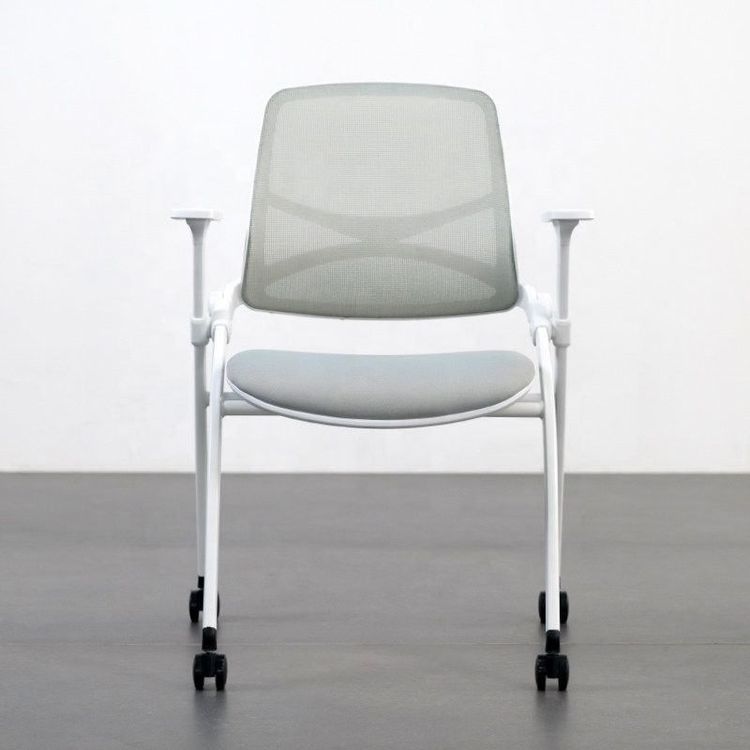
Daily Routine of an Office Chair Factory
The daily routine of an office chair factory encompasses two core areas: production and management, involving key processes such as material inspection, structural processing, assembly and debugging, quality testing, and process monitoring.

In the production process, material selection and inspection are the first steps. The factory must rigorously screen raw materials such as steel, plastics, mesh fabrics, and foam to ensure they meet environmental standards and quality requirements. For example, steel must be tested for strength and corrosion resistance, plastics evaluated for plasticity and harmful substance content, mesh fabrics tested for breathability and abrasion resistance, and foam examined for density and resilience. This step ensures product quality from the source through sampling inspection and laboratory analysis.
The forging and processing of core structures rely on precision molds and multiple processes. Steel is stamped and bent to form the initial chair frame, with welding ensuring secure component connections. Grinding and polishing eliminate burrs and sharp edges, enhancing surface smoothness. Plastic components are molded through injection molding, requiring controlled temperature and pressure to prevent deformation. Mesh fabrics are cut and sewn to ensure neat edges and uniform tension. Each process must strictly adhere to process parameters, such as maintaining welding temperature within a specific range to prevent material overheating and brittleness.
The assembly and debugging process requires workers to follow standardized procedures. Components such as chair frames, seat cushions, backrests, and armrests are installed sequentially and secured with screws, clips, or gas springs. During debugging, adjustable functions such as height adjustment, rotation, and tilting are tested to ensure smooth operation without unusual noises. For example, gas springs undergo repeated lifting tests for durability, while armrests are adjusted for height and angle to verify flexibility.
Final inspection and quality control serve as a critical barrier before product shipment. Quality inspectors conduct comprehensive evaluations from three aspects: appearance, functionality, and stability. Appearance checks include paint uniformity, stitch neatness, and component symmetry. Functionality tests cover adjustment range, load-bearing capacity, and safety locking mechanisms. Stability tests simulate daily use scenarios, such as tilting and rotation, to verify structural strength. Non-conforming products must be reworked or scrapped to ensure zero defects in shipped products.
Daily management focuses on monitoring and optimizing production processes. The factory establishes standardized operating procedures (SOPs) requiring workers to follow steps strictly to minimize human errors. For example, welding processes mandate protective gear and parameter recording, while assembly requires component list verification. Additionally, regular training and skill assessments enhance worker proficiency, while real-time data monitoring systems track production efficiency and yield rates, providing a basis for process improvements.