
Electric Cylinder for Office Chairs
If office chairs require functions such as height adjustment, tilt control, or dynamic support, the technical characteristics of electric cylinders (servo electric cylinders) can meet these needs, but their adaptability must be verified in conjunction with specific designs.
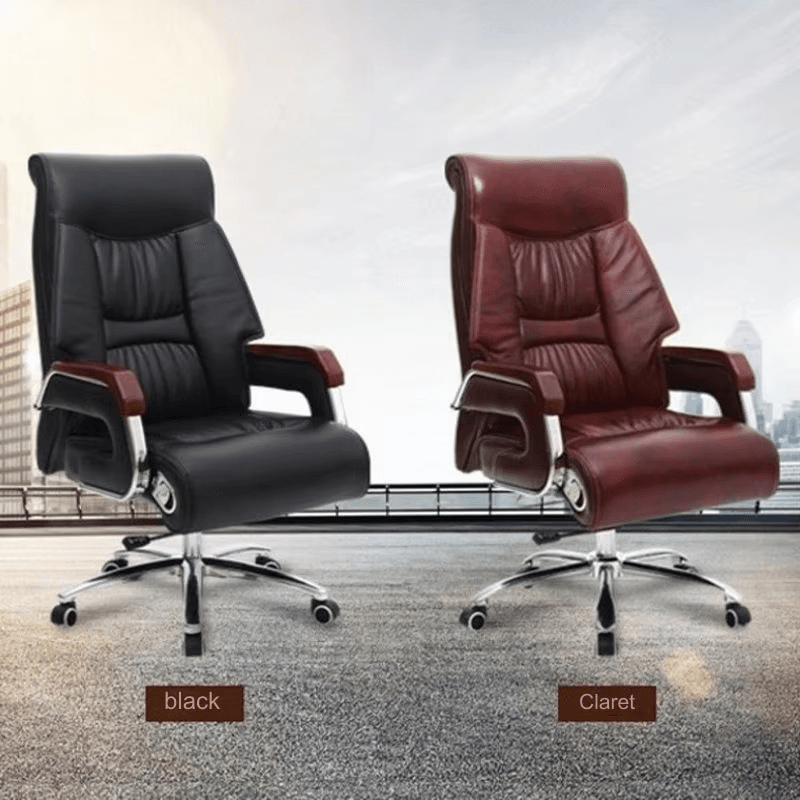
An electric cylinder is a high-precision linear drive device that combines a servo motor with transmission mechanisms such as a screw rod. Its core principle involves driving the motor to rotate using electrical energy, which is then converted into linear motion through a reduction gear and a screw-nut pair. This design provides three major technical advantages: low noise (precise coordination between the motor and transmission components reduces mechanical friction), stable operation (closed-loop control systems can correct positional deviations in real time), and rapid response (millisecond-level start and stop capabilities). In the furniture sector, low-voltage servo electric cylinders have been applied to the lifting systems of RV tables and chairs, enabling millimeter-level height control through voltage adjustment and maintaining structural stability even in tilted positions.
When applying electric cylinders to office chairs, the following adaptability aspects must be verified:
- Load Matching: The appropriate electric cylinder model with suitable thrust must be selected based on the weight of the office chair (including the user) to avoid overloading, which could cause motor overheating or screw deformation.
- Spatial Layout: The installation of the electric cylinder must consider the chair's structure, such as hiding the cylinder beneath the seat or inside the backrest, while ensuring that the transmission components do not interfere with the user's range of motion.
- Control Method: Control can be achieved through buttons, remote controls, or integrated mobile app functionality, enabling single-button lifting, multi-position memory, or linkage with human body sensors (e.g., automatic support angle adjustment based on sitting posture).
- Safety Design: Overload protection, emergency stop buttons, and anti-pinch features must be included, such as immediately stopping and retracting when abnormal resistance is detected.
Typical Application Scenarios:
- Height Adjustment: The electric cylinder drives the seat up and down along a column to accommodate users of different heights or varying desk heights.
- Tilt Control: Dual cylinders work together to adjust the backrest angle, providing stepless support in conjunction with a damping system.
- Dynamic Support: Combined with pressure sensors, the electric cylinder can adjust the seat hardness or backrest curvature in real time to alleviate fatigue from prolonged sitting.
It should be noted that electric cylinders are more expensive than traditional gas springs or mechanical structures and require regular maintenance (e.g., lubricating the screw rod and checking the motor status). Therefore, they are more suitable for high-end office chairs or medical rehabilitation chairs that demand high functional precision.



