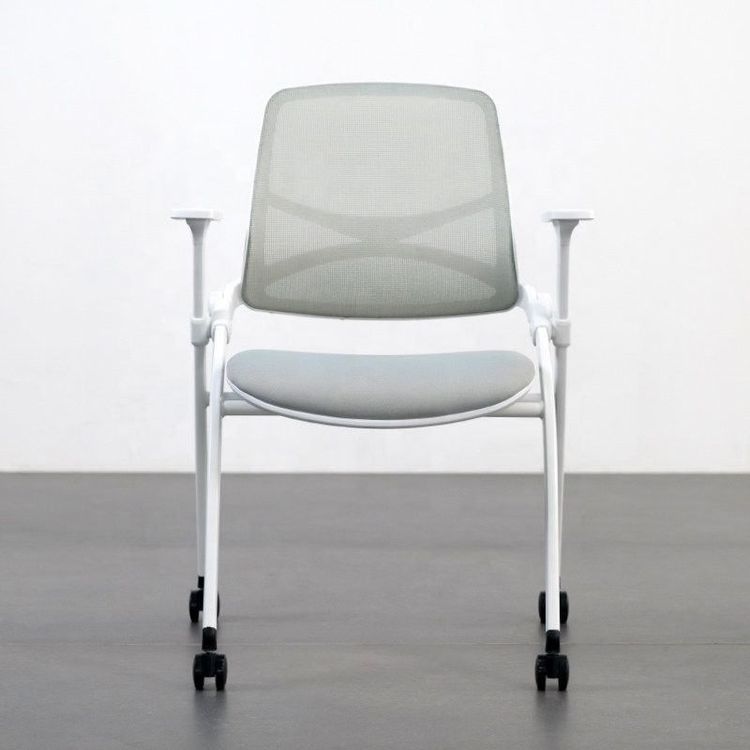
The Office Chair is Deformed
The repair method for a deformed office chair should be selected based on the specific part and degree of deformation. Common situations and their treatments are as follows:

If the caster wheels are deformed or damaged (e.g., the chair tilts to one side), it may be due to bent or broken caster wheels. First, invert the chair to check if the caster wheels make even contact with the ground and observe for any breaks, cracks, or significant deformation. If damage is found, purchase new caster wheels that match the original specifications to avoid secondary damage caused by size or weight-bearing differences.
If the wooden board is deformed (e.g., the seat or backrest board is bent or warped), the root cause is an imbalance between the wood's moisture content and the humidity of the usage environment. For minor deformations, two repair methods can be used:
- Heavy Pressure Method: Place the deformed convex side down and evenly distribute heavy objects (such as books or dumbbells) on top. Press for 3 to 7 days to gradually restore the wood fibers to a flat state.
- Moist Heating Method: Cover the concave side with a damp towel and use a hairdryer or iron on low heat (avoid high temperatures that could scorch the wood) to soften the fibers, then apply pressure to adjust the shape.
If the wooden board is severely twisted, cracked, or delaminated, the repair cost may exceed the value of replacement. It is recommended to directly replace the new board or the entire seat surface.
If there is an imbalance in the support structure or design flaws (e.g., the chair tilts forward), handle it on a case-by-case basis:
- Loose chassis screws: Check if the M8 hex socket screws at the connection between the five-claw wheels and the seat cushion are tightened. Loose screws can cause the seat surface to tilt or wobble.
- Ineffective backrest spring adjustment: Adjust the support force by rotating the backrest resistance knob to restore the backrest's elasticity.
- Long-term pressure deformation of nylon chair legs: Use a level to detect the tilt of the seat surface. If the error exceeds 3°, it may indicate damage to the gas lift or seat. Replace the gas lift that meets the weight-bearing standard (e.g., a Class 3 or Class 4 gas lift) or directly replace the seat assembly.
Before repairing, disconnect the power (for electric chairs) and clean the chair surface to avoid scratches or accidental contact with components during operation. If the deformation involves a broken metal frame or aged plastic parts, it is recommended to contact professional repair personnel to ensure safety and stability.