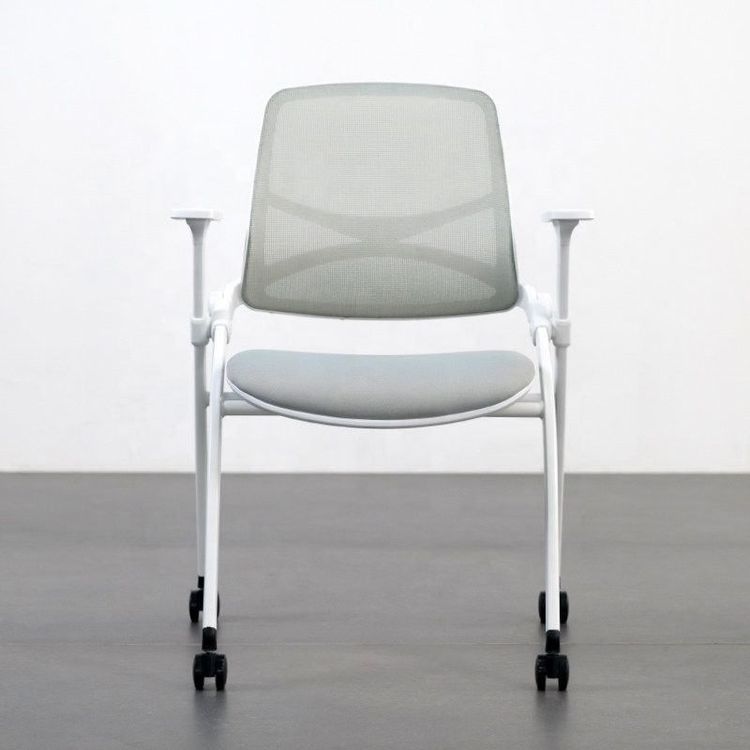
Office Chair Cushion Foam
The high-resilience foam commonly used in office chair cushions belongs to high-resilience polyurethane foam, a type of polyurethane polymer material with special properties.

Core Characteristics High-resilience foam features an open-cell structure with a porosity of up to 95.5%. This structure provides excellent breathability, effectively reducing the stuffy feeling during prolonged sitting. Its rebound time is ≤3 seconds, and the compression set is ≤4%, meaning it can quickly recover its shape after being compressed and is resistant to deformation over long-term use, providing lasting support. Additionally, this material has anti-mite properties, making it suitable for office environments with high hygiene requirements.
Density and Classification The density range of high-resilience polyurethane soft foam typically falls between 25kg/m³ and 80kg/m³. Based on rebound performance, it can be classified into standard and high-performance types. Higher density indicates stronger support and durability, but also comes with increased costs. Standard types are suitable for general office settings, while high-performance types are better suited for users who need to maintain proper sitting posture for extended periods or require higher support.
Production Processes The main production processes include mold foaming and continuous foaming. Mold foaming involves shaping through molds, producing products with high density and stable performance. It is particularly suitable for manufacturing cushions and backrests that require precise fitting to the human body's contours, such as the lumbar support parts of office chairs. Continuous foaming is suitable for large-scale production, with lower costs, but the product density and performance uniformity are slightly inferior to those produced by mold foaming.
Application Scenarios There are factory-customized foam sponge cushions available on the market, such as those provided by Guangzhou Hengtong Automobile Seat Co., Ltd. These cushions can be customized according to the size and design requirements of office chairs, using high-resilience molded cotton or sponge as the core material, balancing comfort and support. Customized production can also optimize parameters such as cushion thickness and hardness to meet the needs of users with different body types.
Selection Advice When selecting, pay attention to indicators such as density, rebound time, and compression set. Products with high density (≥50kg/m³) and short rebound time (≤2 seconds) generally offer better performance. For long-term use, it is recommended to choose cushions produced by mold foaming, which offer superior durability and support stability.