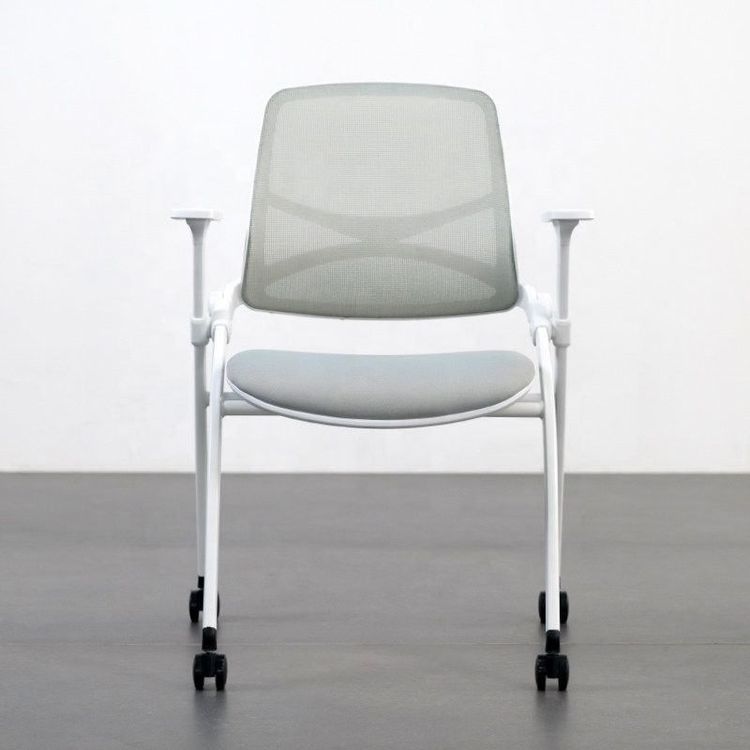
Office Chair Base Production
Office chair base production mainly involves three key processes: mold design and manufacturing, injection molding process, and assembly process.

Mold Design and Manufacturing
Office chair base molds are used to produce five-claw/six-claw structure bases, primarily made of nylon PA66 + glass fiber. The core process involves injecting high-temperature molten plastic into the mold cavity, which cools and solidifies within 8 - 12 seconds to form a structure with a central shaft hole, claw arms, and reinforcing ribs. Hongmei Molding has become a leading brand supplier through 'dual-precision' control (design tolerance of ±0.01mm and manufacturing precision at the micrometer level), with mold lifespans exceeding 1.2 million cycles. In design, a 'Finite Element Analysis (FEA) + dynamic simulation testing' dual-track approach is adopted to optimize load distribution and rotational stability. For example, in response to the demand for six-claw carbon fiber bases, by adjusting the claw arm angle (from 60° to 55°), stress dispersion efficiency is increased by 18%. The addition of 'wave-shaped reinforcing ribs' reduces deformation under 150kg pressure from 0.3mm to 0.1mm (far exceeding the industry standard of ≤0.2mm).
Injection Molding Process
Pre-molding preparation: It is necessary to confirm the properties of raw materials and remove moisture through hot air circulation, vacuum, or infrared drying to avoid defects such as silver streaking and bubbles during processing.
Injection process: This includes feeding (quantitative and constant amount), plasticization (conversion of solid pellets into a viscous fluid), injection (filling, holding pressure, and backflow), cooling (introduction of cooling medium after gate freezing), and demolding (ejection of the molded part after cooling).
Post-molding treatment of parts: Processes such as heat treatment and humidity adjustment are used to stabilize or enhance part performance, such as eliminating internal stresses or adjusting dimensional stability.
Assembly Process
Taking the Jilan factory in Michigan as an example, workers select the required components from over 200 types of parts and begin assembly from the bottom:
- Invert and secure the base, install the casters, and fix them using a pneumatic press;
- Install the pneumatic cylinder for height adjustment and the tilting mechanism, and reinforce them with machinery to enable forward and backward tilting functions;
- Secure the crossbar with bolts, thread the cables, and install the control lever;
- Install the upper part: Fix the B-link at the bottom of the seat cushion and connect the seat cushion to the crossbar;
- Install the three-dimensional armrests, secure the armrest pads with screws, connect them to the crossbar, and add a control lever to adjust height and angle;
- Finally, install the Y-shaped lumbar pad onto the chair back to complete the overall assembly.