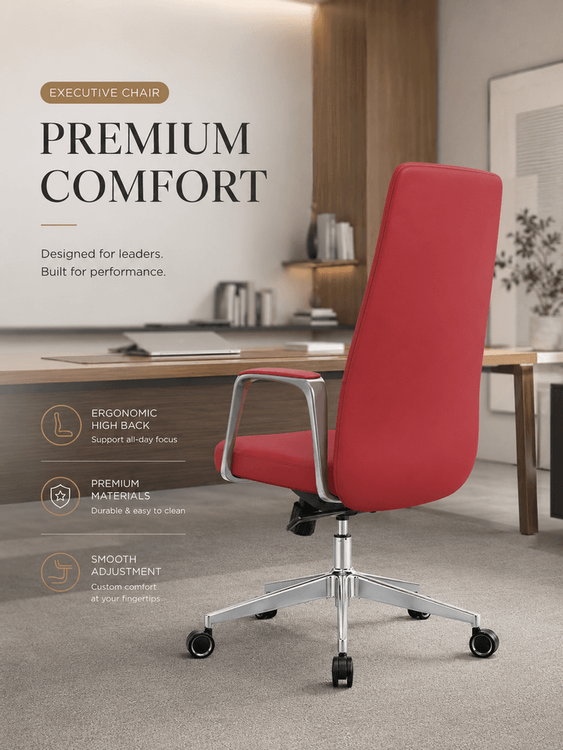
Office Chair Backrest for Work
Office chair backrests for work come in a variety of types, each with unique design features. When selecting one, it's essential to consider comfort, functionality, and safety comprehensively.

1. Common Backrest Types and Design Features
The design of an office chair backrest directly impacts the user experience. For example, the Herman Miller Sayl Classic features an integrated single-back design. Its soft plastic material conforms to the curves of the lower back, providing uniform support and is suitable for users who maintain a seated position for extended periods. This design reduces local pressure by minimizing seams and rigid components, but it may have limited adaptability for users with significant body shape differences.
Another common type is the zoned backrest, such as those found in ergonomic chairs, which often employ a separate lumbar and back design. The lumbar area is reinforced with elastic support or adjustable modules, while the back maintains moderate elasticity to distribute pressure. This design more precisely matches the natural curvature of the spine, making it especially suitable for individuals with lumbar muscle strain or those who sit for long periods.
Additionally, mesh-material backrests are widely used in training chairs or staff chairs due to their excellent breathability. The elastic mesh structure maintains support while promoting air circulation, reducing heat buildup. However, they may become loose over time, so attention should be paid to material durability.
2. Price and Functional Differences
The market offers a wide range of prices for office backrest chairs, from basic models costing tens of yuan to high-end models costing hundreds of yuan. Low-priced products typically feature simple fixed structures with non-adjustable backrest angles, suitable for short-term or infrequent use scenarios. In contrast, mid-range to high-end products often come equipped with multi-directional adjustment features, such as customizable backrest height, recline tension, and even headrest position, catering to different heights and sitting habits. For example, some ergonomic chairs automatically adjust the backrest support angle as the user leans back, maintaining a neutral spine position.
3. Safety and Quality Risks
When purchasing, safety should be a top priority. There have been cases where office chairs have suddenly broken during use due to insufficient strength in the backrest connection bolts or material aging, posing a risk of falling. Therefore, it's advisable to choose products that have passed national mandatory safety certifications (such as GB/T 39223.1-2020) and inspect the connection between the backrest and seat cushion for stability, ensuring there are no obvious gaps or looseness. For adjustable backrests, verify the reliability of the locking mechanism to prevent accidental sliding during recline.
4. Suitable Scenario Recommendations
For extended periods of office work, prioritize adjustable ergonomic chairs, whose backrests can dynamically conform to spinal changes. If space is limited or the budget is tight, consider fixed mesh-back chairs, which offer breathability and basic support. For conference or training scenarios, lightweight training chairs with foldable backrests can save storage space.