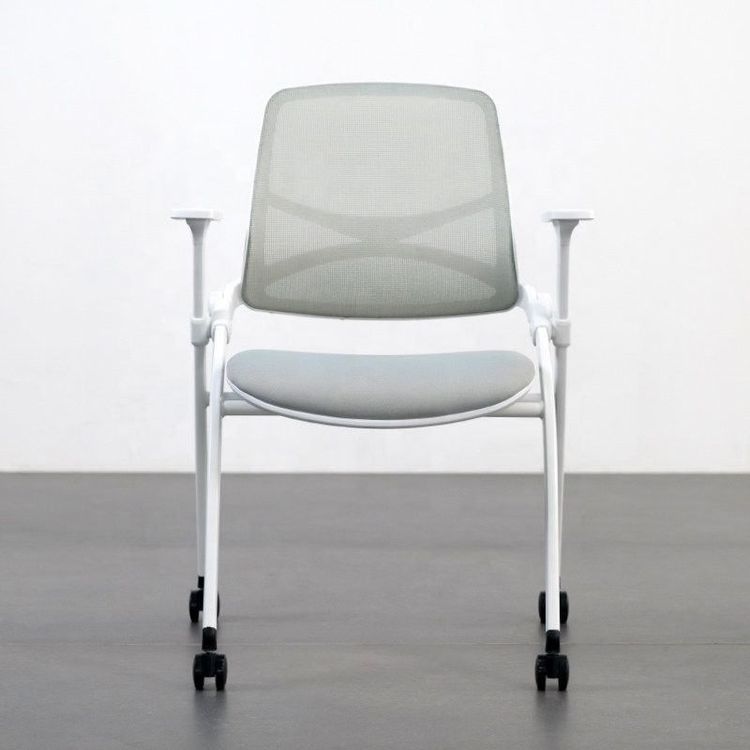
Office Chair Armrest Photos
Although we cannot directly provide photos of office chair armrests, we can offer a detailed description of their common types and characteristics to help you form a clear understanding.

As an important auxiliary component of office chairs, armrests primarily serve to support the arms and relieve shoulder and neck pressure, with their design directly affecting user comfort. Based on differences in material and structure, common types can be divided into the following three categories:
1. Fixed Plastic Armrests
These armrests are commonly found in budget-friendly office chairs, molded in one piece from engineering plastics with a smooth surface and high hardness. They are characterized by a simple structure and low cost but lack adjustability, with fixed height and angle, only meeting basic support needs. Some designs incorporate anti-slip textures or soft rubber coatings on the armrest surface to enhance friction and tactile comfort, suitable for users with limited budgets or low adjustment requirements.
2. Adjustable Metal/Composite Material Armrests
Mid-to-high-end office chairs generally adopt this design, with the core advantage being multi-dimensional adjustability. Through mechanical structures (such as knobs, buttons, or levers), they enable height adjustment, forward and backward movement, angle rotation, and even width adjustment to accommodate different heights, sitting postures, and desk heights. In terms of materials, metal frames (such as aluminum alloy) provide stable support, while the contact surfaces are often covered with soft PU or memory foam for durability and comfort. For example, the 4D armrests on ergonomic chairs can synchronously match the natural curvature of the arms, effectively dispersing pressure.
3. Mesh/Breathable Material Armrests
For prolonged desk work scenarios, some designs replace the armrest surface with high-elasticity mesh or 3D breathable fabric. These materials, formed through weaving processes, create dense pores that enhance air circulation, reducing the stuffy feeling on the armrest contact surface, especially suitable for summer or users who sweat easily. Structurally, they are usually combined with metal or plastic frames to ensure support while improving breathability, commonly found in high-end ergonomic chairs.
Purchase Recommendations: If you need flexibility to adapt to multiple scenarios, prioritize adjustable armrests; if you value cost-effectiveness and have low usage intensity, fixed plastic armrests are sufficient; if you use them for long periods and sweat easily, mesh materials can enhance the experience. When making a choice, consider your body type, usage habits, and budget comprehensively.