Office Chair Always Slides
Office chairs often slide, and the following methods can be used to solve the problem:

Use fixed chair feet design
Fixed feet prevent sliding by increasing the contact area and friction between the chair feet and the ground. This is commonly seen in scenarios requiring long-term fixation, such as laboratories and industrial workshops. The advantage is strong stability, but it sacrifices mobility convenience and needs to be weighed according to usage needs. For example, in an office environment requiring frequent adjustment of sitting posture, fixed feet may affect work efficiency.Use wheels with brakes
Wheels with brakes lock the rotation of the wheels through a mechanical structure, and users can control the locking state through foot pedals or manual operations. These wheels offer high flexibility and are suitable for scenarios requiring intermittent fixation, such as conference rooms or home office areas. It is necessary to regularly check the sensitivity of the brake device to avoid locking failure due to wear.Adopt gravity self-locking wheel design
Gravity self-locking wheels use the user's body weight to trigger the locking mechanism: when the user sits down, the wheels automatically lock; when standing up, they unlock and resume sliding. This design balances convenience and safety and is particularly suitable for scenarios requiring quick switching between fixed and mobile states, such as medical facilities or design studios. However, it is necessary to ensure that the wheel's load-bearing range matches the user's weight to avoid locking failure.Place a rough carpet under the chair
Increase ground friction to reduce sliding, suitable for temporary scenarios with low fixation requirements. Choosing short-pile or rubber-backed carpets yields better results, but attention should be paid to cleaning and maintenance to avoid reduced anti-slip effects due to dust accumulation. This method is low-cost but may affect the smoothness of chair movement.Reinforce the seat cushion and chair feet
- Anti-slip seat cushion: Choose a cushion with silicone particles, anti-slip dot plastic, or rubber patterns on the bottom to prevent sliding by increasing contact surface friction. Strap-type, hook/buckle-type fixing methods can further enhance stability.
- Anti-slip foot pads/covers: Add rubber or silicone anti-slip covers to the chair feet or lay anti-slip mats to directly increase friction between the chair feet and the ground. This method is suitable for hard floors (such as tiles and wooden floors) and is relatively low-cost.
Adjust sitting posture and chair settings
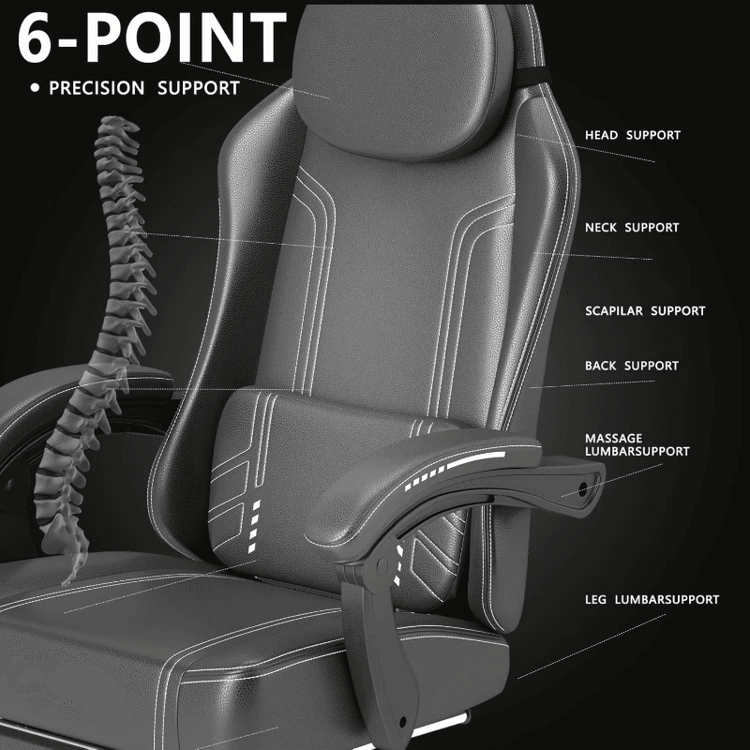
Maintaining a correct sitting posture can reduce the risk of sliding: adjust the seat height so that both feet are flat on the ground and the thighs are parallel to the ground, ensuring stable distribution of the center of gravity on the seat surface. If the chair is equipped with adjustable lumbar support or armrests, they should also be adjusted to a comfortable position according to body shape to avoid sliding caused by leaning forward or backward.
When choosing a solution, it is necessary to comprehensively consider the usage scenario, cost, and convenience. For example, for home offices, trying anti-slip seat cushions or carpets first may be preferable; for corporate office areas, it is suitable to replace wheels with brakes or gravity self-locking wheels in batches; for long-term fixation needs, choosing a fixed chair feet design may be the best option.