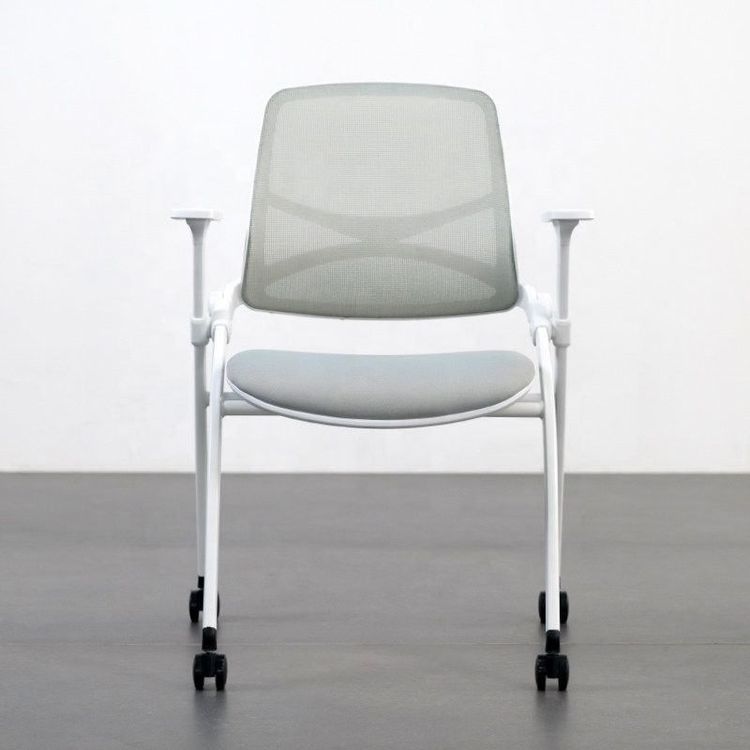
Office Chair 100 Degrees
The design of office chairs at a 100-degree angle is primarily based on ergonomic principles, aiming to enhance comfort, maintain proper sitting posture, and prevent health issues.

1. Balance Between Support and Relaxation
A 100-degree backrest angle can simultaneously meet the support needs of the back, buttocks, and legs. This angle allows the back to fit snugly against the backrest, evenly distributes pressure on the buttocks, and lets the legs hang naturally, forming a physiological curve close to that of standing. This design reduces localized pressure concentration during prolonged sitting, preventing numbness or fatigue caused by poor blood circulation. For example, when the backrest angle is too upright (e.g., 90 degrees), the lower back lacks support, leading to muscle tension; conversely, an overly large angle (e.g., 130 degrees) may cause the body to slide down, forcing the legs to stretch forward to maintain balance, thereby increasing lumbar pressure. As the lower limit of the reclining angle range (100°-130°), 100 degrees provides moderate relaxation while avoiding the additional burden caused by excessive looseness.
2. Conforming to the Natural Curve of the Spine
The human spine has an 'S'-shaped curve, and a 100-degree backrest angle matches the arc of the lumbar lordosis, dispersing pressure on the lumbosacral region. Studies have shown that when the backrest angle is between 100° and 110°, the pressure on the lumbar intervertebral discs is reduced by approximately 30% compared to an upright sitting posture, effectively minimizing compensatory muscle contractions. This design helps maintain a 'neutral sitting posture', where the pelvis is neutral and the spine is naturally extended. Long-term use can reduce the risk of lumbar disc herniation and lumbar muscle strain.
3. Standard Basis for Ergonomic Chairs
The standard lumbar support angle for professional ergonomic chairs is typically between 100° and 110°, with 100 degrees marking the starting point of this range, balancing support and flexibility. For office scenarios requiring frequent posture adjustments, this angle allows users to recline slightly to relieve fatigue while maintaining control over the keyboard and screen. Additionally, when combined with adjustable headrests, armrests, and other accessories, a 100-degree angle can further optimize support for the neck, shoulders, and arms, forming a complete sitting posture support system.
Summary: The 100-degree angle of office chairs is a core parameter in ergonomic design, achieving an optimal balance between comfort and health by scientifically distributing body pressure and conforming to the shape of the spine. This angle not only aligns with human physiological structure but has also been extensively validated through experiments, serving as an important design basis for preventing sedentary-related injuries and enhancing work efficiency.