
Mobile Office Chair
Mobile office chairs are office seating equipped with rotation and mobility functions, enhancing flexibility and work efficiency.
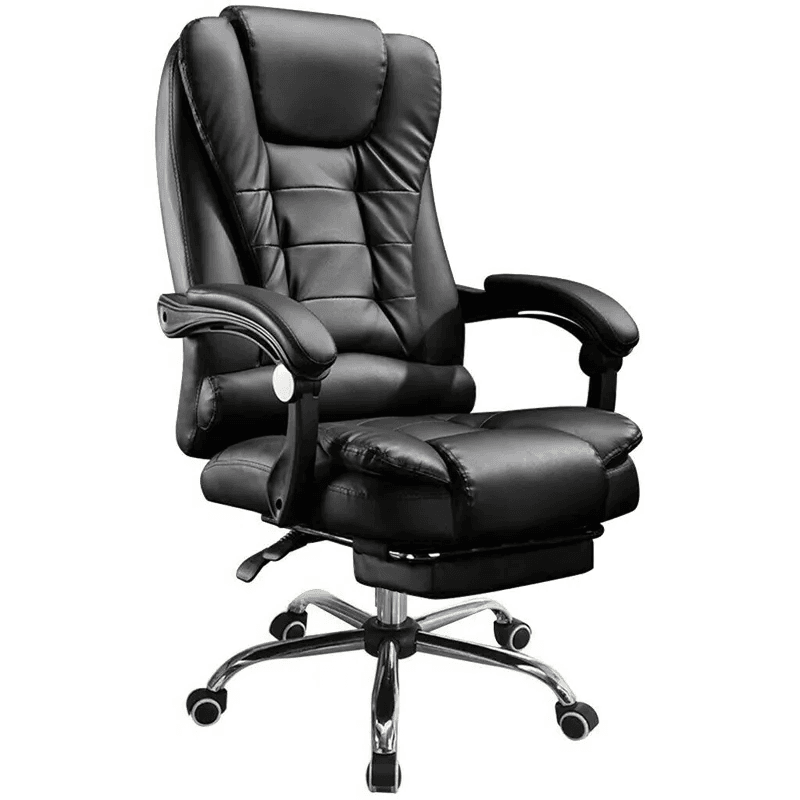
I. Common Types and Functional Features
Swivel Office Chairs
These chairs feature 360-degree rotation, allowing users to adjust their direction without standing up, facilitating easy access to surrounding documents or communication with colleagues. The rotation mechanism is designed for smooth operation, typically using high-precision bearings or roller structures to ensure no stuttering during rotation, reducing operational resistance, and thereby improving work efficiency. For example, in an open office environment, employees can quickly respond to collaborative needs in different directions by rotating their chairs, avoiding efficiency losses caused by frequent standing and walking.Office Task Chairs
Office task chairs add height adjustment capabilities to the rotation function. Their core components include a seat cushion, backrest, five-star base, casters, and a pneumatic height adjustment system. The pneumatic rod adjusts the height by compressing air, allowing users to adjust the chair height according to desk height or personal sitting habits, keeping their line of sight level with the computer screen and reducing neck fatigue. Additionally, the elastic support and roller design support rotation buffering and mobility locking functions: the elastic support absorbs impact during rotation, enhancing comfort; the casters are equipped with brake mechanisms to lock the chair's position when needed, preventing unwanted movement.Ergonomic Chairs (e.g., Henglin L700)
Some high-end ergonomic chairs further optimize adjustment functions. Taking the Henglin L700 as an example, its armrests support dual-axis 5D adjustment, including dual-joint composite 720-degree rotation. This design allows users to adjust the armrest position according to the natural angle of their arms, providing precise support whether typing, reading, or resting, reducing shoulder and neck strain. Furthermore, ergonomic chairs typically feature multi-directional adjustment functions in areas such as lumbar support and headrests, accommodating the needs of users with different body types.
II. Application Scenarios and Advantages
Mobile office chairs are widely used in modern office settings, with their core advantages being improved space utilization and collaboration efficiency. In open offices, employees can quickly participate in group discussions by rotating their chairs; in scenarios requiring frequent task switching, the height adjustment function helps users maintain proper sitting posture, reducing fatigue from prolonged sitting; and multi-directionally adjustable ergonomic chairs meet personalized needs, with long-term use helping to prevent occupational diseases.


