
How to Select Folding Office Chair: Key Criteria & Tips
When selecting a folding office chair, focus on six core criteria: material durability, ergonomic design, flexibility, scenario adaptability, safety, and market feedback, and evaluate them comprehensively based on your needs.
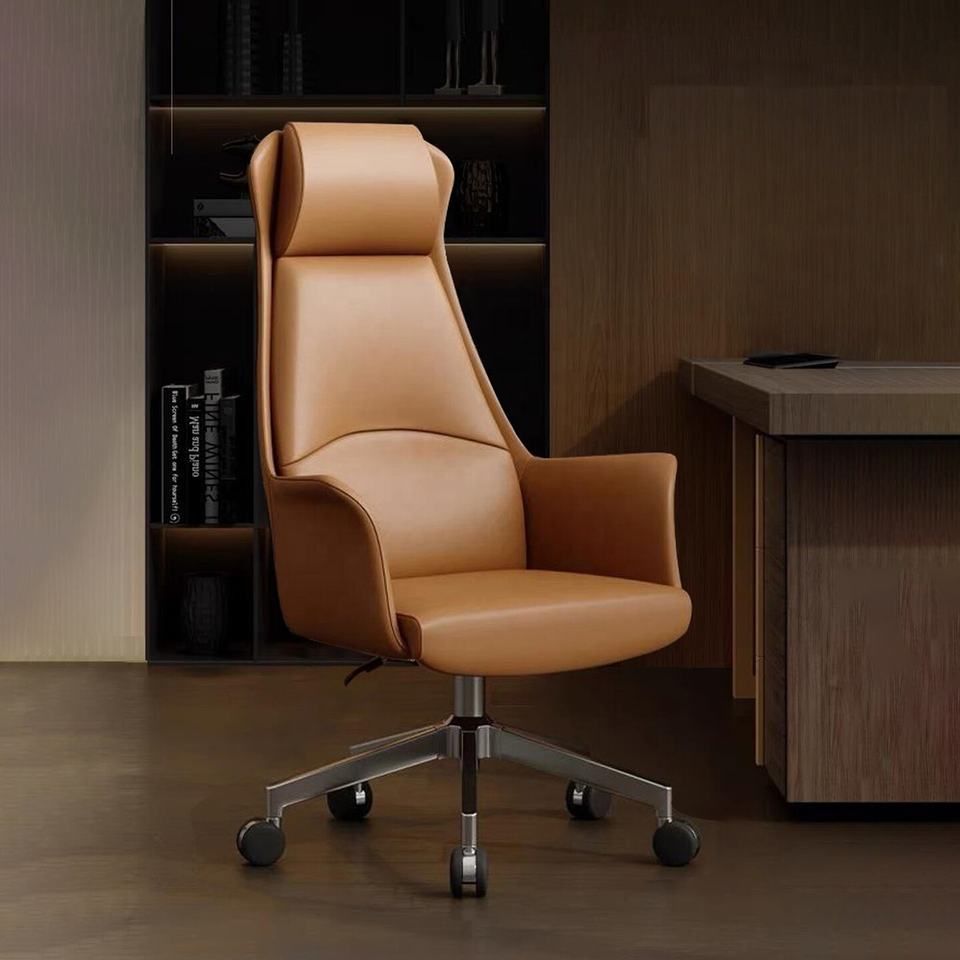
1. Material and Durability: Prioritize Sturdy and Low-Maintenance Combinations
The frame material of a folding office chair directly affects its lifespan. Metal frames (such as aluminum or steel) are the preferred support structure due to their high strength and resistance to deformation; if portability is required, high-strength engineering plastics can be considered, but their impact resistance must be confirmed. The seat and backrest materials should balance breathability and wear resistance; polyester-cotton blends or breathable mesh fabrics can reduce heat buildup during prolonged sitting, while ensuring tight stitching to prevent cracking after long-term use.
2. Ergonomic Design: Focus on Adjustability and Lumbar Support
Protecting spinal health is crucial for long hours of office work. Adjustability is key: a reclining backrest (recommended angle: 100°-135°) can distribute lumbar pressure, adjustable armrests can prevent shoulder and neck strain, and some models support seat depth adjustment to accommodate different leg lengths. For lumbar support, dynamic lumbar support (such as an arched backrest that adjusts with body movement) is superior to fixed support, but note that such features are more common in high-end non-folding models due to structural limitations. When selecting, prioritize models with a backrest curvature that fits the human S-shape.
3. Flexibility and Space Utilization: Confirm Folding Dimensions and Mobility
Evaluate the folding function based on actual scenarios: measure the height and width of storage space and choose a model with a folded thickness of ≤15 cm to save space; if frequent movement is required, prioritize models equipped with silent wheels (such as polyurethane) to avoid scratching floors and reduce noise. Additionally, check that the folding mechanism operates smoothly and that the latch is secure to prevent accidental unfolding during use.
4. Scenario Adaptability: Balance Design Style and Budget
In hybrid office settings, minimalist designs (such as solid-color metal frames with low-saturation seats) blend more easily into different environments; to enhance space vitality, bright-colored fabrics like orange or blue can be chosen, but note that light-colored fabrics show dirt more easily. For budget allocation: mid-range models (500-1500 yuan) focus on basic durability, while high-end models (2000 yuan and above) may add customized features like dynamic support or memory foam seat cushions; choose based on usage frequency and health needs.
5. Certification and Safety: Check Frame Load Capacity and Structural Stability
Prioritize products certified by BIFMA (Business and Institutional Furniture Manufacturers Association) or GB/T 10357 (Chinese furniture mechanical performance testing) and confirm a frame load capacity of ≥120 kg (static test). For metal frames, check that welds are smooth; for plastic components, ensure there are no sharp edges to prevent tipping or scratching risks.
6. Market Trend Reference: Value User Reviews and Long-Term Comfort
Market data from 2026 shows that consumers prioritize credible comfort (such as seat cushion resilience and backrest fit), lifespan (frame fatigue resistance), and verifiable ergonomic effects (such as clinical testing certification). It is recommended to refer to third-party reviews to compare long-term usage feedback across different models and avoid relying solely on merchant claims.


