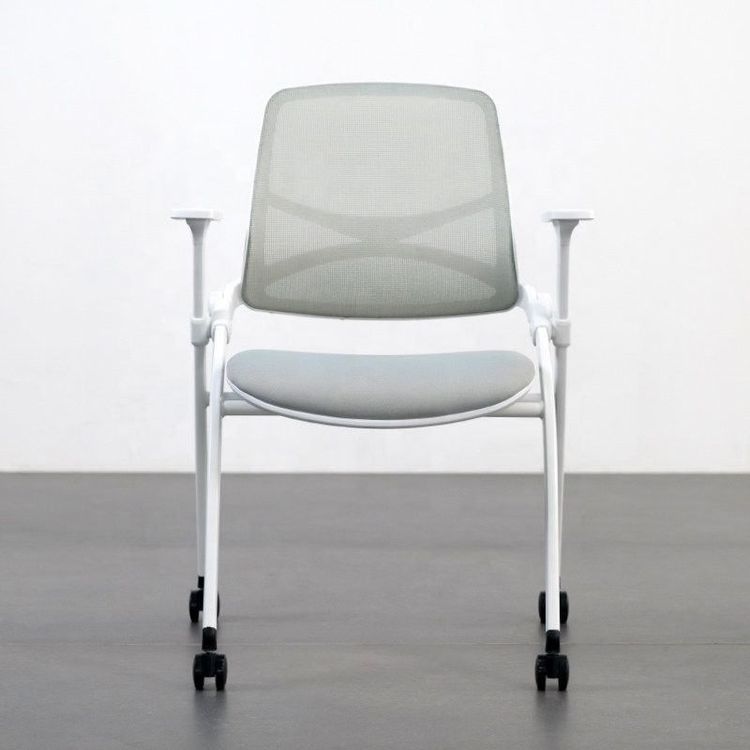
How to Make Office Chairs Comfortable
The comfort of office chairs needs to be comprehensively achieved from five aspects: safety components, dynamic support, material selection, adjustment dimensions, and sitting posture adaptation.

1. Safety and Durability of Core Components The gas lift must pass international certifications such as SGS or BIFMA to avoid explosion risks. The five-star base is preferably made of steel, which can support weights over 200 pounds, while nylon is only suitable for short-term, light-duty use. The linkage armrests use a metal gear structure, which is three times more durable than plastic structures and less likely to loosen over long-term use.
2. Dynamic Support Design The chair back should support infinite adjustment up to 160 degrees to ensure that the lumbar spine is not left unsupported when leaning back. The adjustable lumbar support should have a minimum adjustment range of 5 centimeters to match the lumbar curves of people of different heights (such as aligning with the third lumbar vertebra). The front edge of the seat cushion is designed with a 3-centimeter waterfall curve to disperse pressure on the thighs and prevent leg numbness. The interior is filled with virgin foam, providing good resilience and support while conforming to the curves of the buttocks.
3. Material Selection The material of the chair surface directly affects comfort and durability:
- Mesh Material: High-quality DuPont Techmesh can maintain elasticity for three years, while ordinary mesh tends to loosen within six months. Mesh provides breathability and elastic support through tightly stretched fiber grids, offering good heat dissipation and the ability to adaptively adjust tension distribution.
- Foam Material: Virgin foam is often used for interior filling due to its excellent resilience, providing counter-support. Low-quality foam is prone to collapse and reduces comfort over long-term use.
4. Adjustment Dimensions of the Support System
- Height Adjustment: Use the gas lift to adjust the seat surface so that the feet are flat on the ground and the thighs are parallel to the ground, maintaining pelvic stability and avoiding lumbar pressure caused by pelvic tilt.
- Recline Locking: The chair back follows the body as it leans back, distributing the weight of the upper body to the chair back and reducing pressure on the lumbar discs. Chairs with a recline locking function can fix the reclining angle at a comfortable position (such as 100-120 degrees).
- Armrest Adjustment: Support the forearms to keep the shoulders naturally relaxed and avoid shoulder and neck strain. It is advisable to choose 4D armrests that can be adjusted up, down, forward, backward, and sideways to suit different work scenarios.
5. Seat Depth and Backrest Support Adjustment Adjust the seat depth so that the thighs are fully supported, leaving a two-finger gap behind the knees to avoid compressing blood vessels. When leaning back, the pelvis should tilt slightly forward, keeping the thighs at a 95-degree angle to the horizontal plane to reduce lumbar pressure and allow the gluteal muscles to relax naturally. The lumbar support should align with the third lumbar vertebra to provide precise support.