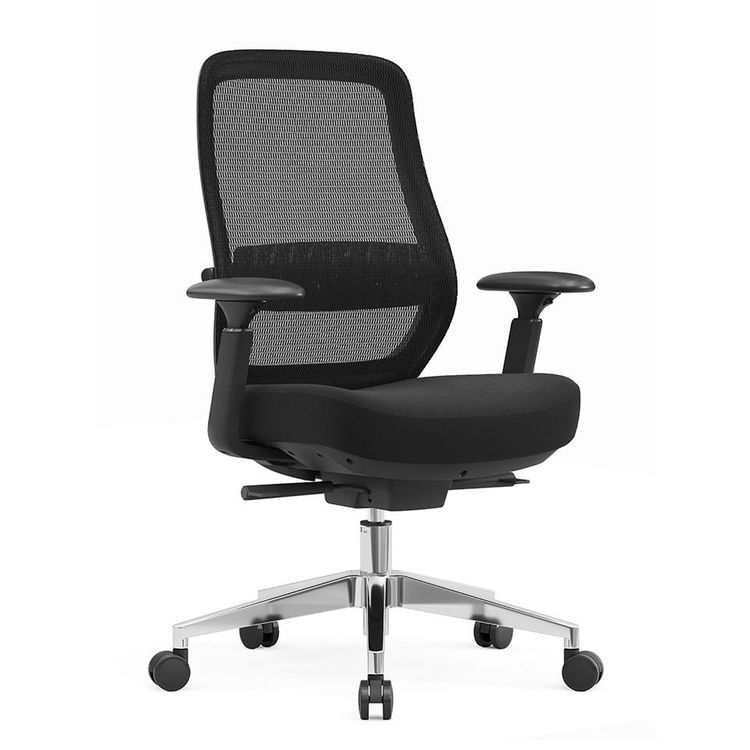
How to Choose the Right Office Chair Premium
When choosing a premium office chair, focus on six core elements: ergonomic design, adjustability, materials, support, budget, and user reviews. Here is a detailed analysis:

1. Prioritize ergonomic design
The core value of a premium office chair lies in its ergonomic design, which improves posture and reduces pressure on the spine and muscles through scientific support structures. For example, lumbar support should fit the curvature of the lumbar spine to prevent slouching; an adjustable headrest supports the cervical spine and relieves neck fatigue. Premium models from brands like Herman Miller and Steelcase are renowned for their “dynamic support” technology, where the backrest automatically adjusts its angle as the body moves, maintaining the natural curve of the spine and reducing the risk of lower back pain over time.
2. Look for rich adjustability features
Premium chairs typically come with multi-dimensional adjustability, including seat height (to accommodate users of different heights), armrest height/angle (to prevent arm suspension), and backrest tilt (for forward-leaning work or reclining rest). Some models also offer seat depth adjustment (to fit different leg lengths) and synchronized tilt mechanisms (where the backrest and seat cushion move together to maintain body balance). These features ensure the chair can be customized to individual body types and work habits, enhancing comfort and efficiency.
3. Material determines comfort and durability
Premium chairs often use breathable mesh or high-density foam for seat and backrest materials. Mesh (like Herman Miller’s “PostureFit SL”) offers excellent breathability for long-term use; foam should have a density of at least 40kg/m³ to prevent sagging. For frame materials, aluminum or steel structures are more stable, while plastic components should be reinforced to prevent breakage. Additionally, the five-star base material (nylon or metal) affects chair stability, with metal bases being more wear-resistant.
4. Support should cover key areas
In addition to lumbar support, premium chairs should provide comprehensive support for the hips, shoulders, and arms. For example, an adjustable lumbar support can precisely target the L4-L5 region of the lumbar spine; 3D/4D armrests can be adjusted up, down, forward, backward, and even rotated to suit different scenarios like typing or reading; a split backrest independently supports the upper and lower back, reducing localized pressure.
5. Balance budget and cost-effectiveness
Premium chairs typically cost over 2000 yuan but offer lower long-term costs due to their durability (lasting over 10 years). If budget is limited, consider mid-to-high-end models from brands like Branch or SIHOO, which retain core ergonomic features (like adjustable lumbar support and breathable mesh) at about 60%-70% of the price of premium models. Avoid paying a premium for “pseudo-ergonomic” designs (like fixed armrests or no lumbar support).
6. Refer to user reviews and expert evaluations
Check real user feedback on e-commerce platforms (like Amazon or JD.com), focusing on comfort, durability, and after-sales service. Also, consult professional evaluations (like Wirecutter or Consumer Reports) for data on chair load-bearing tests, material environmental friendliness, etc., to avoid being misled by marketing hype.