How to Buy Panel Furniture: Start by Understanding the Core Materials
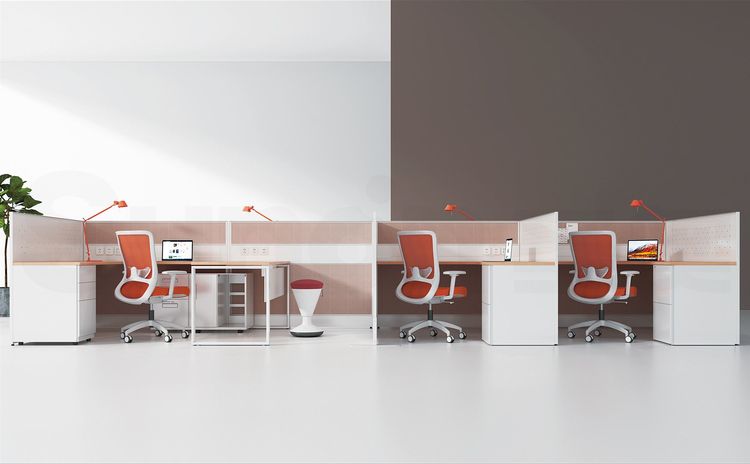
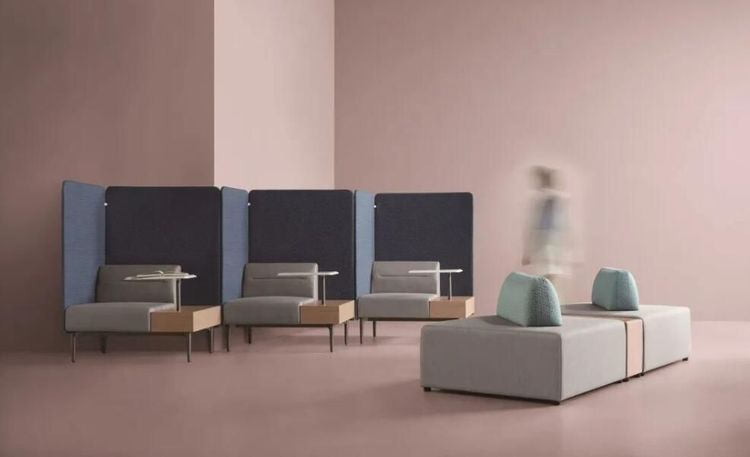
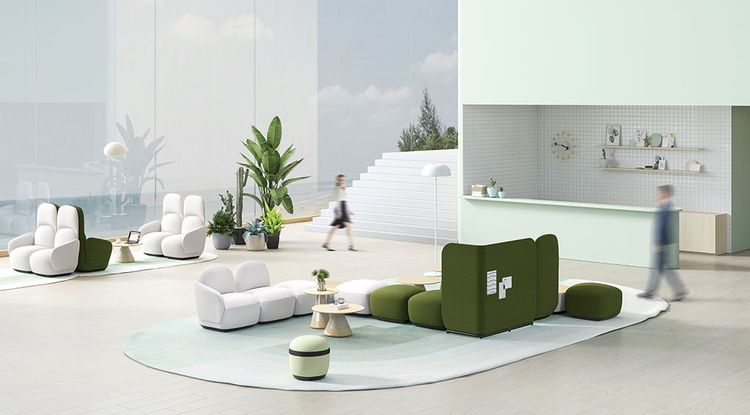
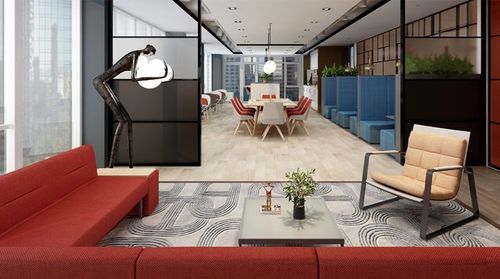
Sleek lines, rich shapes, and versatile combinations — panel office furniture is increasingly the favorite of modern-style office spaces, so the types and styles of panel office furniture on the market are becoming more and more abundant. So how can you purchase high-quality panel office furniture for your office space? The most important thing is to fully understand panel office furniture, so that even when facing new terminology or a dazzling array of promotional concepts, we can make wise decisions efficiently.
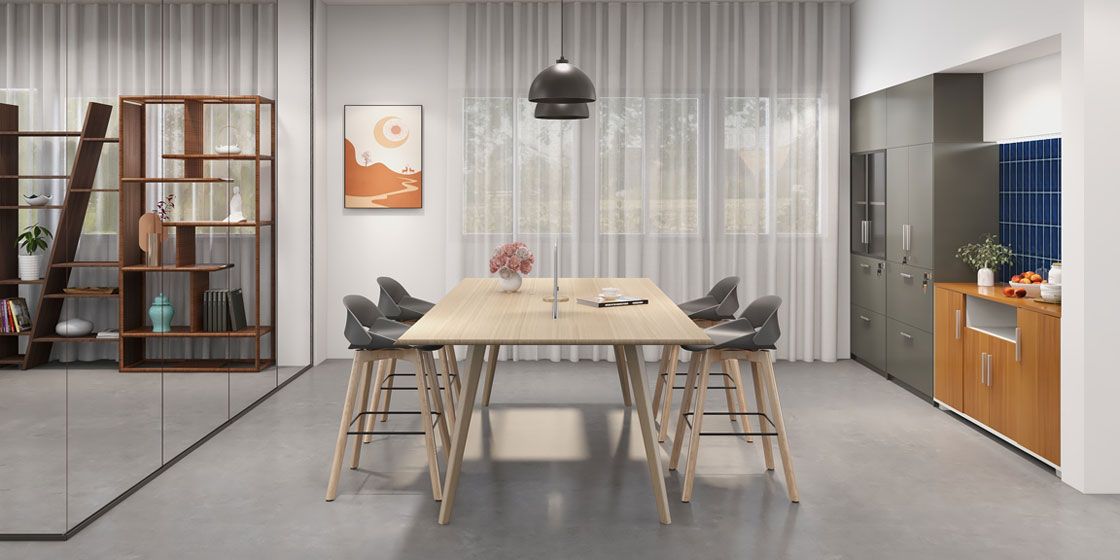
Panel office furniture refers to furniture made with engineered board as the base material, finished with PVC, melamine, wood veneer, or paper wood-grain surfaces. So the first step in understanding panel office furniture is mastering the basics of the core materials. Currently on the market, the base materials of panel office furniture are mainly MDF, melamine-faced board, particleboard, and plywood. All of them are engineered boards, each with its own pros and cons in use — let's learn about them together with Yihang.
MDF: A board made from wood or plant fibers, which are mechanically separated and chemically treated, mixed with adhesives, then formed under high temperature and high pressure. This board began to develop in the mid-1960s and is now widely used in the panel office furniture market. Free from defects such as knots and wormholes, and with minimal expansion and contraction, MDF holds a big advantage in curved and special-shaped designs of panel office furniture. Its structure is more uniform than natural wood, so users don't need to worry much about insect damage. In addition, its bending resistance and impact strength are better than particleboard's. However, its moisture resistance and load-bearing performance are not as good, so for panel office furniture made of MDF, you must strictly check whether the veneering, edge banding, and painting processes are properly done — this directly affects the stability of the board.
Melamine-faced board: Decorative paper or color-matching paper is soaked in melamine resin adhesive, dried to a certain degree, then laid onto the board surface and hot-pressed to form a decorative board. Because a protective film forms on the surface, it offers scratch resistance, high-temperature resistance, and good plasticity. It is common in office screens and has become one of the first choices for customized panel office furniture. The drawback is that it cannot be milled or engraved and only allows straight edge banding, and it really tests the edge banding process of panel office furniture — otherwise the edges chip easily. So when choosing panel office furniture made of this board, be sure to choose a panel furniture supplier that has mastered advanced edge-banding techniques; during screening, you can also ask them to provide relevant qualifications and proof of capability.
Particleboard: An engineered board made by cutting wood and other raw materials into chips or shavings, then pressing them with adhesives, waterproofing agents, and so on. As domestic panel furniture companies keep upgrading their pressing equipment, particleboard is becoming finer and finer, with a relatively uniform structure and increasingly wide applications. However, cutting can easily cause chipped edges, and the granular internal structure is not easy to mill, so it places high demands on the processing equipment of panel furniture suppliers.
Plywood: Commonly known as multi-layer board, plywood is made by rotary-cutting logs into veneers or slicing wood blocks into thin sheets, then gluing them together, usually with an odd number of layers. Plywood is generally classified by thickness. Its advantage, from the production perspective, is effectively improving wood utilization; in terms of performance, plywood has good structural strength, so panel office furniture made from it offers better bending resistance and moisture resistance. Even in southern cities with heavy humidity, you don't need to worry about warping or deformation. Note in particular that plywood's surface is not as smooth as MDF, and because adhesives are used, the requirements for drying and bonding techniques are high; otherwise the furniture will release a large amount of free formaldehyde, affecting the air quality of the office space.
In short: because the panel office furniture displayed on the market is finished product that has gone through veneering and edge banding, the base material cannot be seen with the naked eye. Besides listening to the salesperson's explanation, you can also ask them to show you samples of the base material. Of course, some furniture suppliers may pass off inferior materials, so we recommend choosing a strong, well-qualified panel furniture supplier when purchasing. We hope this sharing helps everyone purchase panel office furniture that is both satisfying and practical.