
Back to blog
Article
Hand-Drawing of Hospital Office Chair
Admin October 09, 2026
Hand-drawing of a hospital office chair requires a combination of structural accuracy, material representation, and functional simplification. The following steps and key points can be referred to:
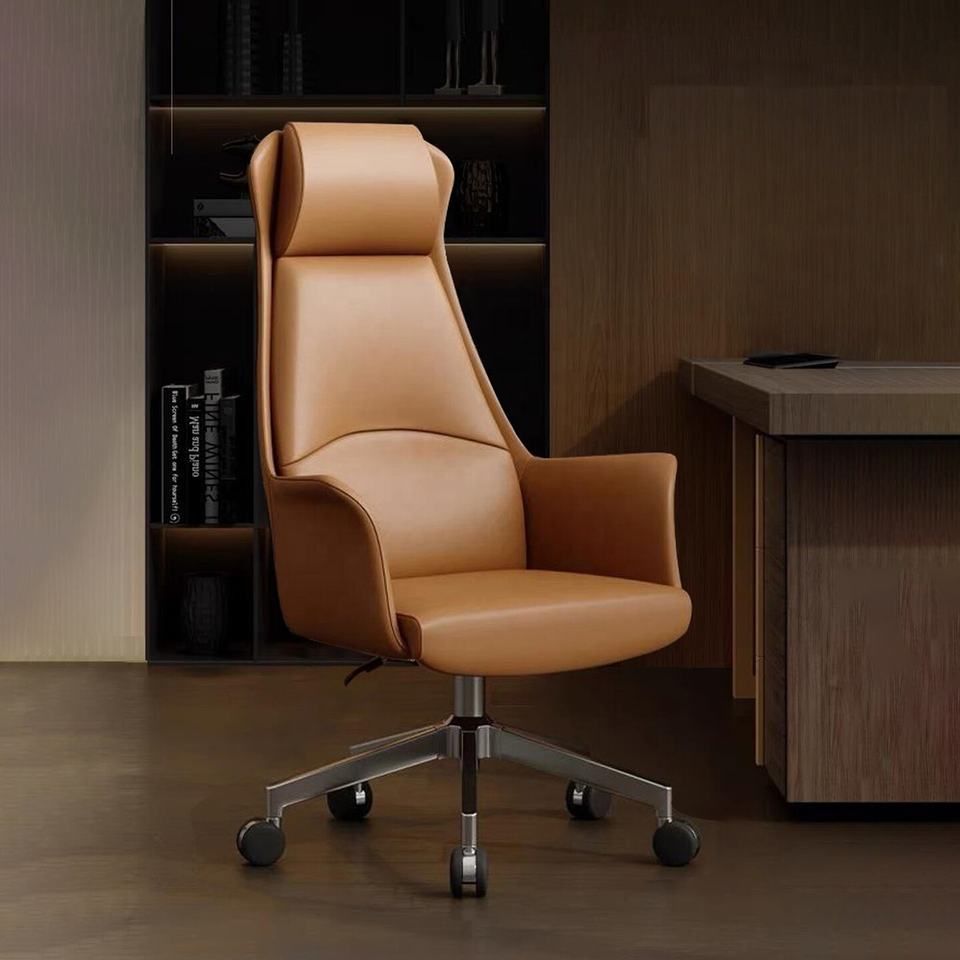
I. Structural Drawing: Perspective Construction from Whole to Part
Basic Framework Positioning
- First, determine the ground horizontal line and use it as a reference to draw the upper and lower contours of the chair. A hospital office chair typically consists of a leather seat and a metal caster base, and the proportional relationship between the two should be clarified through comparison. For example, the seat height accounts for approximately 60% of the overall height, while the base height accounts for 40%.
- The edges of the leather seat should be represented with curved lines to convey a sense of softness, avoiding rigid straight lines; the armrests can be simplified into variant rectangles, with the proportion of near-large and far-small adjusted according to the perspective relationship (e.g., the width at the near end is 2cm, while that at the far end is 1.5cm).
- The metal leg base consists of five legs connected to wheels, and attention should be paid to the front-back perspective relationship. It is recommended to first draw the legs on both sides and then add the middle leg to ensure that the contact points of the wheels with the ground are on the same horizontal line.
Detail Structure Enhancement
- The connection between the backrest and the armrests should be transitioned with a circular arc to reflect ergonomic design; the rotating shaft part of the metal legs should be marked with small circles or short lines to clarify the adjustable function.
- If drawing a chair with armrests, pay attention to the height difference between the armrests and the seat (usually 5-8cm) to avoid disproportionate ratios.
II. Light and Shadow and Texture: Visual Representation of Material Contrast
Leather Part Processing
- Use a soft pencil (e.g., 5B) to lay out the general dark areas, focusing on representing the recessed parts of the seat and armrests; deepen the darker areas such as the wheel and leg connection parts with a 7B pencil.
- The turning surfaces of the dark parts of the leather should have a natural transition, with the gray surfaces subtly processed with a 2B pencil. Leave a reflective surface (e.g., a bright strip at the edge of the seat) to enhance the soft texture; the width of the reflective surface accounts for approximately 1/10 of the seat width.
Metal Part Processing
- The highlights of the metal legs should be drawn with a hard pencil (e.g., H), with a small and sharp shape (e.g., a dot with a diameter of 0.5mm), forming a contrast with the soft highlights of the leather part.
- The connection between the legs and the wheels should be emphasized with a dark color (e.g., 8B) to reflect the heaviness of the metal; the surface of the wheels can be represented with short diagonal lines to convey gloss.
Overall Tone Coordination
- Smudge the dark and gray surfaces with a paper stump to make the tone transition more natural; then deepen the contrast (e.g., at the junction of the seat and the ground) with a 6B pencil to avoid a grayish picture.
III. Design Reference and Simplification Direction
Simple Sketch Style
- If rapid representation is required, decorative details can be simplified, highlighting the basic shape of the chair (e.g., backrest, armrests, wheels), and summarizing the structure with straight lines and circular arcs.
Environmental Art Hand-Drawing Inspiration
- Refer to the curved design of the Daiki chair or the ergonomic structure of the Chandigarh chair to optimize the backrest curvature and armrest height, making the hand-drawing both practical and artistic.
Precautions: Hospital office chairs are mainly for practical use. When hand-drawing, decorative elements (e.g., patterns, rivets) can be appropriately reduced, and emphasis should be placed on representing structural stability and functional rationality.
Related



