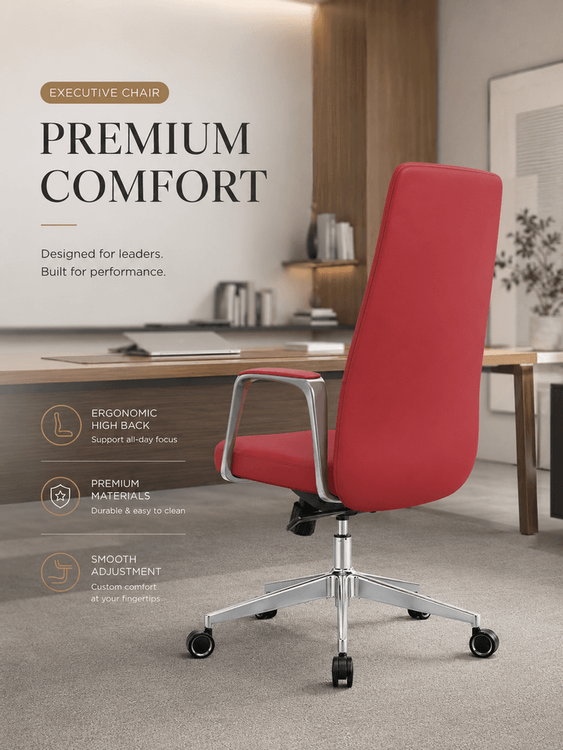
Office Chairs Recommended for Hemorrhoids Patients
When selecting office chairs, patients with hemorrhoids should focus on core parameters such as seat material, shape, backrest design, seat hardness, and armrest height, while also using specialized cushions to further alleviate symptoms.

Seat Material
Prioritize composite materials combining high-density foam with breathable mesh. High-density foam provides uniform support, preventing localized pressure buildup; breathable mesh promotes air circulation, reducing perineal heat and minimizing skin friction caused by sweating. These materials effectively disperse pressure on the buttocks during prolonged sitting while maintaining dryness and comfort.Seat Shape
Opt for a slightly forward-tilted seat design. This structure keeps the pelvis in a mild anterior tilt, reducing pressure on the rectal area and improving local blood circulation. Additionally, a forward-tilted seat encourages natural upright posture, preventing excessive lumbar lordosis from leaning back and indirectly reducing buttock strain.Backrest Design
Choose a backrest that conforms to ergonomic curves, providing targeted support for the L3-L5 lumbar segments. The curved backrest should align with the natural spinal curvature, distributing upper body weight evenly while maintaining proper posture and preventing compensatory buttock strain from a suspended waist. Some premium models offer adjustable lumbar supports for precise positioning based on individual needs.Seat Hardness
Medium hardness is ideal, with a standard of 2-3cm indentation upon sitting. An overly soft seat causes deep buttock sinking, increasing perianal pressure; an overly hard seat fails to disperse body weight effectively, leading to localized ischemia. Test by pressing the seat with your palm to assess rebound speed and support strength—slight indentation with quick recovery is optimal.Armrest Height
Adjust armrests to align with the natural elbow drop height (approximately 5-8cm below the desktop). Proper armrest height relaxes the shoulders, preventing upper body leaning forward from arm suspension, which can cause pelvic retroversion and increased buttock pressure. Some models support forward/backward and left/right armrest adjustments to accommodate different work scenarios.
Supportive Measures: Pair with hollow or U-shaped hemorrhoid cushions to directly reduce perianal pressure through central cutout designs; memory foam cushions adapt to body shape for personalized support; gel cushions offer superior heat dissipation, suitable for summer or sweaty individuals. It is recommended to stand and move for 5 minutes every hour, combined with pelvic floor exercises to promote blood circulation.