He Brings Digitalization to Furniture for Fortune 500 Companies
Office Furniture
By Yang Jun
Edited by Lina
The Yangtze River Delta has never lacked business legends.
In the early 1990s, a carpenter just past thirty arrived at the canal in Hangzhou with 2,700 yuan in his pocket and opened a tiny furniture workshop.
Thirty years later, that small workshop has grown into a furniture group with annual revenue of 3.6 billion yuan, selling products to 116 countries and regions and supplying office furniture to nearly 200 Fortune 500 companies including Google, Huawei, Siemens, Coca-Cola, and Alibaba.
That company is Yihang.
Among the countless private enterprises of the Yangtze River Delta, "hidden giants" like the Yihang Group are everywhere. They first seized the opportunities of the transition to a market economy, weathered the waves of branding and digitalization, and ultimately stood out in their respective niche tracks, going global and selling their products to the world.
The Growth Story of a Carpenter's "Little Workshop"
Ni Liangzheng, founder of the Yihang Group, was born in Pujiang, Zhejiang, in 1958. He began learning carpentry at 22 and later worked in furniture factories in Shanghai with his woodworking skills.
In the 1990s, China's furniture industry accelerated its shift toward a market economy, and furniture stores of every kind sprang up across the country like bamboo shoots after rain.
Riding that wave, Ni Liangzheng came to Hangzhou in 1991 with his 2,700 yuan. He rented a farmhouse with several fellow apprentices and set up a furniture workshop by the canal.
"I wasn't thinking much at the time—I just wanted to earn some money to support my family," Ni Liangzheng recalled in a later interview.
"Meticulous, careful, and always on time with deliveries"—that was how customers remembered Ni Liangzheng's little workshop back then. Fine craftsmanship and attentive service quickly made the workshop stand out, and its reputation in Hangzhou's furniture circle grew steadily as more and more customers arrived on recommendations from friends.
Still, the workshop format limited the growth of the business.
Compared with one-off custom orders for private furniture, bulk-purchased office furniture was clearly the bigger revenue stream. At the time, furniture factories run by Hangzhou's towns and subdistricts were developing fast. These factories could take on larger office-furniture orders—they had plants, storefronts, and sales channels. In his early years, Ni Liangzheng's small workshop often did contract manufacturing for them.
The skills were the same, but without a factory of his own, he couldn't win the orders directly.
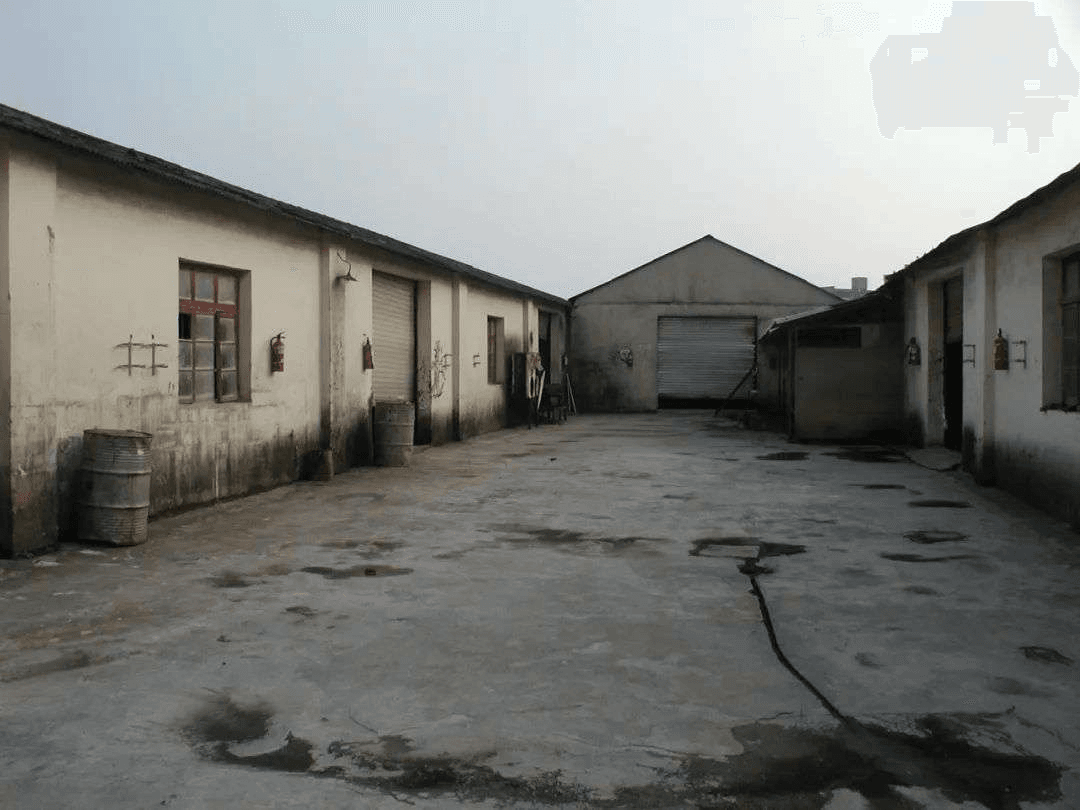
The Peony Furniture factory in its early days
The 1990s was an era for those who dared to dream and strive. Gritting his teeth, Ni Liangzheng pooled his savings and borrowed money, and in 1993 formally registered the Hangzhou Peony Furniture Factory—the predecessor of what would become the Yihang Group.
Events proved this choice correct.
By 1995, Peony Furniture's sales had reached nearly 5 million yuan. Not only was it winning large numbers of office-furniture orders, some of its products were also starting to make a name for themselves in shopping malls like Hangzhou Tower.
Over the following years, however, more and more players entered the office-furniture market and competition grew fiercer by the day.
After his first public tender bid failed, Ni Liangzheng keenly realized that in this fast-changing new era, good product quality alone was no longer enough.
In 1998, after hiring a professional brand-planning team to overhaul the company's image and trademark design, Peony Furniture was officially rebranded as "Yihang" and entered the fast lane of growth.
The New Challenge of the 21st Century: Digitalization
The Yihang Group succeeded in the 1990s by seizing two opportunities: the transition to a market economy, and the window of opportunity for brand building.
But with the arrival of the 21st century, new problems emerged.
Furniture manufacturing is a typical representative of China's light industry: labor-intensive, with long order processes and complex raw-material and product information.
When a company is still small, it can grind through with extra manpower and overtime. But as the group expanded rapidly, human effort alone was no longer enough.
Looking back at Yihang's development, it is easy to see that this is a company with a keen sense for the opportunities of each era's transition—one that embraces change before the wind arrives.
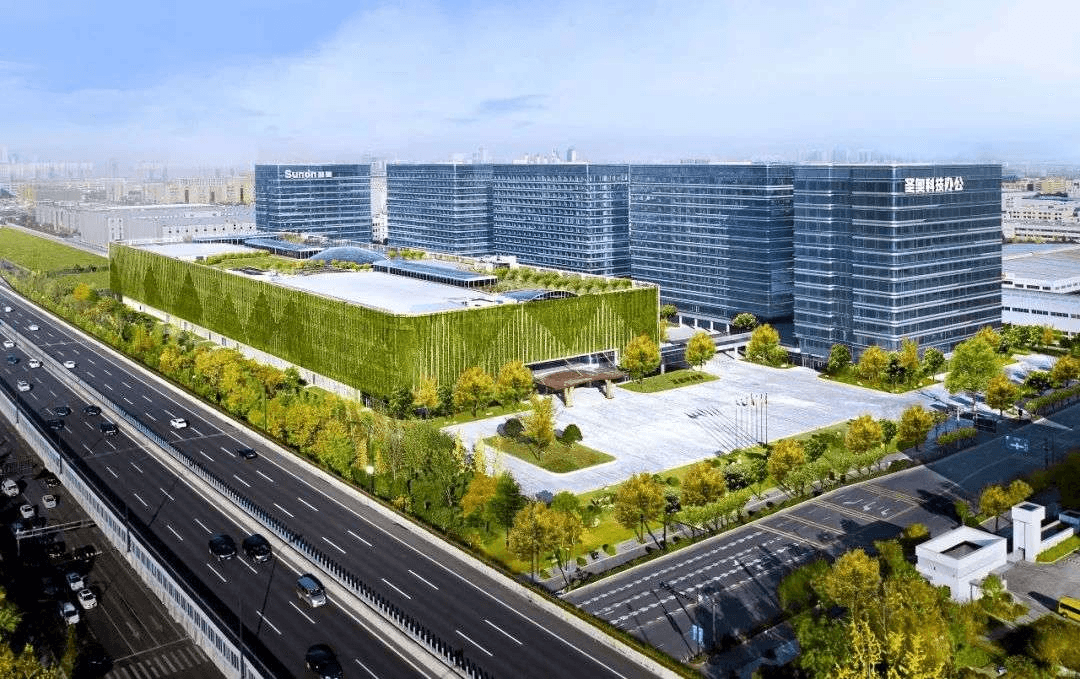
The Yihang campus
This time, Yihang bet on digital transformation.
In 2004, before personal computers were widely adopted, the Yihang Group brought in purchasing-inventory-sales software from outside to fully manage the flow of raw materials and products in and out.
Going digital greatly reduced Yihang's reliance on manpower, broke down the barriers between processes, and improved production efficiency. It also gave Yihang a deeper appreciation of just how necessary digital transformation was.
Having tasted the "sweetness" of digitalization, and as its business kept expanding, the Yihang Group went on to establish a dedicated IT and digitalization department. It not only perfected digital tools across R&D, production, and sales, but in 2010 launched a group-wide ERP project, unifying financial and business management and bringing the entire group's operating processes under control.
For better overall planning, in 2018 the Yihang Group elevated the digitalization department from a second-tier to a first-tier department, reorganizing it as the Information Center reporting directly to the President.
From then on, the Yihang Group formally launched its digital "1+N" strategy—"one data middle platform and N business middle platforms"—driving digital construction across the entire group.
The architect of this digital transformation is Zhao Xiujiang, CIO of Yihang Technology.
The First Link to Change: Warehousing
When Zhao Xiujiang joined Yihang in 2017, the first digitalization initiative he pushed forward was warehousing.
Zhao Xiujiang explained to 36Kr that shipments were often split into several packages, but because of the working habits of logistics staff, wrong or missing shipments happened from time to time. Order completeness became a chronic headache.
To solve this, Zhao Xiujiang led his team in building warehouse management systems across the factories.
What impressed Zhao most during this process was the different results the "pallet code" produced at the Xiaoshan and Haining bases.
To avoid slowing down the receiving of finished goods at the logistics center, the new warehouse management system added a "pallet code" on top of the carton barcode as the basis for scanning goods into the warehouse, which greatly improved operating efficiency.
It sounds simple, but in practice there were plenty of problems.
The Haining base handles several times the throughput of the Xiaoshan base. Barcode management went live at Xiaoshan successfully on the first try, but at Haining the business side insisted on checking goods in with carton codes because the pallet codes were inconvenient to operate. As a result, large quantities of goods piled up in the workshop aisles waiting to be scanned, and delivery timeliness dropped instead of rising.
After repeated fine-tuning between the project team and the business side, both sides finally arrived at a new solution: when finished goods are delivered to the logistics center, a completeness check is carried out first, followed by linking the pallet code with the carton codes. The logistics side then only needs to scan the pallet code to confirm whether goods can be received.
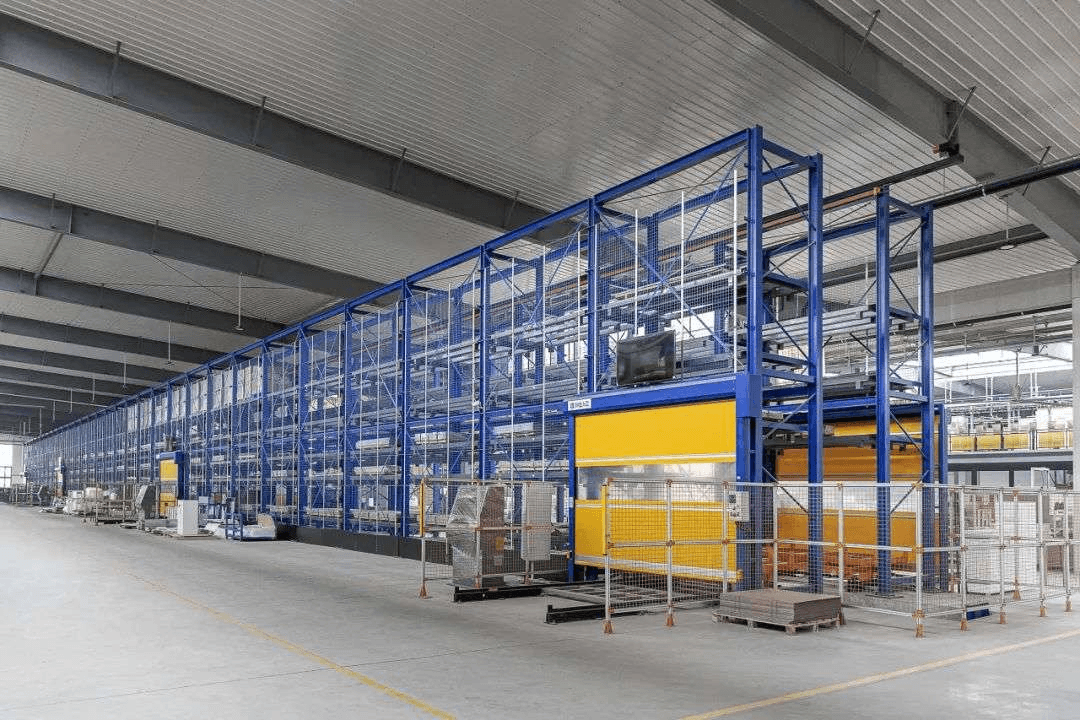
A Yihang Group warehouse
In the digital transformation of traditional manufacturing, "little episodes" like this are too many to count. Long business processes, complex work environments, and huge differences between plants—this is exactly what makes transformation so hard for traditional manufacturers.
After solving one small problem after another, the brand-new warehouse management system finally went live, greatly improving warehouse staff efficiency. Whether shipments totaled 1 billion yuan or 3 billion yuan, warehouse staff could complete the work promptly, and the rate of wrong or missing shipments fell to nearly zero.
Procurement Came Asking on Its Own
Like warehousing, procurement, logistics, and marketing are the areas where enterprises most urgently need digitalization. They directly affect the delivery of goods, and they are where problems surface fastest and most visibly.
The push to upgrade procurement digitally came from the procurement department itself.
Procurement staff said that when the Yihang Group first bought raw materials, communication with suppliers took place only through social tools like WeChat and QQ—not only unprofessional but also harmful to on-time delivery. Beyond that, there were numerous issues with delivery coordination, account reconciliation, invoicing, and more.
After the group launched its digital reform, business departments came to Zhao Xiujiang on their own initiative to request the supporting digital infrastructure.
To improve the procurement system, the Information Center built a dedicated supplier portal—an SRM system—for the procurement department, entering paper purchase orders, receiving notes, invoices, and other documents into reconciliation one by one. Tailored to business needs, it created a more convenient and professional procurement system and raised the efficiency of procurement staff.
For example, late in the procurement process, delivery coordination for different materials across different departments had long been a headache for delivery staff.
In the past, the group relied entirely on people to track down each department and arrange deliveries. Once the digital system went live, procurement data was connected online, and quality inspection and warehouse departments could collaborate fully through data. Delivery efficiency and the efficiency of receiving goods into the warehouse improved by at least 50%.
One-Stop Planning Solutions
"What Yihang provides is not just products, but one-stop planning solutions for office space," said Zhao Xiujiang.
In 2020, the Yihang Group began its transformation from a traditional office-furniture supplier into a provider of "one-stop total office space solutions."
Complex solution-based sales involve many collaborating departments and a long sales cycle, which posed a new challenge for the marketing department.
Yihang's sales system had previously been fairly complicated, with a direct-sales team, a distributor team, and a special-channel sales team. How to unify the management of customer assets and close the loop on the LTC process was Yihang's most pressing issue.
To solve these problems, Yihang's digitalization department kept searching for solutions and finally selected the Ruette marketing-service digitalization management solution. In the form of a marketing middle platform, it built complete customer and contact profiles, and supported by data analysis on orders, shipments, payments, and after-sales service, the Yihang Group came to understand what customers cared about most—converting more prospective customers into orders.
To further improve the quality of marketing service, the Yihang Group also adopted a customized project registration function that automatically updates the project stage of an opportunity through email or other system data. This freed up sales staff while making project-stage information more timely and accurate.
Conclusion
Manufacturing is the foundation of the real economy and the key to high-quality economic growth in the future. In the global competition of the digital economy era, developing higher-level, more competitive advanced manufacturing on the strength of digital technology is the inevitable path to building global core competitiveness.
Furniture manufacturing is as traditional as manufacturing gets, and to this day it still faces severe talent shortages and problems of low efficiency and high consumption. Weak IT foundations and the inability to meet customization demands have long been major factors holding enterprises back.
Asked about his biggest impression from working on digital transformation at Yihang, Zhao Xiujiang told 36Kr: "There are certainly difficulties—doing digitalization in such a traditional manufacturing industry is like crossing a river by feeling the stones. But I am very grateful that our business departments have cooperated so closely. Everyone has been very enthusiastic about digital transformation."
Now that it is 2022, Yihang has entered a new stage of digital construction, and the name of Zhao Xiujiang's department has changed from the "Information Center" to the "Digital Intelligence Operations Center." They will take on the new mission of "making everything digital and business-driven, empowering front-line business through digital technology."
That also means Yihang's IT team faces new challenges ahead.
You may also like

The Primacy Effect: First Impressions Apply to Office Furniture Too
Read More
Back to the 60s? Reinventing the Cubicle
Read MoreChampioning Formaldehyde-Free Offices: Yihang's Healthy Work Mission Upgraded
Read More