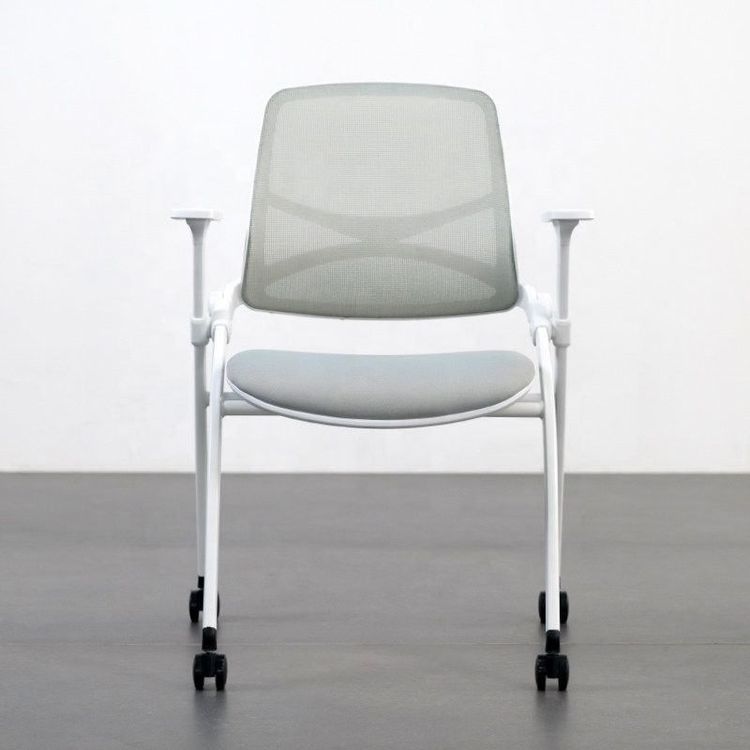
Formaldehyde-Free Office Chair
Currently, there is no direct evidence indicating that there are completely 'formaldehyde-free' office chair products on the market. However, the risk of formaldehyde exposure can be reduced by choosing eco-friendly materials and paying attention to certification standards.

The Relevance of Formaldehyde Sources to Office Chairs
Formaldehyde is a common volatile organic compound in furniture manufacturing, primarily originating from adhesives in artificial wood panels (such as medium-density fiberboard and particleboard), coating agents on leather or fabric surfaces, etc. The risk of formaldehyde release from office chairs usually focuses on the following components:
- Backrest and seat cushion frames: If artificial wood panels are used, formaldehyde may be released due to adhesive residues;
- Leather or fabric surfaces: Some low-quality materials may have formaldehyde-containing additives added during dyeing or stain-resistant treatments;
- Sponge fillers: Low-quality sponges may release trace amounts of formaldehyde due to blowing agent residues.
Suggestions for Choosing Eco-Friendly Materials
Although achieving complete 'formaldehyde-freeness' is difficult, the risk can be reduced in the following ways:
- Prioritize solid wood or metal frames: Solid wood (such as oak and walnut) has extremely low natural formaldehyde content, while metals (such as aluminum alloy and steel) have no formaldehyde release issues;
- Pay attention to fabric certifications: Choose fabrics or leathers certified by OEKO-TEX Standard 100, which strictly limit the content of harmful substances such as formaldehyde;
- Avoid low-quality sponges: Choose high-density, resilient sponges and confirm that they have not used formaldehyde-containing blowing agents.
Certification Standards and Test Reports
When purchasing, you can refer to the following authoritative certifications:
- China's E0 standard: Formaldehyde release ≤ 0.05mg/m³, applicable to panel components;
- CARB certification (California Air Resources Board, USA): Imposes phased restrictions on formaldehyde release from panels, with the NAF level being the highest standard (no added formaldehyde);
- F4 star certification (Japan): Formaldehyde release ≤ 0.03mg/m³, with stricter requirements than the E0 standard.
Request test reports from merchants and focus on checking whether the 'formaldehyde release' item meets the above standards.
Risk Reduction Measures During Daily Use
Even when choosing eco-friendly products, the following precautions should still be taken:
- Keep the new chair ventilated for 1-2 weeks after arrival to accelerate formaldehyde volatilization;
- Avoid prolonged use in enclosed spaces and consider using an air purifier;
- Regularly clean the surface to reduce dust adsorption that may carry formaldehyde.