
Fabric Office Chair Design
For fabric office chair design, you can refer to two cases: the lightweight fabric folding chair and the DIY lambswool office chair, both of which offer clear design ideas from material selection and structural functionality to modification details. The following analysis is conducted from three dimensions: design essentials, material application, and functional adaptation.
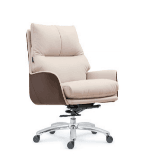
I. Material Selection and Breathability Design
The core advantage of fabric office chairs lies in their breathability, necessitating the selection of fabric types based on usage scenarios. The lightweight fabric folding chair employs ordinary breathable fabric, utilizing natural folds and fine stitching techniques to ensure air circulation while preventing discomfort from prolonged sitting, making it suitable for summer or poorly ventilated office environments. The DIY lambswool office chair, on the other hand, selects lambswool material, which offers stronger warmth but requires a hollow design of the steel frame (such as a mesh backrest structure) or control of fabric thickness (such as a single layer of lambswool plus an inner layer of breathable mesh) to balance comfort and breathability. Additionally, the edge treatment of the fabric must be precise; for example, fine stitching on the folding chair prevents unraveling, while the Velcro fixation on the lambswool chair ensures smooth edges to avoid skin irritation.
II. Structural Functionality and Space Adaptation
Structural design should conform to ergonomic principles while considering space utilization. The backrest curvature of the lightweight fabric folding chair should mimic the natural curve of the spine, distributing pressure through segmented support (such as a lumbar bulge design). Its folding functionality allows it to be stored by windows or in corners, making it suitable for temporary workstations or small offices. The DIY lambswool office chair, based on an existing steel frame, focuses on optimizing the wrapping of the seat and backrest: the seat fabric should have a 3-4cm edge reserved and wrapped around to the back of the backrest, secured with Velcro for easy removal and cleaning; the backrest modification should ensure the fabric fits tightly against the frame to prevent slipping, while the folded edges at the four corners should be rounded to prevent scratches.
III. Style Creation and Scene Expansion
The design of fabric office chairs should harmonize with the office environment style. The minimalist design of the lightweight fabric folding chair, paired with a small wooden table, creates a relaxed reading corner atmosphere, suitable for creative or home office settings. The DIY lambswool office chair, with its fluffy texture, enhances aesthetics and, when paired with warm lighting or green plants, creates a cozy and comfortable independent workstation, ideal for design studios or personal home offices. Furthermore, fabric color selection should consider dirt resistance (such as dark colors) and visual fatigue (such as low-saturation colors). The natural folds of the folding chair and the soft texture of the lambswool chair can enhance scene immersion through material characteristics.



