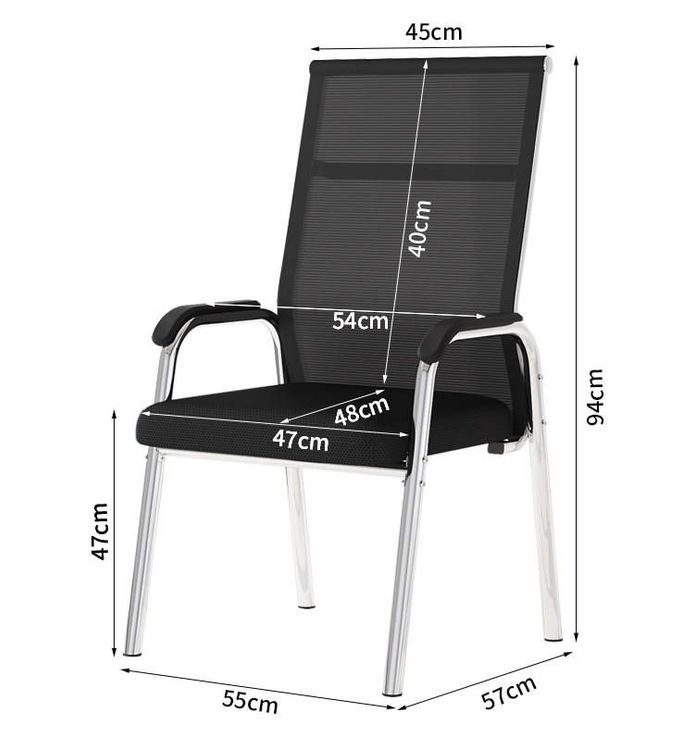
Executive Office Chair
An executive office chair is a seat designed in accordance with ergonomic principles, suitable for formal office settings. Common types include executive chairs, mid-back chairs, and staff chairs, as detailed below:

Executive Chairs
Also known as boss chairs, executive chairs are commonly found in managerial offices or senior executive offices in office buildings. Their design features are prominent: high backrests paired with standard armrests, with upholstery often made of leather, artificial leather (PU leather), linen fabric, or mesh, offering excellent breathability and resilience. Core components include casters, a five-star base, a gas lift, a seat pan, armrests, a backrest, and a headrest, supporting height and tilt adjustments. Some high-end models incorporate intelligent monitoring and automatic adjustment technologies, automatically adjusting support based on the user's sitting posture to enhance comfort.Office Swivel Chair Series
This series includes executive chairs, mid-back chairs, and staff chairs, achieving height adjustments through gas lifts and enabling rotation buffering and movement locking with elastic supports and casters. Designed following ergonomic principles, they maintain natural physiological curves through adjustable lumbar supports, armrests, and headrests, suitable for office, home, and medical settings. Among them, staff chairs typically feature low backrests without armrests, saving space and facilitating movement; mid-back chairs strike a balance between executive and staff chairs, offering functionality and space adaptability, suitable for middle management.Core Design of Ergonomic Office Chairs
High-quality products must offer multiple adjustable functions, such as seat height, backrest tilt angle, seat depth, armrest height and angle, lumbar support position, and support intensity. Some high-end models employ dynamic support technologies, such as dual dynamic lumbar support and flexible back-following designs, allowing support to automatically conform to changes in sitting posture, reducing fatigue from prolonged sitting. In terms of material selection, high-elasticity mesh fabric, with its excellent breathability and even pressure distribution, has become the mainstream choice for mid-to-high-end products; leather or PU leather exudes a more formal and稳重 (stable/dignified) appearance, suitable for formal occasions.Purchase Recommendations
Choose chair types based on height, sitting habits, and usage scenarios. For example, those sitting upright for work should focus on lumbar support, seat cushion, and armrest designs to ensure adequate support for the waist, hips, and arms; those who frequently recline for rest should pay attention to the backrest's range of motion and the seat pan's adjustment method to avoid imbalance during tilting. Additionally, verify weight capacity, adjustable functions, and after-sales terms to prevent discomfort due to mismatched sizes or functions.