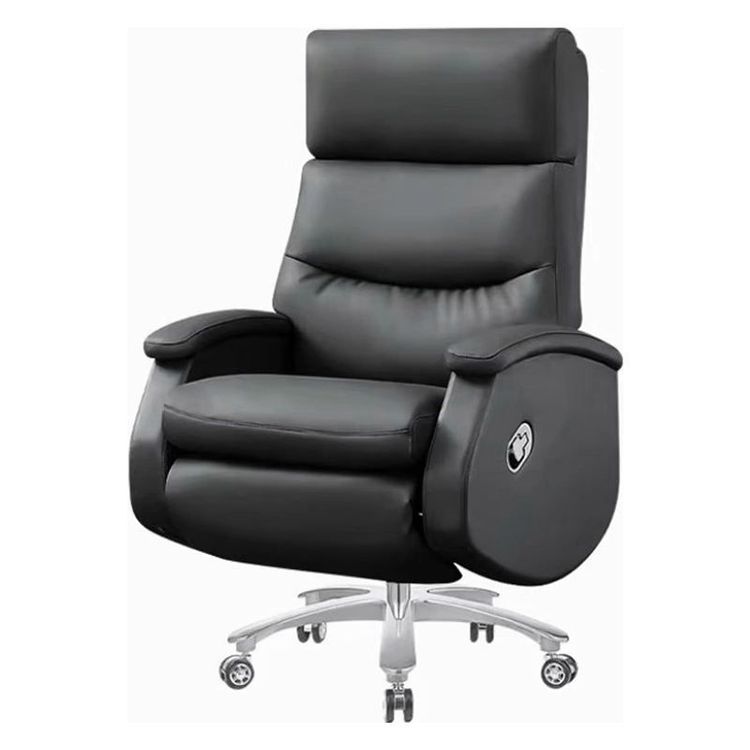
European Standard Office Chair
European standard office chairs primarily adhere to the EN1335 standard, which is formulated by the European Committee for Standardization. It covers requirements for mechanical safety, stability, and durability, and ensures product compliance with EU market safety regulations through CE certification.

I. Core Content of the EN1335 Standard
The EN1335 standard regards office chairs as an integrated system composed of subsystems such as seats, backrests, armrests, and bases, and sets clear requirements for the material strength, connection methods, and adjustability ranges of each component. For example:
- Seat surface: It must have the characteristic of evenly distributing pressure to avoid discomfort caused by excessive local pressure;
- Gas spring: As the core component for height adjustment, its sealing and fatigue resistance must be verified through continuous cycle testing to ensure long-term use safety;
- Connecting components: High-strength materials must be used to prevent the risks of loosening or breakage.
II. Testing Items of the EN1335 Standard
This standard verifies the safety of office chairs through multiple tests, including:
- Stability testing: It covers the stability of the front edge of the seat, forward, lateral, and backward stability, as well as special scenario testing for chairs with footrests, ensuring that the chair is not prone to tipping over in various usage postures;
- Static pressure testing: Static pressure is applied to the seat, backrest, armrests, and footrests to verify their structural strength;
- Durability testing: The seat and backrest need to complete 260,000 cycle tests, and the armrests need to complete 60,000 cycle tests to simulate wear and tear after long-term use;
- Wheel rolling resistance testing: It ensures that the chair moves smoothly without abnormal noise.
III. Sub-standards of the EN1335 Standard
- EN1335-1: Defines the external dimensions of finished chairs, such as seat height, depth, and backrest height, to ensure compliance with ergonomic design;
- EN1335-2: For safety performance testing, the 2018 updated version (EN1335-2:2018) adopts the strength and durability testing methods of EN1728:2012, enhancing the strictness of the standard;
- EN1335-3: After the update, its content has been integrated into relevant testing requirements and no longer exists independently.
IV. CE Certification and Market Access
Office chairs circulating in the EU market need to pass CE certification, which is based on the conformity assessment of EN1335 series tests to ensure that the products meet basic safety requirements and reduce the risk of personal injury caused by design defects. The CE mark is a necessary condition for the legal sale of products and an important reference for consumers when choosing safe office chairs.