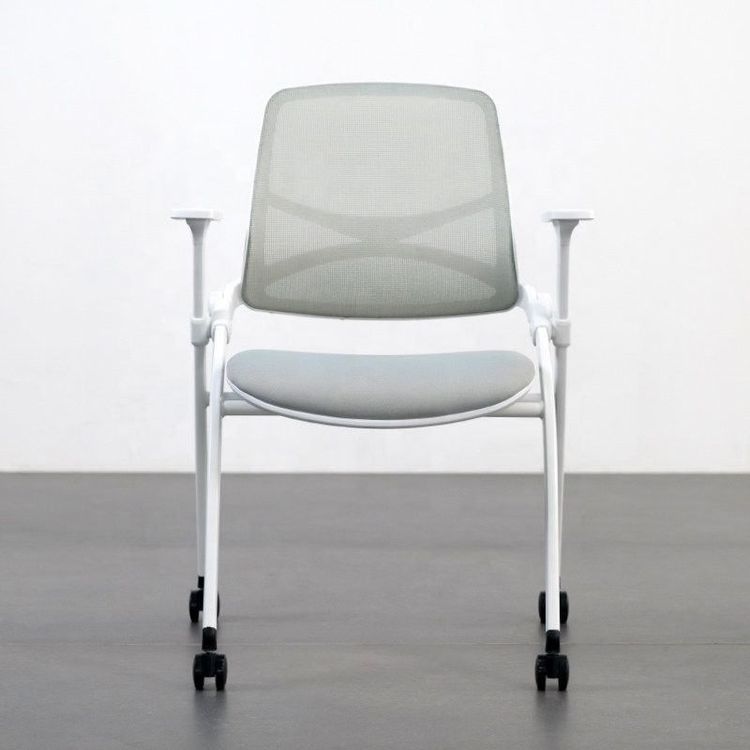
Ergonomic Office Chair
Ergonomic office chairs are healthy seating solutions designed based on ergonomic principles, suitable for individuals who work at desks or use computers for extended periods. They reduce the pressure of prolonged sitting through adjustable structures, and when purchasing, attention should be paid to functional adaptability, material safety, and authoritative certifications.

Core Functional Design
The core design of ergonomic office chairs revolves around 'dynamic support', adapting to different body types and sitting postures through adjustable components.
- Lumbar Support System: It should fit the lumbar curve and offer adjustability. For example, the 'Three-Zone Floating Wing Lumbar Support' of the Baobaodiao E3Air fourth generation provides personalized lumbar support through adjustable arc-shaped lumbar support, 40° inward rotation of the side cushions, and 14° adaptive following function; some models from Sihoo adopt '6D bionic joint armrests', which can simulate the range of motion of human joints and cooperate with the dynamic chassis to adjust the distribution of lumbar pressure.
- Backrest and Headrest: The backrest should have elasticity to follow body movements, and the headrest should support multi-dimensional adjustment. For instance, the four-dimensional dual-axis neck pillow can be raised, lowered, and rotated to meet the cervical support needs of users of different heights; the elastic design of the backrest can reduce back muscle fatigue during prolonged sitting.
- Armrests and Seat Cushion: The armrests should support height, angle, and forward-backward adjustment. For example, the 6D mechanical arm armrests can be raised to be level with the desktop and have a 20-centimeter movement range; the seat cushion should use breathable materials (such as high-quality mesh) and support forward-backward adjustment, cooperating with an adaptive gravity-sensing chassis to ensure stability when reclining.
Materials and Safety Standards
Material selection directly affects comfort and durability.
- Seat Cushion and Backrest: Prioritize mesh or memory foam with good elasticity and breathability to avoid stuffiness during prolonged sitting; high-end models may use eco-friendly materials to reduce the release of volatile organic compounds (VOCs).
- Chassis and Chair Frame: Metal or high-strength engineering plastic materials can ensure structural stability; the gas lift should pass safety certifications such as SGS and TUV to prevent explosion risks.
- Certification Basis: The Chinese national standard 'Ergonomic Requirements for Healthy Homes - Part 3: Office Desks and Chairs' (GB/T 39223.3-2020) regulates material safety, structural adaptability, and health protection indicators (such as formaldehyde emission and edge rounding treatment). When purchasing, priority can be given to products that have passed this standard certification.
Market and Brand References
In 2023, the global sales of ergonomic office chairs reached $14.38 billion, and it is expected to rise to $20.28 billion by 2030, reflecting the upgrading of market demand. Chinese brand Sihoo has participated in formulating multiple industry standards, with products covering lumbar support, back protection, and smart series; high-end models such as the Baobaodiao E3Air fourth generation achieve adaptive adjustment through technologies such as dynamic balance chassis and floating wing lumbar support, which can serve as functional references.