Ergonomic Office Chair
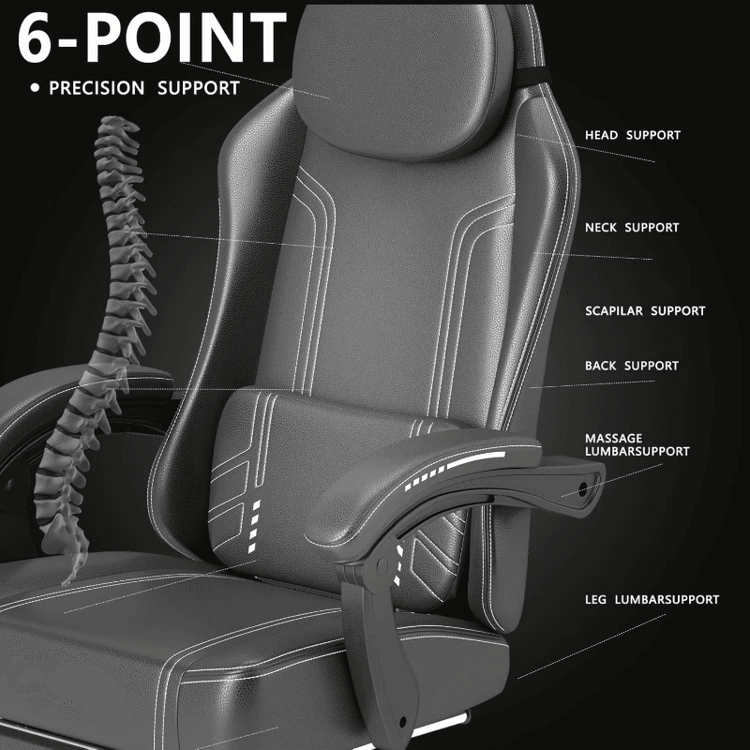
An ergonomic office chair is designed based on ergonomic theory, incorporating sitting posture data and manufacturing techniques to provide users with ergonomic support, alleviate fatigue from prolonged sitting, and enhance health and comfort.

Core Design Principles
The design of ergonomic office chairs is based on the physiological characteristics of human sitting postures, focusing on optimizing support for the spine, waist, hips, and limbs. Structural parameters such as seat height, width, and depth are referenced from human sitting posture data, for example:
- Seat Design: A gap is left at the back of the knees to prevent obstruction of blood circulation in the legs;
- Backrest Angle: Adjusted according to the pressure distribution on intervertebral discs in sitting postures to reduce lumbar strain;
- Lumbar Support: The curve of the backrest or an independent lumbar pillow (such as intelligent lumbar tracking design) fits the S-shaped curve of the spine to disperse pressure.
Functionality and Adjustability
To accommodate different body types and usage scenarios, ergonomic office chairs offer multi-dimensional adjustability:
- Headrest: Adjustable in height and angle to support the neck and relieve cervical spine pressure;
- Backrest: Some models (such as Steelcase) feature a flexible frame that automatically senses body posture and adjusts support intensity;
- Lumbar Pillow: High-end models (such as Habitat X7) are equipped with intelligent lumbar pillows that dynamically track the position of the waist to provide precise support;
- Seat Cushion: Adjustable in depth to prevent the hips from sliding forward; the material is mostly mesh or breathable foam to enhance comfort;
- Armrests: Adjustable in height and angle to support the arms and reduce shoulder and neck fatigue.
Materials and Safety
According to the national standard Ergonomic Requirements for Healthy Homes - Part 3: Office Desks and Chairs (GB/T 39223.3-2020), the materials of ergonomic office chairs must comply with safety regulations:
- Seat Surface: Commonly uses mesh (good breathability) or cowhide (high durability);
- Frame: Often made of nylon (lightweight) or aluminum alloy (strong load-bearing capacity);
- Health Protection: Must pass tests for formaldehyde emission and flame retardancy to ensure long-term harmless use.
Market and Applications
With the prevalence of sedentary office work, ergonomic office chairs have become a common fixture in modern home offices and workplaces. The Chinese office chair industry has a vast market size, with adjustable ergonomic office chairs being an important segment. Some high-end models also integrate functions such as massage, heat therapy, and ventilation (such as Habitat X7) to further meet health needs.