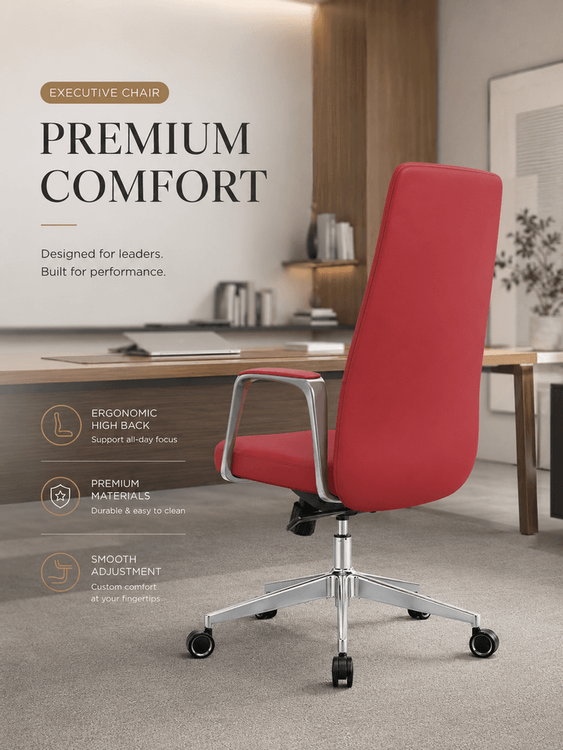
Ergonomic Office Chair for Proper Posture
An ergonomic office chair for proper posture typically refers to a chair designed based on ergonomic principles, with its core function being to enhance comfort and alleviate the pressure of prolonged sitting by fitting the body's curves. Common designs include dynamic lumbar support, full-back support, and multi-zone support structures.

1. Dynamic Lumbar Support System: Precisely Fitting the Lumbar Curve
The lumbar support design of ergonomic chairs is crucial for fitting the sitting posture. For example, the "Domino Lumbar Support System" of the Sihoo C500 creates dynamic interaction with the human lumbar region through elastic materials. When the user turns their head or shifts sideways, the lumbar support automatically adjusts the support angle to prevent the lumbar region from hanging in the air. The "ZeroG Flow Dynamic Lumbar Support" of the SumLush Xia Mu Fit CC supports both upward and downward as well as forward and backward adjustments, working in conjunction with the full-back support design to disperse pressure on the lower back, making it particularly suitable for people who work at a desk for long periods. These designs actively adapt to lumbar movements, reducing lumbar pressure and preventing lumbar muscle strain caused by prolonged sitting.
2. Full-Back Support Structure: Dispersing Spinal Pressure
Some high-end ergonomic chairs adopt a "full-back support" design. For instance, the backrest of the SumLush Xia Mu Fit CC can cover the entire area from the scapula to the sacrum, evenly dispersing pressure across the entire back through zoned support. This design avoids the limitation of traditional chairs that only support the lumbar region, maintaining the natural physiological curvature of the spine, especially suitable for users who need to frequently adjust their sitting posture. In addition, the backrest of the Deli ergonomic chair features a streamlined design that fits the contour of the human back, further enhancing comfort.
3. Multi-Zone Support and Adjustable Components: Personalized Fit for Body Types
Posture-correcting chairs achieve personalized fit through multi-zone support structures for the chest, elbows, and pelvis, combined with adjustable headrests, armrests, and seat depth functions. For example, users can adjust the headrest height according to their height to support the cervical spine or adjust the armrest height to prevent shoulder suspension, thereby maintaining a natural sitting posture with the "head-shoulder-hip" in a straight line. This design has a positive effect on preventing posture problems such as cervical spondylosis and rounded shoulders, especially suitable for people who need to use a computer for long periods.
4. Materials and Craftsmanship: Balancing Support and Breathability
The seat cushions and backrests of ergonomic chairs usually use high-density foam or mesh materials. The former provides soft support, while the latter enhances breathability. For example, some models of seat cushions adopt a "waterfall" front design to reduce pressure on the upper thighs. Mesh backrests fit back movements through elastic tension, providing both support and comfort. In addition, the material of the chair legs (such as nylon or aluminum alloy) and the smoothness of the casters also affect the overall user experience and should be selected according to the usage scenario.