
Elastic Bow-shaped Office Chair
The elastic bow-shaped office chair is an office seating solution that achieves lumbar support and a comfortable sitting posture through specific elastic structures, with common designs including the slingshot sacral pillow and elastic lumbar support. The following explains its technical features and functional advantages in conjunction with specific products:
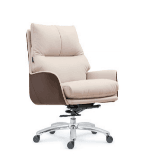
1. Sihoo B100Lite Ergonomic Chair: Composite Slingshot Sacral Pillow Design
This product adopts a composite slingshot sacral pillow structure, achieving dynamic support through a combination of large-area elastic sheets and dual springs. Its core principle is to utilize the elastic deformation capability of the slingshot, enabling the chair back to automatically adjust the support angle according to the user's sitting posture and lumbar pressure. For example, when the user leans forward to work, the slingshot structure will slightly rebound to maintain lumbar贴合 (fit); when leaning back to rest, the dual-spring system provides stronger support to prevent the lumbar region from hanging in the air. This design reduces single-point stress on the lumbar spine by dispersing lumbar pressure, making it suitable for office scenarios that require prolonged fixed sitting postures. Additionally, the durability of the slingshot structure has been optimized, with the combination of dual springs and highly elastic sheets capable of withstanding tens of thousands of deformations without failure, ensuring long-term stability in use.
2. Chibailun Computer Chair: Mechanical Optimization of Elastic Lumbar Support
Chibailun achieves a slingshot-like support effect through an elastic lumbar support module, but its technical approach focuses more on material mechanics applications. This lumbar support combines high-density memory foam with an elastic frame, converting lumbar pressure into lateral stretching force through the frame's curved design, and then achieving dynamic贴合 (fit) through the slow-rebound properties of the memory foam. For example, when the user sits down, the lumbar support will deform适度 (moderately) due to body weight pressure, forming a support surface that matches the natural curve of the spine; when the user stands up, the memory foam gradually returns to its original shape, maintaining the initial form of the lumbar support. This design reduces the lumbar lordosis angle, alleviating muscle fatigue caused by prolonged sitting, and is particularly suitable for users who need to frequently adjust their sitting postures. The material of the elastic frame is usually selected from nylon or glass fiber-reinforced plastic, balancing strength and lightweight requirements.
Common Value of the Two Designs
The core advantage of the elastic bow-shaped structure lies in its passive adaptation to ergonomics. Compared to traditional fixed chair backs, the elastic design achieves matching between support force and sitting posture without requiring active adjustment by the user, lowering the usage threshold. Meanwhile, the deformation capability of the elastic elements buffers the impact of minor body movements, reducing stress on the lumbar intervertebral discs, and has positive implications for preventing common lumbar muscle strains among office workers. When selecting, choices can be made based on usage scenarios: if strong support and long-term stability are required, the slingshot structure is preferred; if multi-posture adaptability is emphasized, the elastic lumbar support module is more suitable.


