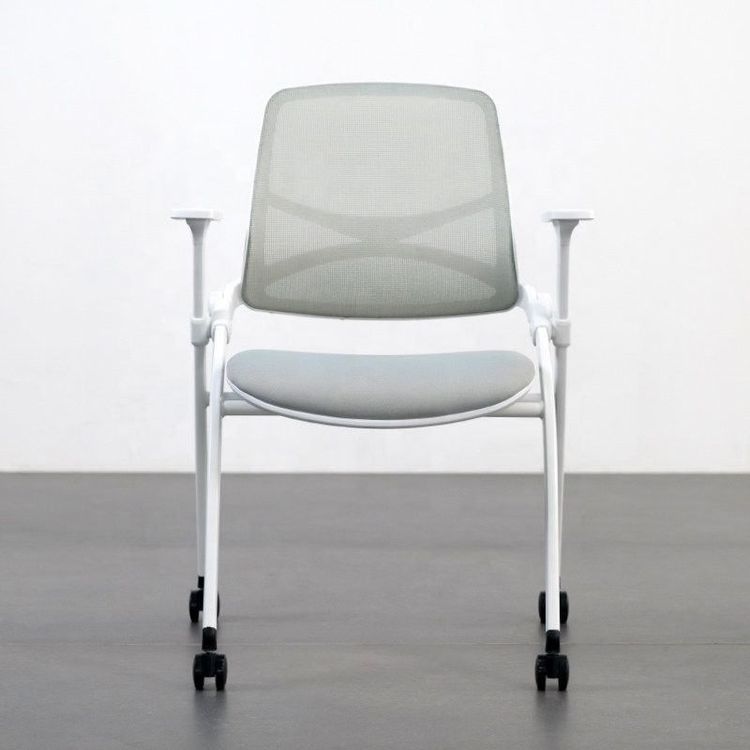
Custom Staff Office Chair
Custom staff office chairs are usually customized in combination with office desks, with some manufacturers offering full-service customization options. The materials are primarily mesh or PU, featuring basic lifting functions and a design that balances space and budget considerations.
I. Customization Models and Manufacturer Services
The customization of staff office chairs typically forms a combined solution with office desks to meet the needs of the overall office environment. Some furniture manufacturers offer a "full set of office desk and chair customization" service. For example, Onaide Furniture can achieve modular customization of screen partitions, staff office desks, and employee workstations, supporting office renovation projects nationwide. This model enhances the overall coherence and practicality of the office space through unified design styles, size matching, and functional coordination, making it particularly suitable for open office areas or standardized workstation layouts.
II. Material Selection and Functional Design
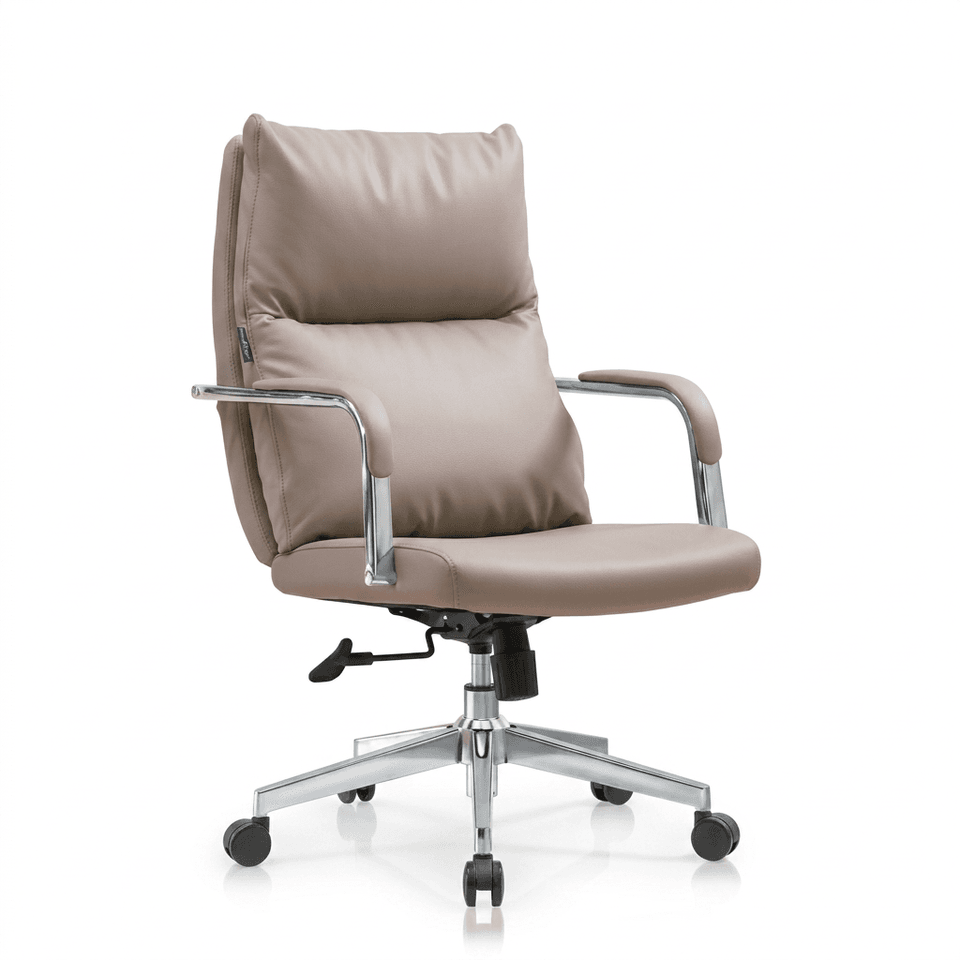
The primary materials for staff chairs are mesh and PU. Mesh material offers strong breathability, making it suitable for prolonged sitting scenarios and reducing feelings of stuffiness. PU material, on the other hand, is easier to clean and provides a more uniform appearance, making it suitable for office areas with high cleanliness requirements. In terms of functional design, staff chairs are usually equipped with a basic gas lift adjustment function, allowing users to adjust their sitting posture according to their height or desk height to maintain the natural curve of the spine. Some high-end customized products may include additional features such as lumbar support and adjustable armrests, but the core design remains focused on providing "basic sitting support" to avoid excessive complexity and cost increases.
III. Space and Budget Adaptability
The customization of staff chairs requires careful consideration of space utilization and cost control. In open office areas, chairs need to closely match the dimensions of the workstations, such as reducing occupied space through modular design or adopting stackable designs for easy temporary storage. In terms of budget, manufacturers typically offer configuration options with different materials and functions, allowing users to choose cost-effective solutions based on their needs. For example, basic mesh chairs can meet the daily needs of most employees, while PU material or chairs with additional functions are suitable for management or specific positions.
IV. Application Scenarios and Expandability
The customization of staff chairs needs to be deeply integrated with the office environment. For example, in creative companies, chairs may need to be paired with movable bases to adapt to flexible team collaboration models; in traditional enterprises, more attention is paid to matching the stability of fixed workstations. Additionally, some manufacturers support subsequent expansion services, such as adding more chairs as the company grows or adjusting the functional modules of existing chairs to reduce long-term usage costs.