
Corner Swivel Office Chair
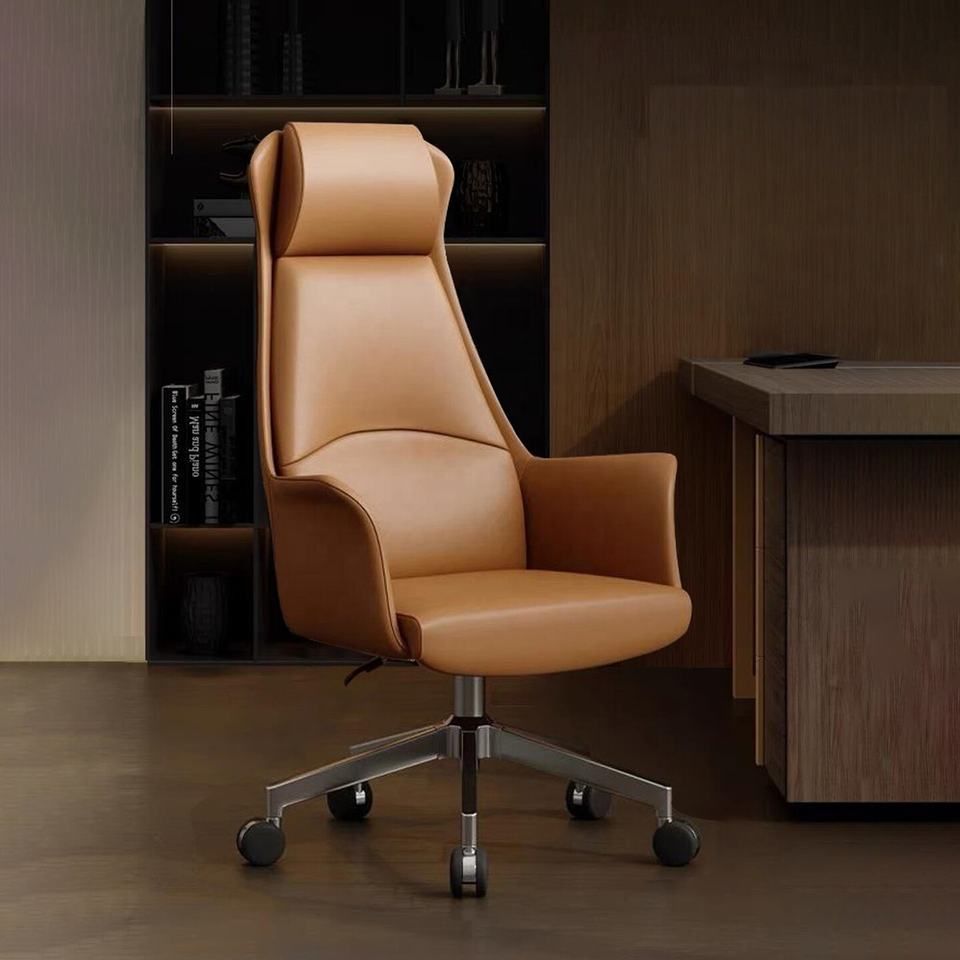
A corner swivel chair, also known as a swivel chair, falls under the category of office chairs or computer chairs. Its English name is swivel chair, and it features functions such as rotation, height adjustment, and mobility. Some high-end products also incorporate ergonomic design.
I. Basic Structure and Classification
The structure of a swivel chair typically includes a headrest, backrest, seat, armrests, gas lift support, swivel mechanism, and a five-star base with wheels. Based on the rotation angle, it can be classified into two types: semi-swivel chairs (90-degree rotation to the left and right) and full-swivel chairs (360-degree rotation). Full-swivel chairs are more suitable for office scenarios that require frequent adjustments in perspective due to their higher flexibility. Common types include task chairs, staff chairs, mid-back chairs, and executive chairs, each catering to different office needs. For example, staff chairs focus on cost-effectiveness, while executive chairs emphasize comfort and functionality.
II. Core Function Implementation Principles
The height adjustment function of a swivel chair relies on a gas lift, which is filled with high-pressure nitrogen gas. It generates elastic force through the difference in piston cross-sectional areas to support body weight and achieve height adjustment. Users can lock the height at any position. Some swivel chairs also feature a forward-and-backward motion function: the seat base consists of two components that can freely swing forward and backward, and a conical spring helps return it to the original position. The front control lever can adjust the tilt angle to meet users' personalized sitting posture needs.
III. Flexible Mobility and Rotation Mechanism
The spherical bottom valve at the bottom of a swivel chair is composed of three iron pieces and steel balls, paired with universal wheels, enabling free rotation and flexible mobility. This design allows users to adjust their position without getting up in office scenarios, making it particularly suitable for scenarios that require frequent communication with colleagues or operation of multiple devices.
IV. Ergonomic Design of High-End Products
Some high-end swivel chairs adopt ergonomic design, such as:
- Support System: Precisely fits the curves of the lumbar spine, back, and neck to relieve prolonged sitting pressure;
- Adjustable Lumbar Support: Adapts to users of different body types through multi-dimensional adjustments (e.g., height, angle);
- Material and Structure: Uses high-density rebound foam and thickened steel frames to prevent sagging and deformation;
- Multi-Dimensional Adjustment: Supports adjustments to armrests, backrest height, recline angle, etc., to meet the comfort needs of users of different heights.


