Boss Chair, Office Chair, Computer Chair
The boss chair is a type of computer chair, designed as a high-end office seating option specifically for business managers or home office settings, combining comfort with a professional image. The following provides an in-depth look at its definition, structure, materials, design features, and usage precautions:

1. Definition and Historical Evolution
The boss chair originally evolved from traditional office chairs, primarily featuring leather upholstery in its early days, symbolizing authority and professionalism in the workplace. As design iterations progressed, its functionality expanded from simple sitting to ergonomic support, with materials diversifying into mesh and solid wood types. For example, Thomas Jefferson modified a Windsor chair into a swivel chair, Charles Darwin added wheels, and Thomas Warren invented the prototype of the modern office chair in 1849, integrating rotation, sliding, and an elastic seat surface, laying the foundation for the ergonomic design of boss chairs.
2. Structure and Core Components
A boss chair consists of eight basic components, including casters, a five-star base, a gas lift, and a chassis. Among them, the gas lift is the core for adjusting seat height, and it is essential to choose products certified by international standards such as SGS and TUV to avoid the risk of explosion from inferior gas cylinders; the chassis must have explosion-proof functionality to ensure safety; the five-star base is typically made of aluminum alloy or nylon, requiring strong load-bearing capacity and smooth movement.
3. Material Classification and Suitable Scenarios
- Leather models: Mostly use PU leather or genuine leather, offering a delicate touch, commonly found in executive and mid-level chairs, suitable for formal office settings. For example, the Xichang L6 boss chair uses top-grain genuine leather, providing excellent breathability and durability.
- Mesh models: Stand out for their breathability, ideal for summer or prolonged use, commonly seen in junior chairs. Some products incorporate a double-layer mesh design for enhanced support.
- Other materials: Solid wood frames paired with leather or fabric seat surfaces offer a vintage style; plastic materials are lightweight and easy to clean but offer lower comfort.
4. Ergonomic Design Trends
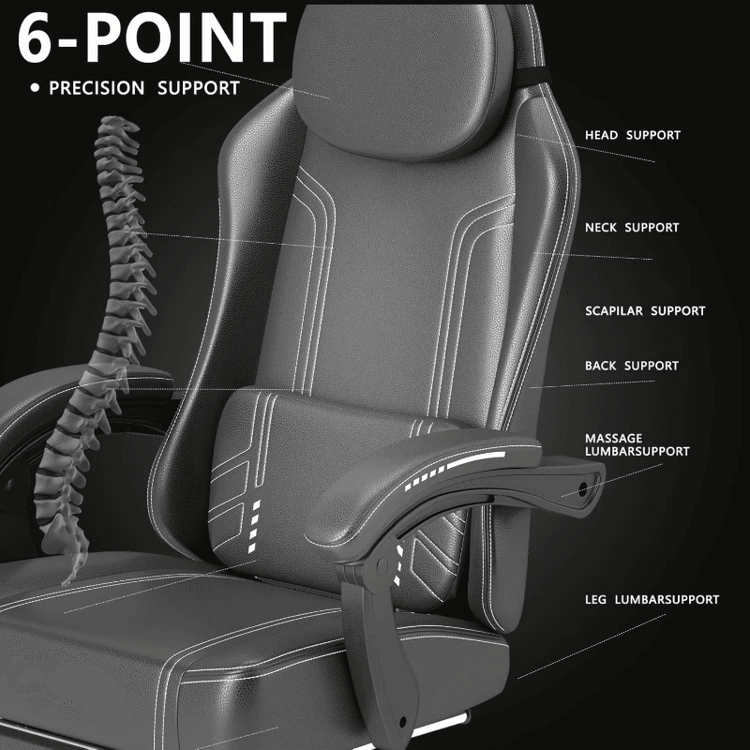
Modern boss chairs emphasize lumbar and back support along with dynamic adjustment capabilities. For example:
- Xichang L6: Features three-dimensional lumbar and back support, dynamic lower back support, three-stage adjustable armrests, a 135-degree recline function, and a thick, high-density foam seat cushion that maintains its shape even after prolonged sitting.
- Sihoo C500 Second Generation: Offers adjustable lumbar and head pillows, providing synchronized support for the lumbar and sacral regions, with customizable lumbar support intensity to accommodate different body types.
5. Usage Safety and Health Risks
- Gas cylinder quality: Inferior gas cylinders may explode due to impure internal gases or poor sealing, so it is crucial to choose products with safety certifications.
- Formaldehyde emission: Some leather or mesh materials may exceed formaldehyde limits, posing long-term health risks; it is advisable to select brands with environmental certifications.
- Flame retardancy: In office settings, attention should be paid to the flame retardancy of the seating to avoid fire hazards.
The design of boss chairs integrates functionality with symbolic significance. When selecting one, it is important to consider materials, ergonomics, and safety standards to meet the demands of efficient work and health.