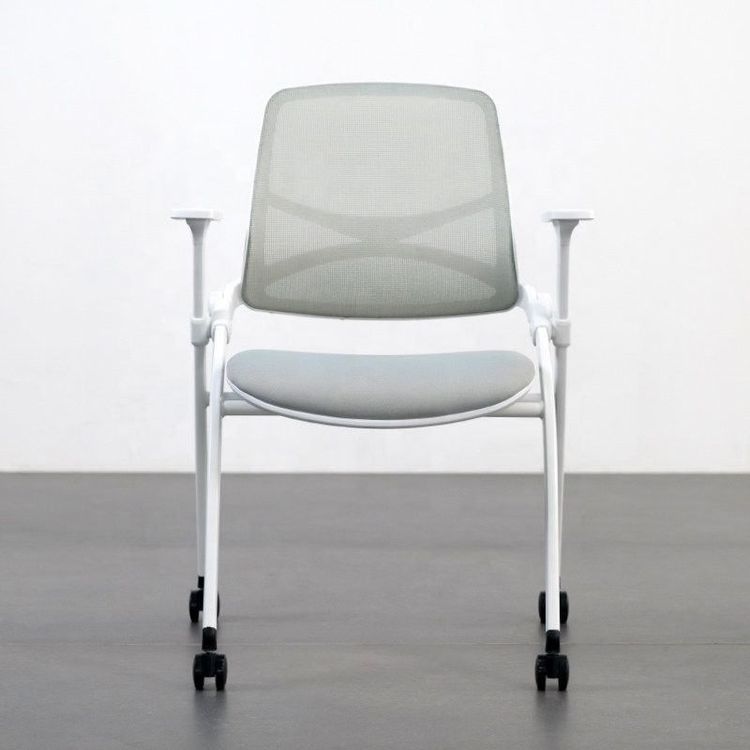
Backrest Office Chair Dimensions
The common dimensional design of backrest office chairs needs to integrate ergonomic principles, with key parameters including backrest height, tilt angle, overall height, seat depth, and armrest height, as detailed below:

1. Backrest Height and Tilt Angle
The backrest height is a crucial parameter for supporting the human back, typically designed to be 46 to 61 centimeters. This range can cover support needs from the waist to the shoulders, accommodating the sitting comfort of people of different heights. The backrest tilt angle affects the degree of relaxation when leaning back, with a standard range of 103° to 112°. Among them, 103° to 105° is suitable for office scenarios requiring focus, reducing pressure on the lumbar spine; 110° to 112° is closer to the natural relaxed posture of the human body, suitable for short breaks or meeting scenarios.
2. Overall Height and Leg Space
The standard range for the overall height of an office chair (from the ground to the highest point of the seat) is 40 to 50 centimeters. This design should ensure that when the user sits down, the thighs and lower legs are perpendicular (about 90°), while maintaining a 5-centimeter space between the back of the knees and the front edge of the seat to avoid compressing blood vessels and nerves. If the seat is too high, it will cause the legs to hang in the air; if too low, it will compress the back of the thighs, both of which may cause fatigue or numbness.
3. Seat Depth and Tilt Angle
The recommended seat depth (the horizontal distance from the front edge to the back edge) is 30 to 40 centimeters to accommodate the buttocks and thigh lengths of users with different body types. A depth that is too small will cause the thighs to hang in the air, increasing pressure on the buttocks; a depth that is too large may compress the back of the knees. Additionally, the seat tilt angle is usually designed to be less than 5° backward tilt. This slight tilt can guide the pelvis to maintain a neutral position, reduce lumbar lordosis, and help prevent lower back fatigue with long-term use.
4. Armrest Height
The armrest height directly affects the support effect on the shoulders and arms, with a standard range of 21 to 22 centimeters (the vertical distance from the seat to the top edge of the armrest). This height ensures that when the user naturally hangs their arms, the elbows are bent at 90°, avoiding shoulder shrugging or arm suspension, thereby reducing the burden on the neck and shoulder muscles.
Summary: The dimensional design of backrest office chairs needs to balance support and comfort, with each parameter adjusted flexibly according to the user's height, body type, and usage scenario. For example, tall users can choose models with a backrest height close to 61 centimeters and a higher overall height; those who need to work for long periods should prioritize whether the seat depth and armrest height meet ergonomic standards.