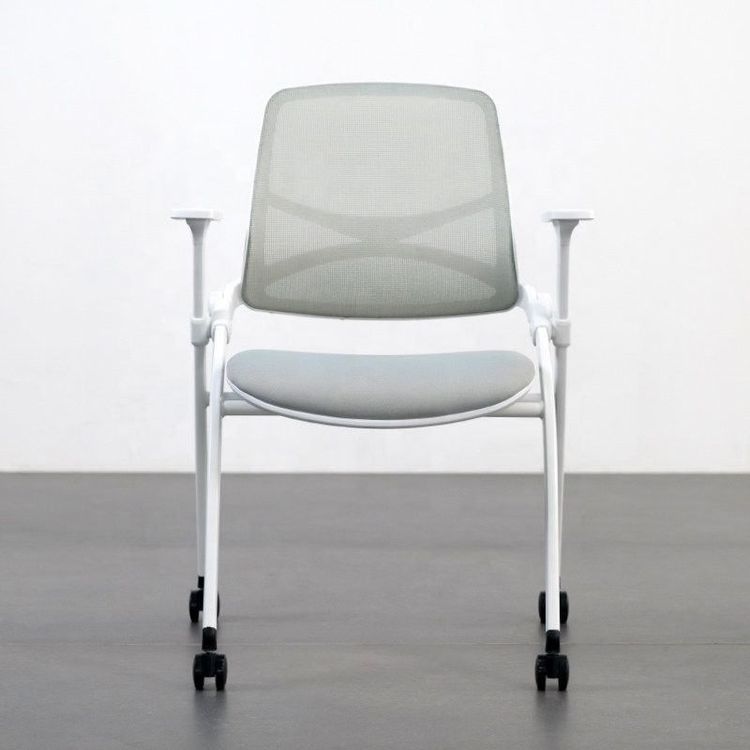
Alternative Approach to Office Chair Design
Design ideas for enhancing the comfort and practicality of office chairs and workstations can achieve low-cost improvements through dynamic support, functional reorganization, and ergonomic optimization. Specific solutions are as follows:

1. Dynamic Support Footrest: Alleviating Prolonged Sitting Fatigue
Traditional prolonged sitting can lead to poor blood circulation in the lower limbs and concentrated pressure on the lumbar spine. Placing a 10~15 cm high footrest under the desk (such as a thickened yoga block or memory foam material) can effectively alleviate this issue. By alternating the support positions of the feet, body weight is distributed, reducing fatigue caused by unilateral stress and suppressing the urge to cross legs, thereby lowering the risk of spinal scoliosis. Material selection should avoid hard plastics, prioritizing memory foam or cork to conform to the foot's contours and provide elastic support.
2. Semi-Reclined Nap Design: Efficient Space Utilization
Traditional folding beds take up a lot of space, whereas using an office chair with a recline function paired with a memory foam headrest and lumbar support can create a 25~30-degree semi-reclined angle for quick naps. A U-shaped pillow can stabilize the neck, preventing excessive backward tilting of the head during recline; the lumbar support should conform to the natural curvature of the lumbar spine, dispersing spinal pressure; combined with a blanket and eye mask, relaxation can be achieved within 10 minutes. This solution requires no additional equipment purchases and is suitable for small workstations.
3. Modular Desktop Transformation: Adapting to Work Habits
Desktop layouts should be customized according to work type: left-handed individuals can move the mouse and keyboard to the left; drawing personnel can configure rotating stands for easy adjustment of drawing board angles; programmers can use vertical monitors to enhance code reading efficiency. Additionally, the principle of prioritizing high-frequency actions requires placing frequently used items (such as notebooks and water bottles) within the natural reach of the arms to reduce body twisting; cable management should hide power cords to avoid clutter on the desktop affecting operational smoothness.
4. Ergonomic Chair Upgrade: Dynamic Adaptation to Waist Types
Mid-to-high-end office chairs (such as SumLush Xia Mumu Fit CC) utilize dynamic lumbar support, zoned support, and fiberglass chassis technologies to adapt in real-time to different waist types. Dynamic lumbar support automatically adjusts support intensity based on sitting posture changes, avoiding the "lumbar pressure" of traditional fixed lumbar supports; zoned support divides the backrest into shoulder, back, and waist sections to disperse spinal pressure; the fiberglass chassis provides more stable recline resistance, preventing sudden drops. Such designs can offer the comfort of high-end brands at a budget-friendly price point.
**The above solutions, through detail optimization and functional reorganization, address health hazards (such as prolonged sitting fatigue and spinal pressure) and space utilization issues (such as nap equipment occupying space) in traditional workstation designs at a low cost, combining scientific validity with practicality.