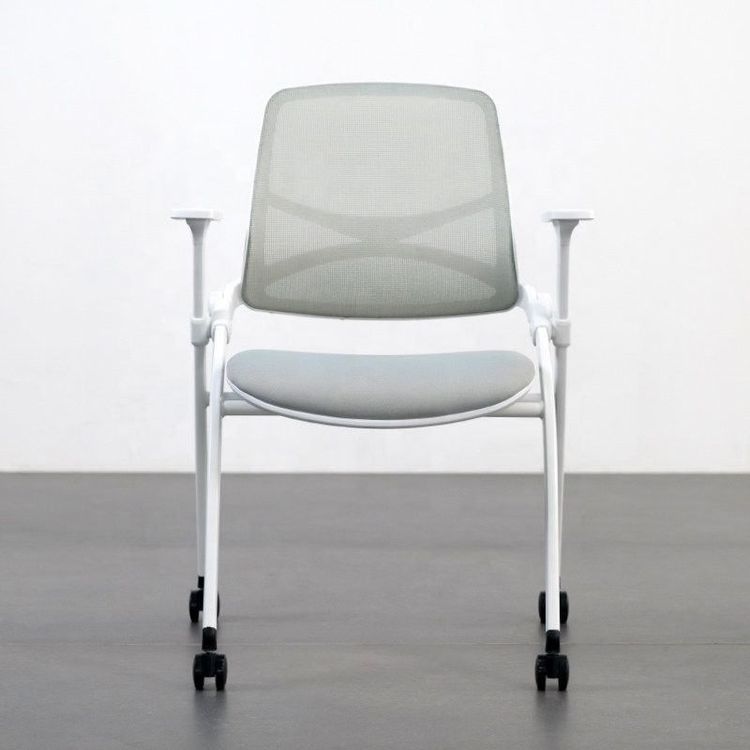
Administrative Office Chair Quality
The quality of administrative office chairs is influenced by multiple factors, and the following key points can be focused on when judging their quality:

I. Load-Bearing Structure
The load-bearing structure is the core support part of an office chair, directly affecting its safety and durability. Attention should be paid to the materials and workmanship of the gas lift, chassis, chair legs, and connecting components. High-quality gas lifts should pass international safety certifications (such as SGS, BIFMA), as poor-quality ones may experience stuttering, air leakage, or even explosion risks. The chassis should be made of thickened steel or high-strength engineering plastics to avoid insufficient load-bearing capacity caused by thin plastics or low-quality steel. For chair legs, it is recommended to choose a five-claw aluminum alloy design, which offers better stability than three-claw or four-claw designs. Connecting components (such as screws and rivets) should be firmly fastened without looseness to prevent breakage after long-term use.
II. Fabric and Seat Cushion
The comfort of the fabric and seat cushion directly affects the user experience. For mesh fabrics, attention should be paid to elasticity, tension, and edge-fixing techniques: high-quality mesh fabrics use high-density polyester fibers, offering long-lasting elasticity and reinforced edges, while poor-quality ones are prone to sagging and deformation. For seat cushions, high-density rebound foam (density ≥ 40kg/m³) should be chosen to avoid excessive softness leading to collapse or excessive hardness causing discomfort to the buttocks. Some high-end office chairs adopt zoned support designs, such as independent lumbar support areas, to further enhance comfort.
III. Moving Parts
Functions such as height adjustment, recline, and armrest adjustment require special attention to structural stability. The armrest connection should use metal reinforcements to avoid breakage of plastic parts. The mesh fabric on the chair back should maintain uniform tension to prevent local sagging during recline. The height adjustment mechanism should operate smoothly without stuttering, with a recommended recline angle of 120°-135° and adjustable rebound force. Some poor-quality chairs may produce abnormal noises during recline or have unsmooth armrest adjustments, which should be excluded through actual testing.
IV. Overall Stability
The chair should not exhibit significant wobbling or abnormal noises under normal sitting or adjustment conditions. During testing, simulate daily usage scenarios: gently rock the chair forward, backward, left, and right while sitting to observe the stability of the chair legs; when adjusting the recline function, check the tightness of the connection between the chassis and the chair back; listen for uniform sounds from the gas lift during height adjustment to avoid harsh friction noises.
V. After-Sales Support
The warranty scope and repair methods should be clarified, with special attention paid to the warranty periods for core components such as the gas lift, chassis, and mesh fabric. Some brands offer warranties of 5 years or even 10 years, but it is necessary to confirm whether they include consumable parts (such as mesh fabric and casters). For repair methods, it is recommended to choose on-site services or free part replacements to avoid vague commitments such as "lifetime maintenance."